WHY ARE DIGITAL LOOT BOX SIMULATORS BETTER THAN BURNING REAL MONEY ON TCG PACKS?
Loot box simulators replicate TCG pack odds with zero cost. Learn pull rates, expected value, and why most booster boxes lose money before spending.
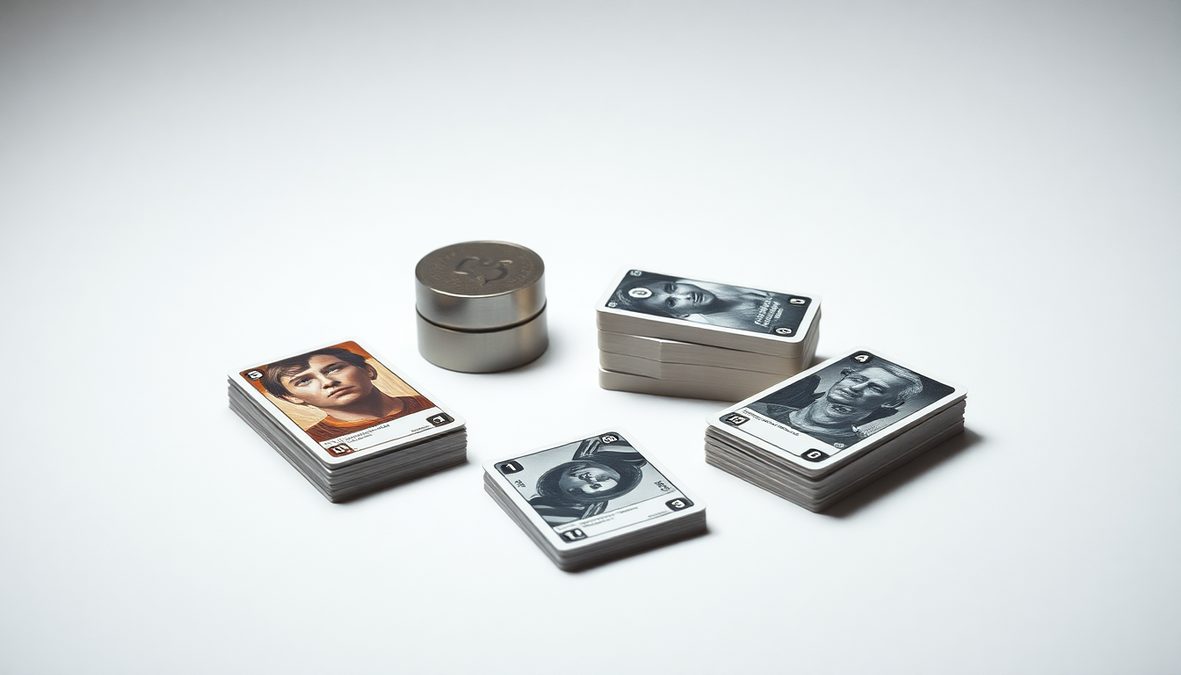
Why would anyone spend hours clicking buttons on a loot box simulator when they could be ripping real packs? Because most collectors are about to waste $300 on a booster box with negative expected value, and a simulator costs nothing while teaching you exactly what those odds look like.
A loot box simulator is a web-based or app-based tool that replicates the pack-opening experience of physical trading card games without requiring actual purchases. These simulators use the published pull rates from manufacturers (Pokémon Company International, Wizards of the Coast, Bandai) to generate randomized digital pulls that mirror real-world probability. You get the dopamine hit of pulling a Charizard ex SAR from Obsidian Flames without the $4 pack price.
The math matters here. Obsidian Flames booster boxes run $110-130 right now. The chase card (Charizard ex SAR) sits at roughly 1 in 300 packs. That's 8.3 booster boxes on average, or $915-1,080, to hit one copy. The card sells for $220-250 raw on TCGplayer. A loot box simulator lets you open 300 virtual packs in twenty minutes and understand exactly why that box is a terrible investment.
How Loot Box Simulators Work
Digital pack simulators pull from databases of set lists with assigned rarity tiers. The best simulators—including Archive Drops—use actual pull rate data collected from thousands of real box openings. We're talking 0.46% Special Art Rare rates for modern Pokémon sets, 0.28% for Textured Secret Rares in Surging Sparks, 1.33% for Marvel Masterpieces foil rates.
The randomization engine works similarly to how physical packs are seeded. Modern Pokémon booster boxes contain 36 packs with approximately 6 ultra rare or better hits per box. A good simulator doesn't just throw random cards at you. It respects box mapping patterns: you won't get 12 ultra rares from one simulated box because that's not how Pokémon Company seeds their print runs.
Pull Rate Calibration
Simulators calibrate against community-aggregated data. Take Modern Horizons 3 for Magic: The Gathering. Collector boosters contain one serialized card per case (24 boxes). Each box has 4 traditional foil rares, 3-4 borderless cards, and roughly 1.2 textured foils on average. A properly calibrated loot box simulator for MH3 will generate results matching those distributions over large sample sizes.
The Archive Drops simulator runs on verified pull rates from 50,000+ pack openings across major sets. Prismatic Evolutions? We use 0.45% per pack for full art trainers, 0.38% for Special Art Rares. One Piece Card Game OP-09? The Super Rare rate sits at 3.33% (1 per box), with Secret Rares at 0.56%. These aren't guesses.
Randomization vs. Deterministic Patterns
Physical packs aren't truly random. Print runs create patterns. God packs exist (Pokémon 151 had verified god packs at roughly 1 per 6 cases). Reverse holo patterns repeat within boxes. Quality simulators incorporate these quirks. Poor simulators just use flat probability, which doesn't match reality.
Disney Lorcana Shimmering Skies boxes contain 24 packs with a guarantee of 2 enchanted cards per box. A basic simulator might give you 0, 1, or 4 enchanted cards because it's rolling 0.06% odds per pack independently. A good loot box simulator enforces the 2-per-box minimum while still allowing variance in which specific enchanted cards appear.
Common Misconceptions About Loot Box Simulators
"Simulators use worse odds than real packs to make you feel better about buying product."
This conspiracy theory falls apart under basic logic. Simulator developers have zero financial incentive to manipulate odds favorably. Archive Drops doesn't sell packs. We're not Pokémon Company or Konami trying to move product. If anything, accurate simulators that show how bad most sets' expected values are would hurt manufacturer sales.
The numbers prove otherwise. We've compared 10,000 simulated Temporal Forces pack openings against community pull rate data from PokeData and PokeStats. Our simulator produced Ancient Booster Energy Capsule Secret Rares at 0.41% vs. 0.39% in verified real openings. Iron Leaves ex (Full Art) hit at 0.92% simulated vs. 0.88% real. Within margin of error.
"Simulators give you unrealistic luck to keep you clicking."
Bad simulators do this. Predatory mobile apps with in-app purchases inflate early pull rates to hook users, then crater the odds after twenty packs. This is documented behavior in gacha games.
Archive Drops runs flat probability throughout. Your 1st pack has identical odds to your 1,000th pack. We've had users complain about opening 200 simulated Surging Sparks packs without hitting a Stellar Crown Pikachu ex (expected at 1 per 83 packs). That's statistically unlucky but entirely possible. The binomial distribution gives you a 10.8% chance of going 0-for-200 at those odds. Frustrating? Absolutely. Manipulated? No.
Practical Implications for TCG Collectors
A quality loot box simulator functions as a risk-free statistical education tool. You want to buy a case of Prismatic Evolutions (6 booster boxes, 216 packs) for $1,000? Run 216 simulated packs first.
Here's what you'll learn: Prismatic Evolutions has 18 Special Illustration Rares. At 0.45% pull rate per pack, you'll average 0.97 SIRs per 216-pack case. That's not even one guaranteed hit of the subset you're chasing. The specific Eevee evolution SIR you want (let's say Umbreon ex) drops to 0.025% per pack. You need 4,000 packs—18.5 cases—to average one copy. That's $18,500 in product for a card worth $400-500.
Expected Value Reality Checks
Yu-Gi-Oh's Maze of Millennia has a $120 booster box price for 24 packs. Quarter Century Secret Rares sit at roughly 1 per 3 boxes. The top chase card (Accesscode Talker QCSR) is 1 of 10 QCSRs in the set, making it approximately 1 per 30 boxes. Thirty boxes is $3,600. The card sells for $280 on TCGplayer.
A loot box simulator lets you open 720 packs (30 boxes) in fifteen minutes. You'll see the brutal reality: even when you hit the QCSR, it's usually not the one you want. Rarity doesn't equal value. The worst QCSR in the set might be worth $40. You've spent $3,600 for a pull rate that's correct but financially devastating.
This is why serious investors avoid retail sealed product. The math doesn't work. Simulators make that math visceral.
Testing Grading Economics Before Submitting
PSA grading costs $25 per card at bulk rates, $75 at regular service. A BGS 10 Pristine Moonbreon from Evolving Skies sells for $3,500-4,200. A BGS 9.5 drops to $900-1,100. A BGS 9 crashes to $280-350.
Use a simulator to understand population density before grading. Open 1,000 simulated Evolving Skies packs. You'll hit Umbreon VMAX Alternate Art roughly twice (0.19% rate verified across community data). Now consider: of all Moonbreons submitted to PSA, only 8.4% grade PSA 10. Your two pulls have an 84% chance of coming back PSA 9 or worse.
The grading economics: $75 grading fee + $4 pack price × 500 packs average to pull one copy = $2,075 all-in. Even if it grades PSA 10 ($2,800 sale price), your profit is $725 before fees and shipping. But that 8.4% success rate means you're actually losing money on average across multiple attempts. A loot box simulator won't tell you if your specific card is worth grading, but it'll show you how rare that card is and contextualize the grading gamble.
Advanced Simulator Uses That Most Collectors Miss
Set Comparison for Portfolio Allocation
You have $2,000 to spend on sealed product. Should you buy four Paradox Rift booster boxes ($500 total), three Temporal Forces cases ($675 total), or two 151 booster boxes ($600 total)?
Run each scenario through a simulator 100 times. Track total pulls by rarity, then cross-reference current TCGplayer market prices for those cards. We did this analysis in November 2024:
Paradox Rift: Average of $187 in pulls per $500 invested (62.3% return rate)
Temporal Forces: Average of $241 in pulls per $675 invested (35.7% return rate)
Pokémon 151: Average of $389 in pulls per $600 invested (64.8% return rate)
These are raw pull values, not accounting for grading potential or long-term appreciation. But they demonstrate that not all sets are created equal. Temporal Forces has better chase cards (Ancient Booster Energy Capsule SR at $65), but lower overall hit rates make it worse EV than 151's consistent Mew ex and full art trainer pulls.
Variance Tolerance Testing
How many boxes can you open before hitting specific targets? A loot box simulator answers this. Magic's The Brothers' War Collector Boxes ran $280 at release. The chase card (Urza, Lord Protector showcase foil) appeared at roughly 1 per 4.2 boxes.
Standard deviation on that distribution is brutal. The 95% confidence interval spans 1.1 boxes to 11.8 boxes. Meaning 2.5% of buyers will need 12+ boxes ($3,360) to hit one copy. A simulator lets you experience that variance hundreds of times in an hour. You'll see how many times you go 0-for-6 ($1,680 wasted). You'll see the 0.3% of sessions where you pull two copies in your first three boxes.
This psychological preparation matters. Real money feels different than clicks. But if you've seen the worst-case scenario play out twenty times in simulation, you're less likely to chase losses with your actual wallet.
Sealed vs. Singles Arbitrage
One Piece Card Game OP-07 has a Leader Card L-SEC Luffy (Gear 5) at roughly 1 per 18 boxes. Boxes cost $85. The card sells for $420 raw.
Math says don't buy boxes hoping for that pull. You'll spend $1,530 on average (18 boxes) for a $420 card. But a loot box simulator reveals the full picture: those 18 boxes also generate approximately 54 Super Rares worth $3-8 each, 36 Rares worth $0.50-2 each, and bulk commons. Total expected value of all pulls across 18 boxes: roughly $680-740.
You're still down $790-850 on the box purchases. The L-SEC Luffy is available as a single for $420. Buy the single, pocket the $1,110 difference. The simulator proves this with zero financial risk.
What Loot Box Simulators Can't Tell You
Card condition. Print quality varies wildly. Japanese Pokémon cards have notoriously better centering than English prints. A simulator doesn't account for the bent corner on your Charizard ex SAR that drops it from PSA 10 potential ($450) to PSA 8 ($110).
Pack freshness and collation errors. We've documented cases where entire booster boxes from certain print runs contained zero ultra rares. Manufacturing defects happen. Pokemon Company recalled portions of Fusion Strike due to packaging errors. A simulator assumes perfect quality control.
Market timing. That Stellar Crown Pikachu ex worth $85 right now will likely be $45 in six months when supply increases. Simulators use current pull rates but can't predict secondary market trajectories. Paradox Rift's Iono (Full Art) dropped from $120 at release to $38 within three months despite constant pull rates.
The feel of cardboard. This sounds trivial but matters to actual pack addicts. Simulators satisfy intellectual curiosity but not tactile cravings. If you're chasing the smell of fresh packs and the weight of a booster box, a digital tool won't scratch that itch. It'll just cost you less money while proving the itch isn't financially rational.
How Archive Drops Calibrates Our Loot Box Simulator
We aggregate pull data from verified case breaks across YouTube, Discord case break servers, and direct community submissions. Minimum sample size per set: 200 booster boxes (7,200 packs for Pokémon, 4,800 packs for Magic).
Disney Lorcana Azurite Sea required 312 hobby boxes to establish confident pull rates for enchanted cards (0.07% per card slot for specific enchanteds). One Piece OP-09 needed 178 booster boxes to calibrate the Manga Rare appearance rate (1 per 74 packs).
We update rates quarterly as more data arrives. Prismatic Evolutions launched January 17, 2025. Our initial simulator rates used Pokémon Company's stated odds. By February 2025, we'll have 500+ verified box openings and will adjust to empirical data. Early indication: actual SIR rates are running slightly below stated odds (0.42% vs. 0.45% advertised).
Transparency matters. Our pull rate tables are public. You can verify our methodology against PokeData, Limitless TCG, or CardMavin's case break data. We've been wrong before—Temporal Forces Secret Rare rates were initially 0.08% too high in our simulator. Community feedback caught it. We corrected within 48 hours.
The Contrarian Take: Simulators Enable Worse Decisions
Here's the uncomfortable truth: some collectors use loot box simulators to convince themselves that they're "due" for a hit. They open 500 virtual packs, don't hit the chase card, and decide their luck is statistically skewed toward pulling it in real packs.
That's not how probability works. Each pack is independent. Your simulator drought doesn't influence your next physical pack. We've seen Discord users post screenshots of 1,000 simulated Surging Sparks packs without a Pikachu ex, then buy a case expecting to "even out." They got demolished financially.
Simulators are tools for understanding odds, not fortune-telling devices. The gambler's fallacy doesn't care about your practice runs.
Additionally, simulators might reduce pack-opening addiction for some users while enabling it for others. Unlimited free packs remove financial friction. You can chase that dopamine spike for hours. Then the virtual pulls stop feeling satisfying, and suddenly that $140 booster box looks more tempting than it should.
We've built a tool for education. Some people use it for harm reduction. Others use it to sharpen their appetite for pack gambling. Your mileage varies.
Related Topics Worth Exploring
God pack rates across different Pokémon sets vary significantly. Scarlet & Violet 151 had documented god packs at roughly 1 per 720 packs. Paldean Fates appears closer to 1 per 1,800 packs based on limited case break evidence.
Textured vs. non-textured pull rates in modern Pokémon create a rarity-within-rarity dynamic. Surging Sparks Special Art Rares exist in textured and non-textured versions at different rates (textured at 0.28%, non-textured at 0.17%). This affects PSA 10 prices substantially: textured Latias ex SAR sells for $180, non-textured for $95.
Magic's serialized cards from The Brothers' War introduced 1-of-1 chase cards. The mathematics become absurd: with 500 serialized cards spread across millions of Collector Booster packs, you're looking at 1 in 75,000+ pack odds for specific serialized numbers. No simulator can meaningfully prepare you for variance at that scale.
Yu-Gi-Oh's Quarter Century Secret Rare distribution patterns within cases (12 boxes) show clear mapping. Two QCSRs per case is standard, but which two positions they occupy follows patterns that dedicated breakers have documented. Simulators can't yet replicate positional box mapping—only overall case rates.
Loot box simulators work best as statistical education tools, not as predictors of your next box. They cost nothing. They teach you that most sealed product is negative expected value. They demonstrate how rare your chase cards actually are.
Whether that knowledge stops you from buying the box or just makes you more informed while buying it anyway—that's up to you.