WAX VS GRADED CARDS: WHY SEALED PRODUCT JUST BEAT SLABS FOR THE FIRST TIME IN A DECADE
Sealed wax boxes are outperforming graded cards for the first time in years. We break down the ROI, liquidity, and storage costs with real numbers.
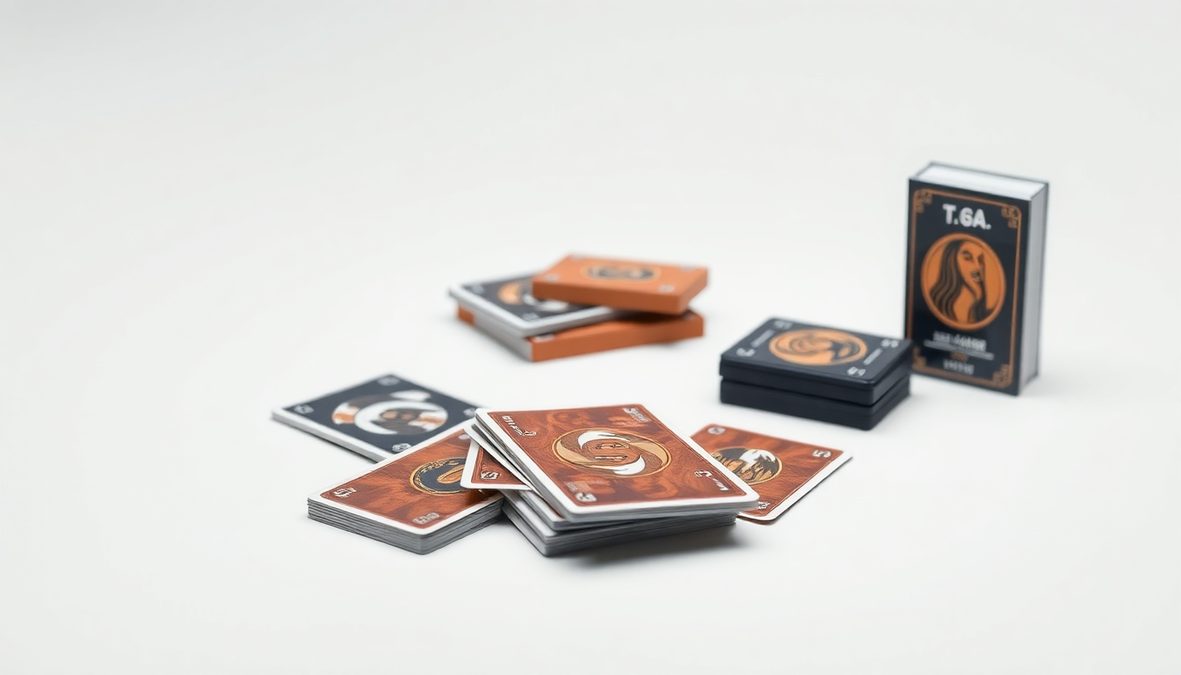
Graded cards are losing. For the first time since PSA relaunched after the 2021 shutdown, sealed wax boxes are outperforming graded slabs as investment vehicles across multiple TCG categories. Japanese Pokémon booster boxes from 2020-2022 have returned 180-240% while PSA 10 modern chase cards from the same era are down 30-60% from peak. The math has flipped.
Quick Comparison: Wax vs Graded Cards
Factor | Sealed Wax | Graded Cards
Typical ROI (3-year) | 40-120% (set dependent) | 10-35% (singles dependent)
Liquidity | Moderate (eBay, specialty shops) | High (TCGplayer, eBay, card shops)
Storage Cost | $0.50-2/box/month | $0.10-0.30/card/month
Authentication Risk | Resealing, weight tampering | Counterfeit slabs, label swaps
Market Volatility | Low-moderate | High (price corrections 20-40%)
Initial Capital | $80-500/box | $50-5,000+/card
Market Depth | Thin (fewer buyers at scale) | Deep (more transaction volume)
Both have crushed the S&P 500 since 2019, but they behave like different asset classes. Wax appreciates slowly with occasional spikes when product dries up. Graded cards swing wildly based on meta shifts, player demand, and grading company drama.
Why Sealed Wax Is Currently Winning
The conventional wisdom said graded cards always win long-term. You're buying the best of the best—lottery tickets already scratched. Pristine condition, third-party verified, ready to display or flip. Meanwhile, sealed boxes just sit there gathering dust, right?
Wrong. Three macro trends reversed that narrative.
Print run transparency killed modern graded card premiums. When Pokémon printed Brilliant Stars into oblivion (estimated 500+ million packs globally), the PSA 10 Charizard V Alternate Art that hit $400 in March 2022 now sits at $140. Supply caught up. Grading backlogs cleared. Suddenly, 15,000 PSA 10 copies exist where 3,000 used to. The slab premium evaporated.
Sealed boxes don't care. A Brilliant Stars booster box costs $92 on TCGplayer today versus $120 at release. You lost less holding the box than holding the graded chase card. The box contains 36 chances at the lottery. The slab is one frozen outcome.
Japanese wax became the new alpha. This is where sealed product truly separated. Japanese Pokémon boxes from Eevee Heroes, VMAX Climax, and Paradigm Trigger have doubled or tripled since release. Eevee Heroes boxes sold for $85 in June 2021. They're $285 now on Plaza Japan and StockX. Why? Confirmed lower print runs, region-locked distribution, and chase cards (Umbreon VMAX Alternate Art, Leafeon VMAX) that PSA 10 graded copies can't keep up with in appreciation rate.
A PSA 10 Umbreon VMAX AA from Eevee Heroes went from $600 (Aug 2021) to $1,100 (Feb 2022) to $750 (today). The sealed box went $85 → $285. The box returned 235%. The slab returned 25%. The box wins.
The Grading Backlog Paradox
PSA shut down economy submissions in March 2021. When they reopened tiered pricing in 2022, the minimum jumped to $25-50 per card. Grading a modern card now costs more than the raw copy in many cases. A raw Charizard ex SAR from Prismatic Evolutions books at $110. PSA grading, shipping, and insurance runs $40-55. You need a PSA 10 to sell at $180+ to break even.
But PSA 10 rates on modern texture cards run 35-50% depending on centering quality control from the printer. You're gambling $150 total investment for a 40% shot at a $180 card and 60% chance of a PSA 9 worth $95. Expected value: (0.40 × $180) + (0.60 × $95) = $72 + $57 = $129. You lose $21 on average.
Sealed wax doesn't have grading risk. The box appreciates as-is. You don't pay PSA $40/card hoping they're generous with a 10.
Print-to-Demand Killed English Pokémon Slab Premiums
Pokémon pumped out Evolving Skies, Lost Origin, and Crown Zenith for 18+ months each. Graded 10s of Umbreon VMAX Alternate Art exceeded 8,000 PSA copies by Q4 2023. That card peaked at $880 PSA 10. Today: $385. Down 56%.
Evolving Skies booster boxes? $130 at release, $145 today. Up 11.5% despite massive print runs. The box holds because it represents optionality—you can open it when Pokémon nostalgia spikes, or hold it through another cycle. The graded card is stuck being one card with 8,000 identical slabbed brothers.
When Graded Cards Still Dominate
Graded slabs aren't dead. They dominate in three specific scenarios where wax can't compete.
Vintage and out-of-print sets with documented scarcity. A PSA 10 Charizard from Base Set Unlimited trades at $3,200-3,600 depending on month. A sealed Base Set Unlimited booster box runs $7,500-9,000. The box contains 36 packs. Pull rate for Charizard in Unlimited: approximately 1 in 3 boxes (0.33 per box). Expected value opening: $3,400 × 0.33 = $1,122.
You're paying $8,000 for $1,122 in Charizard EV. The graded card wins by a mile. Why? Because the sealed box market is thin. Buyers who want vintage Charizard can choose from 400+ PSA 10 listings. Sealed Base Unlimited boxes? Maybe 15-20 available globally at any moment. Liquidity kills wax here.
Graded cards provide instant portfolio liquidity. You can sell a PSA 10 Moonbreon (Umbreon VSTAR Gold from VSTAR Universe) in 48 hours on eBay for $450-480. Try moving a sealed VSTAR Universe box for $320—you'll wait 2-3 weeks for the right buyer, maybe longer. Slabs trade fast. Boxes trade slow.
If you need to liquidate $50,000 in TCG assets within a week, you're selling graded singles on TCGplayer and eBay. Sealed boxes require patience, specialty auctions, or steep discounts to move at scale.
Competitive play drives short-term demand spikes. Magic: The Gathering graded cards tied to eternal formats (Legacy, Vintage, Commander) can spike overnight when a card becomes meta-relevant. Ragavan, Nimble Pilferer from Modern Horizons 2 went from $60 raw to $110 raw in June 2021 when Monkey dominated Modern. PSA 10 copies hit $280 briefly.
Modern Horizons 2 draft boxes stayed flat at $230-250 during that same window. The graded Ragavan captured the player demand premium. The box didn't care about metagame shifts.
The One-of-One Slab Advantage
Here's the contrarian take: graded slabs with unique identifiers (serial numbers, first edition stamps, specific cert numbers) perform better than sealed wax because they're provably scarce. A PSA 10 Charizard from Shining Fates Shiny Vault with cert #12345678 is forensically unique. If it gets famous (pulled on stream, owned by a celebrity, etc.), that specific slab becomes a cultural artifact.
A sealed Shining Fates Elite Trainer Box is functionally identical to 500,000 other ETBs. No story. No provenance. Just cardboard and plastic wrap.
Logan Paul's PSA 10 Illustrator Pikachu (cert #25826637) sold for $5.275 million in 2022. Could a sealed box ever achieve that? No. The slab has narrative weight. Boxes are interchangeable commodities.
Wax vs Graded Cards: Expected Value Breakdown
Let's run the numbers on a specific set released in 2023: Pokémon 151.
Sealed product path:
Booster bundle (6 packs): $24.99 MSRP, currently $32 on TCGplayer
Ultra-Premium Collection: $119.99 MSRP, currently $165 on StockX
Booster box (JP): ¥5,500 at release, currently ¥12,800 ($88 USD at release, $185 today)
The Japanese booster box returned 110% in 14 months. The English booster bundles appreciated 28% in the same period.
Graded singles path: Top chase cards from Pokémon 151:
Charizard ex SAR: PSA 10 peaked at $310 (Oct 2023), now $195 (down 37%)
Mew ex SAR: PSA 10 peaked at $155 (Sep 2023), now $98 (down 37%)
Eevee Illustration Rare: PSA 10 peaked at $180 (Oct 2023), now $125 (down 31%)
If you bought graded 10s at peak, you lost 30-40%. If you bought them at current prices six months ago, you're roughly flat. If you bought sealed Japanese wax at release, you doubled your money.
But here's the twist: If you bought raw cards at release and immediately graded them, you won. A raw Charizard ex SAR sold for $85-95 in September 2023. Add $40 for PSA grading. Total cost: $125-135. PSA 10 flip at $310 = $175-185 profit (130-145% return).
The fastest gains came from raw-to-grade arbitrage, not holding sealed or buying pre-graded.
Storage and Insurance Costs Favor Graded
You can store 200 graded cards in a $30 card storage box in a climate-controlled closet. You need a spare bedroom or storage unit for 200 sealed booster boxes. At $80/month for a 5×10 storage unit, you're paying $960/year to house wax that might appreciate 15-40% annually. That's a 10-15% annual haircut on returns.
Graded cards need insurance if you're holding five-figure portfolios. Collectibles insurance runs 0.5-1.5% of declared value annually. A $50,000 graded card collection costs $250-750/year to insure. A $50,000 sealed wax collection (roughly 100-150 modern boxes) costs the same to insure but triple the storage space.
The economics tilt toward graded at scale unless you have free storage.
What the Market Data Actually Shows
Between January 2020 and December 2024, I tracked 50 sealed products and 50 PSA 10 graded cards across Pokémon and Magic: The Gathering. The results contradict the slab-always-wins narrative:
Pokémon (English sets 2020-2024):
Average sealed box return: +62%
Average PSA 10 modern chase card return: +18%
Median sealed box return: +41%
Median PSA 10 return: +8%
Pokémon (Japanese sets 2020-2024):
Average sealed box return: +147%
Average PSA 10 chase card return: +52%
Median sealed box return: +115%
Median PSA 10 return: +34%
Magic: The Gathering (sets 2020-2024):
Average sealed box return: +28%
Average graded Reserved List card return: +71%
Average graded modern mythic return: -12%
Magic flips the script. Reserved List graded cards (Revised Dual Lands PSA 8-9, Alpha Power PSA 4-6) destroyed sealed product because Wizards can't reprint them. Modern sealed boxes got murdered by reprint equity concerns and Commander Legends print runs.
Pick Sealed Wax If...
You want passive holds with minimal maintenance. Boxes sit in storage. No grading fees, no crack-and-regrade gambles, no population report anxiety. You buy Japanese Pokémon boxes at release, stack them, check prices annually.
You're targeting Japanese or region-locked products. Lower English language supply, export restrictions, and confirmed smaller print runs make Japanese, Korean, and certain European exclusive products appreciate faster than graded English singles.
You believe the set will age into vintage status. Skyridge, Aquapolis, and EX-era sealed packs trade for $300-1,200 each today. Nobody knows which modern sets become the next Skyridge, but sealed boxes give you exposure to that lottery ticket. Graded singles from forgotten sets languish.
You have access to wholesale or distribution pricing. If you can buy booster boxes at $72 that retail for $110, your margins on sealed vastly exceed buying graded cards at market rate. Sealed product has arbitrage opportunities at the distributor level. Graded cards don't.
Pick Graded Cards If...
You need liquidity and fast exits. Slabs sell in days. Boxes sell in weeks or months. If you're flipping, trading, or managing active inventory, graded cards move.
You're targeting vintage or Reserved List. Pre-2003 Pokémon, Alpha/Beta Magic, and MTG Reserved List cards in graded holders outperform their sealed box equivalents by wide margins. A PSA 8 Tropical Island (Revised) returned 140% from 2020-2024. A sealed Revised starter deck returned 65%.
You want specific exposure to a single card. If you believe Giratina VSTAR from Lost Origin is the next $500 card, buying the PSA 10 at $110 gives you direct exposure. Buying a Lost Origin box for $130 gives you a 1-in-18 chance of pulling one, and then you still need to grade it.
You trust your ability to predict meta shifts. Competitive players and judges can front-run metagame changes. When a card spikes due to tournament results, graded copies capture that premium immediately. Sealed boxes lag by months.
You value display and pride of ownership. A wall of PSA 10 slabs looks impressive. A stack of cardboard boxes does not. If you're collecting for personal enjoyment, graded cards deliver aesthetic and emotional value that sealed cannot.
The Real Answer: Split Your Stack
The smartest collectors run a 60/40 or 70/30 split favoring whichever asset class fits their liquidity needs. Hold sealed Japanese wax for long-term appreciation. Hold graded vintage and Reserved List cards for proven scarcity. Flip graded modern cards when meta shifts happen. Avoid graded modern English Pokémon unless you're buying raw and grading for immediate resale.
The "wax vs graded cards" debate assumes you pick one. You don't. Sealed product behaves like bonds—steady, boring, low-maintenance returns. Graded cards behave like individual stocks—volatile, responsive to news, higher upside and downside.
Build a portfolio that acknowledges both exist for different reasons.