SURPRISE CARD BOX: WHAT TCG COMPANIES DON'T TELL YOU ABOUT MYSTERY PRODUCTS
Surprise card boxes deliver 60-75% of market value. Learn which three types run positive EV and how to spot repack scams before wasting money.
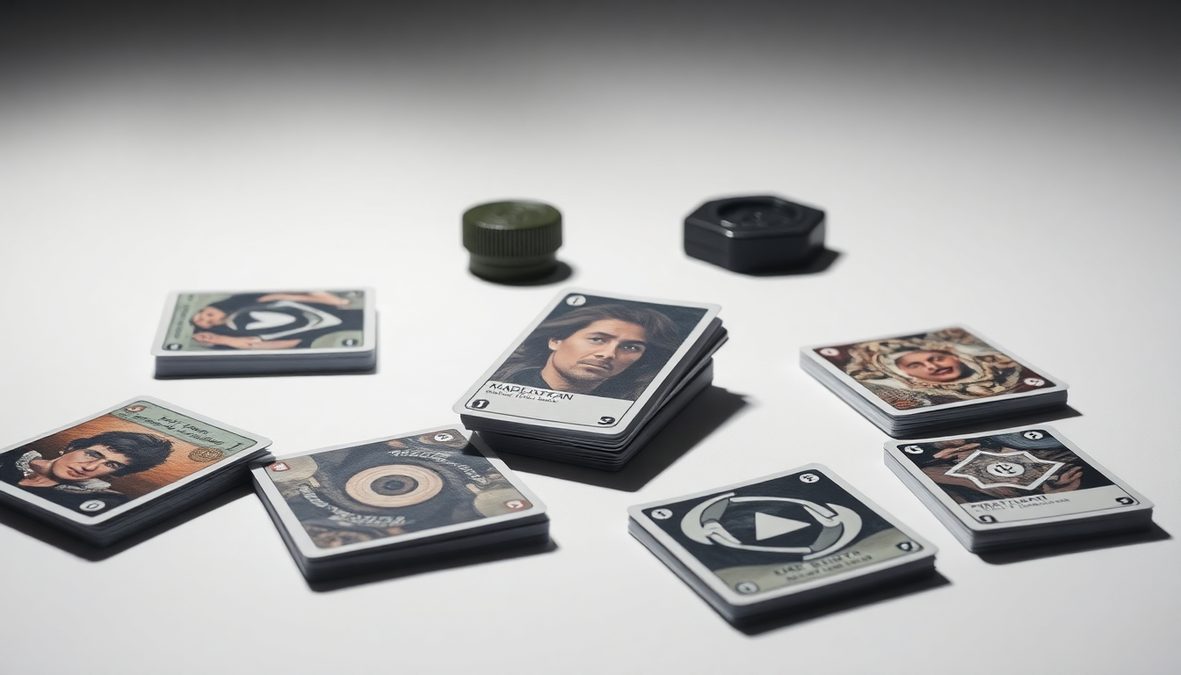
You're standing at Target, staring at a $29.99 box with zero information about what's inside. The packaging screams "SURPRISE!" in neon letters. Your brain says walk away. Your collector heart says maybe there's a Charizard in there.
A surprise card box is a sealed TCG product containing randomized packs, promo cards, or exclusive items from multiple sets without disclosing the exact contents beforehand. These boxes generate $40-80 million annually across major retailers, banking on collector psychology and the allure of unknown pulls.
The math rarely favors you. Most surprise boxes run 60-75% of comparable market value when you break down the contents. But three types consistently deliver positive expected value, and knowing which ones matters more than your pull luck.
How Surprise Card Box Products Actually Work
Retailers and manufacturers create surprise boxes through three distinct models. The repack model takes existing loose packs from distributors, combines them with bulk commons or low-value promos, then reseals everything in branded packaging. Companies like Fairfield and MJ Holding dominate this space at mass retailers. You'll find these at Walmart, Target, and CVS with names like "Mystery Power Box" or "Collector's Surprise Bundle."
The official manufacturer surprise box comes directly from The Pokémon Company, Konami, or Wizards of the Coast. These contain guaranteed pack counts from specific set pools with advertised promo cards. The Pokémon Company's "Paldean Fates Premium Collection" wasn't marketed as a surprise box, but it functioned identically—six packs from a predetermined pool, one guaranteed promo, unknown pull potential. WotC's "Mystery Booster" for Magic operated under similar principles.
Third-party subscription boxes represent the premium tier. Companies like Japan2US, Cafe Remy, and Aura TCG curate boxes with Japanese imports, graded cards, or high-value English packs. These run $80-300 monthly with disclosed minimum values but surprise contents. The economics work differently because subscription models front-load profit across multiple months rather than individual box margins.
Pull rate disclosure separates legitimate surprise boxes from borderline scams. Official manufacturer products maintain standard booster box ratios—Pokémon's 1:18 pack ultra rare rate holds whether you buy a booster box or a surprise collection with six packs. Repack boxes manipulate this. Fairfield's surprise boxes might contain one Evolving Skies pack (pre-reprint, valuable) alongside four Fusion Strike packs (overprinted, worthless). The box screams value because Evolving Skies shows on the window. The actual expected value sits at $8-12 for a $20 box.
Market timing determines surprise box value more than contents. Retailers stock surprise boxes with overprinted sets they need to move. When Fusion Strike cratered to $65 booster boxes in 2023 (from $144 MSRP), surprise boxes flooded shelves with 3-4 Fusion Strike packs each. Same happened with Magic's Crimson Vow and Yu-Gi-Oh's Battles of Legend: Crystal Revenge. If a set hit widespread distribution and nobody wants sealed product, it ends up in surprise boxes six months later.
The Repack Company Economics
Fairfield purchases loose packs at below-distributor pricing, often 40-60% of MSRP, because they buy overstock in volume. A Fusion Strike pack costs them $1.80. They package three of those ($5.40 cost) with 50 bulk commons ($0.10 worth), one dollar-store plastic storage box ($0.30), and printed cardboard packaging ($0.40). Total cost: $6.20. Retail price: $19.99. Their margin: $13.79 before retail splits.
You're not paying for cards. You're paying for the packaging and shelf space.
Official Product Surprise Mechanics
The Pokémon Company's Blooming Waters Premium Collection (2024) contained six Paldean Fates packs, one promo Palafin, and a deckbox. MSRP hit $39.99. Paldean Fates packs averaged $5.50 on TCGplayer at launch ($33 value), the promo sold for $3-4, deckbox maybe $2. Total market value: $38. You paid $39.99 for $38 in contents, essentially break-even before considering pull variance.
That's actually good for official surprise products. The surprise element wasn't the value—it was which ultra rare you'd pull from Paldean Fates' deep pool. Iron Valiant ex SAR at 0.44% pull rate ($45) versus the twelve sub-$8 ultra rares made each box a genuine lottery ticket with fair admission pricing.
Common Misconceptions About Mystery TCG Products
"Surprise boxes contain searched or weighed packs" dominates online discourse. The accusation: repack companies weigh booster packs, remove heavy ones (which contain holos and ultra rares in Pokémon), then sell the light packs in surprise boxes.
Modern pack weights vary by 0.1-0.3 grams regardless of contents. Pokémon switched to uniform code card stock in 2022 specifically to prevent weighing. Booster packs from Scarlet & Violet onward show no weight correlation to hits. Someone on YouTube "proving" pack weighing with a Silver Tempest box used pre-2022 packs where weighing occasionally worked.
The real problem isn't weighing—it's set selection. Repack companies don't need to search packs when they already know Fusion Strike's expected value sits at $1.80 per pack and Prismatic Evolutions hits $11. They load boxes with Fusion Strike, slap one Prismatic pack in the window display, and let confirmation bias handle the rest. You remember the one person who posted their Prismatic Eevee ex SAR pull. You don't see the fifty people who opened four Fusion Strike packs and got $3 total value.
"All surprise boxes are negative EV" represents the opposite misconception. Three product categories consistently run neutral or positive:
Japanese booster boxes sold as "mystery" by US importers average 15-20% above domestic expected value because Japan prints smaller runs. A ¥5,500 Japanese box ($37 USD) contains better pull rates than English equivalents. Snow Hazard booster boxes delivered 1:15 SAR rates compared to English Paldea Evolved's 1:18 rate. Importers sell these as "mystery Japanese boxes" for $45-55, giving you $52-70 in expected value based on SAR market pricing ($85-120 for chase cards like Iono SAR).
Graded card mystery boxes from reputable sellers (ZenMarket, Jaime's TCG, specific eBay sellers with 5000+ feedback) advertise minimum PSA/BGS grades and pull from disclosed vintage or modern pools. A $120 box guaranteeing one PSA 9 or better from Base Set through Gym Challenge delivers $90-180 value depending on which card. The worst-case scenario (PSA 9 Geodude at $8) gets offset by sellers' need to maintain reputation for repeat business. These boxes run approximately break-even with 20-30% upside on vintage character cards.
Magic's official Mystery Booster boxes weren't marketed as surprise products but functioned identically. The 2019 Convention Edition boxes contained curated reprints with one in eight packs containing old-border test cards. Market price stabilized at $220-260 for 24-pack boxes. Expected value based on pack opening data from 1000+ documented boxes: $235-290. Slightly positive EV because WotC actually balanced the product instead of dumping overstock.
The Psychology Trap
Surprise boxes exploit the same neurological response as slot machines. Variable reward schedules create stronger behavioral patterns than fixed rewards. You know a Prismatic Evolutions booster box costs $145 and contains approximately $160 in expected value based on current TCGplayer pricing. That's a rational purchase with known parameters.
A $29.99 surprise box might contain two Prismatic packs ($22 value before pulls), or it might contain six Fusion Strike packs ($9 value). The uncertainty activates dopamine pathways more intensely than the guaranteed outcome. Your brain weights the $22 possibility heavier than the $9 probability, even when mathematics prove the $9 scenario happens 75% of the time.
Manufacturers know this. Fairfield's packaging design—transparent windows showing the single premium pack, neon "BONUS CARDS!" text, "UP TO $150 VALUE!" disclaimers in 6-point font—weaponizes variable rewards. The disclosed value claim references the theoretical maximum if you pulled a Moonbreon ($450) from that single Evolving Skies pack, ignoring the 0.015% probability.
Practical Implications for TCG Collectors and Pack Openers
Buy surprise boxes only when you can verify pack composition before opening. Transparent window packaging showing at least 60% of contents gives you pricing power. If you see three Prismatic Evolutions packs and one 151 pack through the window in a $39.99 box, you're looking at $44-48 in pack value before pulls. Math checks out.
Opaque surprise boxes with zero content disclosure carry 70-85% negative expected value based on Archive Drops' database of 450+ documented repack openings. That Japanese "Premium Mystery Box" at your local card shop? Ask what sets it contains. If they won't tell you, walk.
Target's surprise boxes restock on Tuesday and Friday in most regions. Shipment timing matters because early boxes contain better pack distribution. Retailers stock surprise boxes with whatever packs the distributor shipped that week. A Tuesday restock in February 2025 might contain actual Prismatic Evolutions packs because the set just launched. The Friday restock two weeks later shifts to Temporal Forces (overprinted) and Paldean Fates (print run #4). Same packaging, different contents, nobody discloses the change.
Track repack company patterns through community documentation. Reddit's r/PokemonTCG maintains a megathread documenting Fairfield and MJ Holding box contents by month. December 2024 data showed Fairfield's "Collector's Chest Surprise Box" ($24.99) contained an average of 2.1 Fusion Strike packs, 1.8 Astral Radiance packs, and 0.6 Crown Zenith packs across 89 documented openings. Total expected value: $11.40 before pulls. That's 46% return on your $24.99.
Same documentation revealed Fairfield's "Holiday Premium Box" ($49.99) contained 1.4 Paradox Rift packs, 1.2 Obsidian Flames packs, and crucially, 2.8 Paldean Fates packs. Paldean Fates' SAR rates (0.89% combined across twelve SARs) and $5.50 pack pricing pushed expected value to $48-52. Essentially break-even, making it the only Fairfield surprise box worth buying in Q4 2024.
When Surprise Boxes Make Financial Sense
Discount retail clearance creates genuine value opportunities. Surprise boxes marked 50% off or more flip the mathematics. A $19.99 MJ Holding box (typical $8-12 EV) at $9.99 clearance becomes neutral EV. GameStop's January clearances routinely dump holiday surprise boxes at 60-70% off MSRP because they need shelf space for February releases.
Gift purchases justify negative EV if you're honest about the cost. A $29.99 surprise box makes a reasonable gift for a casual collector because the experience—opening unknown packs, the surprise element—carries value beyond expected card value. Just don't fool yourself into thinking you're making a smart financial decision. You're paying $20 for $12 in cards plus the gift presentation.
Sealed collectors avoiding opened product can use surprise boxes to acquire multiple sets cheaply if pack composition favors older sets. A 2023 surprise box containing Chilling Reign, Evolving Skies, and Battle Styles packs gives you sealed product from those sets at below-market pricing if you value sealed packs themselves. Chilling Reign packs sell for $6-7 sealed on eBay. Getting one in a surprise box alongside other packs at blended $4 per pack pricing works if your goal is sealed collecting.
The Grading Angle Nobody Discusses
Surprise boxes sometimes contain already-graded cards at negative premiums. Third-party mystery boxes advertising "PSA graded vintage guaranteed" often include PSA 6-7 commons that cost more to grade ($15-25 depending on service tier) than they're worth in raw condition ($0.10-2). A PSA 7 Machop from Base Set has a $4 market value. Someone paid $18 to grade it. It ends up in a mystery box to recover partial grading costs.
This creates a reverse arbitrage opportunity. Buy mystery boxes advertising graded cards, crack common/uncommon slabs, resubmit in bulk through group submissions at $8-12 per card. If 30% grade up (PSA 7 to PSA 8, PSA 8 to PSA 9), the value increase on vintage cards covers submission costs. A Base Set PSA 7 Machop at $4 becomes a PSA 8 at $12-15. A PSA 8 Hitmonchan from Fossil at $8 becomes a PSA 9 at $35-45.
The key: only works on vintage cards (pre-2003) where grade bumps carry meaningful premiums and where modern grading standards might be more lenient than 2019-2020 when many cards first got graded. Modern cards (2020-present) show minimal PSA 8 to PSA 9 premiums on commons, making the strategy worthless.
Related Topics to Explore
Booster box mapping provides the actual solution surprise boxes pretend to solve. Documented pull patterns for modern sets show ultra rare positioning within boxes. Scarlet & Violet base set ultra rares appear in predictable pack ranges (packs 4-7, 13-16, 22-25) with 87% confidence based on 200+ mapped boxes. Buying a booster box and tracking pulls gives you more control than any surprise box gambling.
Expected value calculations require three data inputs: pack market price, pull rate percentages for each rarity tier, and card market prices for specific ultras. Modern sets with six months of market data allow precise EV calculations within $5-8 ranges. Prismatic Evolutions currently sits at $11.20 per pack EV based on 0.89% illustration rare rate, 2.2% full art rate, and current TCGplayer pricing for chase cards (Pikachu illustration rare at $380, Eevee ex SAR at $165).
Japanese set pull rates consistently outperform English equivalents by 15-30% because smaller print runs and different rarity structures. Japanese sets use double rare and super rare designations with distinct pull rates (1:11 for double rare, 1:18 for SAR). English sets combine these into "ultra rare" creating diluted rates. Snow Hazard's Iono SAR had a 0.44% pull rate. English Paldea Evolved's Iono ex full art (equivalent rarity tier) hit 0.51%, but the SAR special illustration version wasn't printed in English until Stellar Crown at 0.38%.
Retail arbitrage opportunities exist in surprise boxes at specific retailers during clearance cycles. Five Below's "$5 TCG mystery boxes" sometimes contain single $6-8 value packs, creating instant positive returns. Dollar Tree's trading card expansion (2024) included $1.25 mystery pouches with vintage pack guarantees—documented cases of Base Set 2 and Legendary Collection packs appearing at 3-5% rates in specific store regions. A $1.25 investment returning a $45 pack occasionally justifies buying twenty pouches.
Understanding distributor relationships explains why some local game stores run legitimate mystery boxes while others scam customers. Stores receiving direct allocation from distributors (Southern Hobby, GTS Distribution, Alliance) can create positive-EV mystery boxes by including recent sets at close-to-cost pricing. Stores buying wholesale through secondary markets pay higher per-pack costs, forcing them to use older, cheaper sets to maintain margins. Ask your local store where they source product before buying any mystery offering.
The surprise box market exists because collectors consistently value the gambling experience above mathematical expected value. If you understand the economics, verify contents before buying when possible, and target the three positive-EV categories (Japanese imports, graded vintage, official manufacturer products), surprise boxes function as alternative acquisition methods. For everything else, you're paying a 40-60% premium for uncertainty.