SHOULD YOU ACTUALLY BUY AN MTG BOOSTER BOX IN 2024?
MTG booster boxes cost $100-$300 but usually have negative EV. Learn which boxes justify the price, when sealed holds value, and why singles beat gambling.
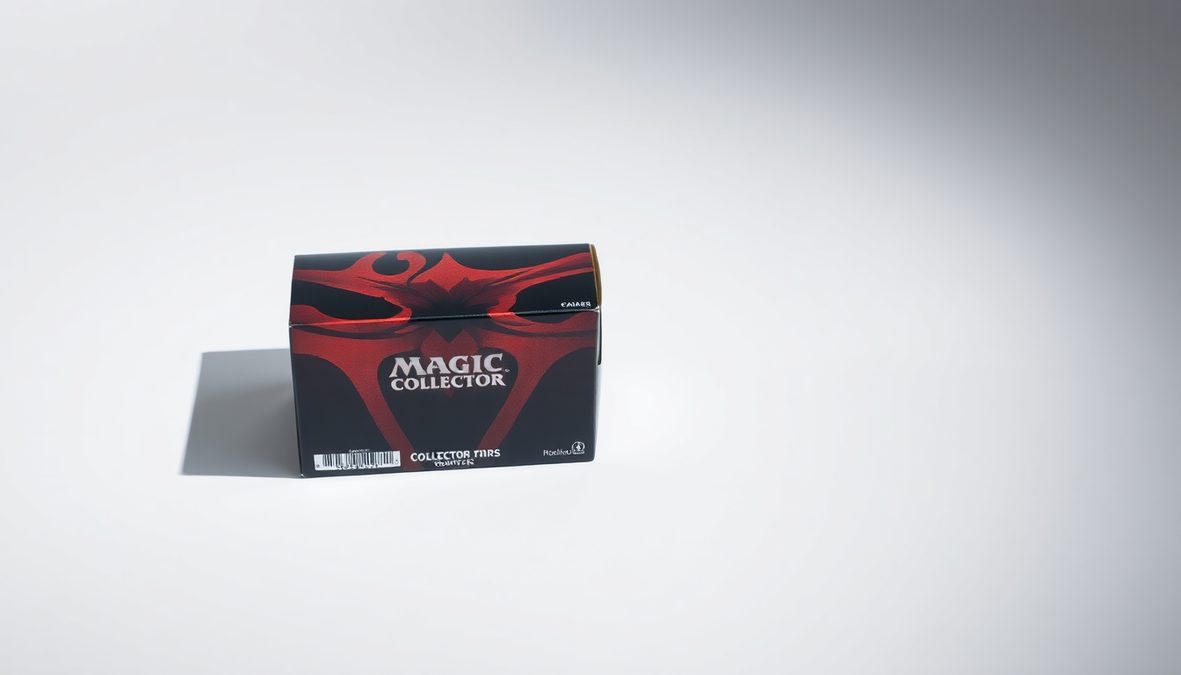
You're staring at a $100–$300 price tag on a Magic: The Gathering booster box and wondering if cracking 36 packs is worth it, or if you're about to subsidize someone else's singles collection. The math rarely works in your favor, but that doesn't tell the whole story.
An MTG booster box contains 36 booster packs from a single set, sold as a sealed product directly from Wizards of the Coast or authorized distributors. Boxes represent the primary way Wizards distributes randomized cards to the market. You're buying lottery tickets, essentially—36 chances at chase mythics, extended art treatments, and the occasional $200+ card that makes up for ten bad boxes.
The dirty secret: most booster boxes lose money when you crack them. Modern Horizons 3 boxes at $280 have an average opening value around $240 based on TCGplayer market prices. Bloomburrow boxes at $95 return roughly $70 in singles value. The house always wins, and the house is Wizards of the Coast.
But raw expected value doesn't account for grading potential, sealed appreciation, or the simple fact that some people enjoy opening packs. The question isn't whether boxes have positive EV—they usually don't. The question is whether the experience, sealed investment potential, or specific set justifies the premium over buying singles.
What Actually Comes in an MTG Booster Box
Standard set booster boxes contain 36 packs with 12–14 cards per pack, depending on the product type. Draft boosters prioritize limited play balance. Set boosters optimize for opening excitement with guaranteed foils and art cards. Collector boosters cram every pack with treatments, foils, and extended art—at $20–$35 per pack.
The rarity distribution matters more than pack count. A standard draft booster box guarantees roughly 4–5 mythic rares and 2–3 special treatments (borderless, extended art, showcase frames). Set boosters bump this to 5–6 mythics plus a guaranteed foil in every pack. Collector boosters deliver 3–5 rares or mythics per pack but cost 4–6× more than draft boxes.
Modern Horizons 3 collector boxes at $320–$380 contain 12 packs with potential hits like Flare of Denial (borderless foil, $120), Ugin's Labyrinth (serialized versions $2,000+), and Ajani Nacatl Paragon (extended art foil, $45). You're paying for density of high-end cards, not quantity of packs.
Commander Masters draft boxes at $160 delivered different math entirely—20 packs instead of 36, with double the rares per pack. Each pack contained two legends and borderless treatments showed up in 33% of packs. That box had positive expected value at release ($180 average opening) because Wizards overestimated demand and underprinted chase mythics like Jeweled Lotus (borderless, $100 at the time).
Draft vs. Set vs. Collector Booster Boxes
Draft booster boxes run $90–$120 for standard sets. You're buying for limited play or baseline pack cracking. The expected value sits 20–30% below box price for most sets released in the past two years. Wilds of Eldraine draft boxes at $95 average around $68 in opened value—you lose $27 per box on pure singles arbitrage.
Set booster boxes cost $100–$140 and target collectors who don't draft. Every pack includes an art card, guaranteed foil, and a "the list" reprint slot that occasionally drops a $20–$100 card from Magic's history. The list cards appear in 25% of set booster packs. Lost Caverns of Ixalan set boxes delivered slightly better value than draft boxes because of higher borderless hit rates (Extended art Cavern of Souls at $85, Treasure Map showcase at $12).
Collector booster boxes represent pure gambling at $200–$400 per box. Murders at Karlov Manor collector boxes at $220 contained serialized Avacyn's Memorial (500 serialized copies, #001 sold for $8,000), but the median box opened $160 in value. You're either hitting the serialized lottery or subsidizing the person who does.
The bizarre exception: some older collector boxes from 2020–2021 now sell for less than their EV because Wizards printed them into oblivion. Zendikar Rising collector boxes at $185 still contain $200+ in expected value three years later because the set has multiple eternal format staples.
Sealed Box Investment vs. Opening for Value
Sealed boxes appreciate when sets go out of print and contain format staples. Modern Horizons 1 draft boxes sold for $220 in 2019 and now trade at $450–$500 because the set includes Wrenn and Six ($75), Force of Negation ($50), and Urza Lord High Artificer ($30). The entire set feeds Modern and Commander demand.
But most boxes don't double. Dominaria United boxes at $100 eighteen months ago still sell for $95 because the set is fine but not essential. March of the Machine boxes dropped from $110 to $80 because the set flopped competitively despite solid legendary creatures for Commander.
The sealed investment thesis requires patience and storage space. You're betting that format staples age well and Wizards doesn't reprint chase cards into the ground. Core Set 2021 boxes tanked when Wizards reprinted Ugin the Spirit Dragon and Grim Tutor in subsequent products.
Real sealed investors target boxes with unique mechanics unlikely to be reprinted. Mystery Booster boxes at $180 contain cards from across Magic's history with special playtest cards that can't be reprinted due to IP issues. Those boxes hold value because the product was a one-time print run.
Breaking Down MTG Booster Box Expected Value
Expected value calculations aggregate every card's market price, weight by pull rate, then multiply by packs per box. A draft booster box with 4.5 mythics on average needs those mythics to average $30+ each just to break even on a $120 box price—and that's before factoring in the 90% of rares worth $0.50–$2.
Modern Horizons 3 draft boxes illustrate the variance problem. The set contains 78 mythics and rares in the main set. Flare of Denial sits at $28. Guide of Souls hovers around $22. Phlage Titan of Fire's Fury trades at $18. Those three cards represent maybe 8% of your rare/mythic slots. The other 92% includes cards like Amphibian Downpour ($0.35) and Wumpus Aberration ($0.40).
You need to hit multiple chase cards to profit. One Ugin's Labyrinth (regular, $40) doesn't offset 35 packs of bulk when the box cost $280. The median box—meaning half of all boxes opened—returns $220–$240. The mean (average) sits higher around $260 because the top 5% of boxes with multiple $50+ pulls skew the average upward.
Why Singles Arbitrage Usually Fails
TCGplayer market prices assume you can sell cards instantly at those values. You can't. Buylist prices from Card Kingdom or TCG Direct run 40–60% of market value for most rares. That $28 Flare of Denial buylists for $16. Your $240 expected value box drops to $140 in actual cash when you sell to vendors.
Selling on eBay or TCGplayer as an individual means 12.5% platform fees, shipping costs, and dealing with buyers who claim cards arrived damaged. Your margins evaporate fast. Professional box breakers operate on volume and direct sales through Discord servers or Whatnot streams—they're not competing with retail TCGplayer prices.
The only time singles arbitrage makes sense: you crack boxes of newly released sets during the first 72 hours when prices are inflated 2–3× sustainable levels. Wilds of Eldraine presale weekend saw Beseech the Mirror at $45 before settling at $12 two weeks later. Early breakers cashed out at peak hype.
The Grading Gamble on Booster Box Pulls
Pack-fresh mythics with perfect centering can grade PSA 10 or BGS 9.5, turning a $30 card into a $120+ graded slab. Modern Horizons 3 Flare of Denial in PSA 10 borderless foil sells for $280–$320 versus $90 raw. But grading costs $25–$100 per card depending on service tier and turnaround time.
You're paying to certify quality on cards that might not grade well. Modern print quality has declined—centering issues, print lines, and foil warping plague recent sets. Your pack-fresh Ugin's Labyrinth might grade PSA 9 instead of 10, meaning you paid $40 grading fees to add $15 value to a $40 card.
The grading premium only makes sense on cards with established collector demand and significant PSA 10 multipliers. Old-border foils, serialized cards, and iconic characters (Planeswalkers, Dragons, fan-favorite legends) command 3–5× multipliers in PSA 10. Random mythics from recent sets barely move in value when graded.
Serialized cards bypass this calculation entirely. A serialized card is already a one-of-500 or one-of-100 collectible. Murders at Karlov Manor serialized Avacyn's Memorial #007 sold for $6,500 raw, $7,200 graded. The $700 premium doesn't justify the grading cost and time for most flippers.
Common Misconceptions About MTG Booster Boxes Debunked
Myth: Boxes are "mapped" and vendors pull the good packs. Modern booster boxes use randomization algorithms that prevent sequential pack mapping. The 2012-era box mapping exploits—where pack positions correlated with rare distributions—were fixed years ago. Your local game store isn't pulling god packs from boxes before selling them.
Card Kingdom and TCG Direct open thousands of boxes weekly to stock singles. They're not cherry-picking your specific box. The variance you experience comes from genuine randomization, not vendor manipulation. Some boxes contain three mythics. Others contain seven. That's how random distributions work across small sample sizes.
Myth: Buying boxes guarantees you're getting "real" packs versus repacks. Resealing happens, but it's rare with modern tamper-evident shrinkwrap and Wizards' authentication features. The bigger risk: buying "loose" packs sold individually, which could be weighed or searched using light tests to identify foil patterns.
Booster boxes from authorized distributors (not Amazon third-party sellers, not eBay random sellers) come factory sealed with Wizards' shrinkwrap. Check for even wrapping, authentic Wizards logos on the box, and buy from stores with reputations. A reputable LGS or major online retailer (Card Kingdom, TCGplayer Direct, Miniature Market) isn't risking their business license to scam you on one box.
Myth: Collector boxes always have better value than draft boxes. Collector booster expected value sits at 60–70% of box price for most standard sets. Murders at Karlov Manor collector boxes at $220 average $160 opened. Wilds of Eldraine collector boxes at $200 average $145 opened. You're paying extra for guaranteed premium treatments, not better return on investment.
The only sets where collector boxes approach break-even: specialty releases like Modern Horizons or Masters sets where every rare has eternal format applications. Modern Horizons 3 collector boxes at $320 average $290–$310 in value because even the "bad" mythics see fringe Commander play.
Myth: You should always wait for boxes to go on sale. Prices drop when sets are dogs. Phyrexia All Will Be One boxes fell from $110 to $75 six months post-release because the set was terrible for constructed formats. You're not getting a deal—you're buying into a set with permanently suppressed demand.
Conversely, boxes that hold price or increase (Modern Horizons 3 at $280 three months later, Lost Caverns of Ixalan at $105 vs. $95 at release) signal genuine demand. Waiting for a sale on those boxes means missing your entry point entirely.
When an MTG Booster Box Actually Makes Sense
Buy boxes when you're drafting with friends and splitting the cost 8 ways. A $120 draft box costs $15 per person for three hours of entertainment. That's the actual use case for draft boosters—limited play, not cracking for value.
Buy collector boxes when you're chasing specific high-end treatments and enjoy the gambling aspect. Modern Horizons 3 collector boxes for $320 give you 12 shots at serialized Ugin's Labyrinth or borderless foil Flare of Denial. You'll probably lose money, but you're paying for entertainment value, not arbitrage.
Buy sealed boxes as speculation only if you're comfortable holding for 3–5 years and can identify genuinely scarce, high-demand sets. Modern Horizons, Masters sets with unique reprints, and specialty products like Mystery Booster have track records of appreciation. Standard sets almost never appreciate faster than inflation.
Skip boxes entirely when you need specific cards. A $120 Bloomburrow box gives you random rares. Spending that $120 on TCGplayer to buy the exact 15 cards you need for your Commander deck gives you what you actually want. Singles are cheaper than gambling unless gambling is the point.
The One Box That Breaks All Rules
Commander Legends collector boxes—not the sequel, the original 2020 release—contained 12 packs with guaranteed foil-etched legends, extended art commanders, and multiple rares per pack. Boxes at $200 averaged $240–$280 in value because Jeweled Lotus ($80 regular, $180 extended art), Mana Drain (etched foil, $120), and Hullbreacher (before the ban, $25) showed up frequently enough to offset the bulk.
Wizards doesn't print products that generous anymore. Commander Legends: Battle for Baldur's Gate collector boxes at $240 averaged $160–$180 because the set was diluted with too many rares and not enough chase mythics. Commander Masters attempted to recreate the formula at $280 for draft boxes with mixed results—initial positive EV crashed as supply flooded the market.
The lesson: unicorn products happen when Wizards miscalculates demand or supply. You can't predict them in advance. Commander Legends looked like a trap at $200 until people realized the hit rate was insane.
Alternatives to Buying Full MTG Booster Boxes
Single booster packs at $4–$5 for draft, $6–$8 for set boosters let you scratch the opening itch without committing to 36 packs of a potentially awful set. The value proposition is even worse (you're paying a per-pack premium), but the financial damage is contained.
Preconstructed Commander decks at $40–$80 deliver guaranteed playable cards and specific strategies. The Blame Game (Bloomburrow Commander deck) includes Flubs the Fool, Omo Queen of Vesuva, and several $5–$10 reprints for $55. That's better value than 8 draft booster packs from the same set.
Box splits with friends on Discord servers or local playgroups share the cost and variance. Eight people each take 4–5 packs from a $120 draft box, paying $15–$18 each. You get the opening experience without the full financial commitment.
Singles buying on TCGplayer or Card Kingdom remains the financially optimal choice. The market has already aggregated the variance of thousands of boxes. You're buying at the median value, not gambling on beating it.
Related Topics Worth Exploring
The sealed box investment market parallels vintage video games or graded comics—condition, scarcity, and nostalgia drive long-term appreciation. Older boxes from Portal Three Kingdoms or original Kamigawa sell for thousands because they're out of print and contain unique cards never reprinted.
Print-to-demand versus limited print runs affect box values. Standard sets get printed for 18–24 months as long as demand exists. Specialty products like Modern Horizons 3 have shorter print windows, creating artificial scarcity that props up sealed box prices.
The evolution of booster products—from simple randomized packs to set boosters, collector boosters, and now "play boosters" combining draft and set booster features—reflects Wizards chasing higher margins. Each product tier targets different customer price sensitivities.
Comparing MTG booster boxes to Pokémon or Yu-Gi-Oh reveals different market dynamics. Pokémon boxes appreciate faster because childhood nostalgia drives adult collectors. Yu-Gi-Oh boxes often have higher hit rates because Konami balances competitive viability differently than Wizards.
You're buying booster boxes for one of three reasons: entertainment, speculation, or misplaced faith in beating the house. Know which one you're actually doing before you spend $300 on 36 packs of cardboard.