SHOULD YOU ACTUALLY BUY A ONE PIECE BOOSTER BOX IN 2024?
One Piece booster boxes explained: pull rates, EV analysis, which sets are worth it, and why singles beat sealed for most collectors.
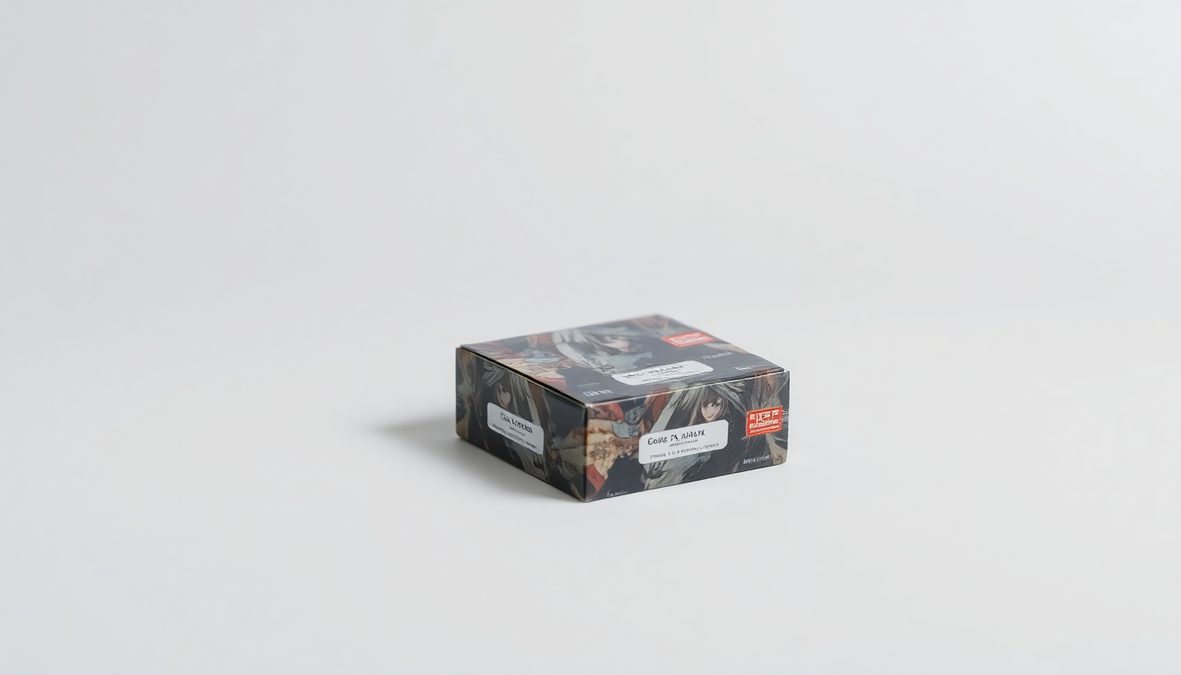
Are you throwing away $100+ on sealed One Piece product when singles would save you money? Let's run the numbers.
A One Piece booster box contains 24 packs with 12 cards per pack (288 cards total). You're guaranteed at least one Leader card per box, and the current pull rate structure sits at roughly 2-3 Super Rares, 4-6 Rares, and if you're lucky, one Secret Rare or Special Rare per box. That's the baseline. Whether that math works in your favor depends entirely on which set you're cracking and what the secondary market looks like when you pull.
Most boxes run $80-120 at launch depending on the set. Romance Dawn boxes hit $95-110 at release. OP-05 (Awakening of the New Era) peaked around $130 before settling. OP-09 (Emperors in the New World) launched at $95-105 and climbed to $140+ within weeks as Luffy Gear 5 Leader hype took over. Right now, boxes from newer sets like OP-10 (Kingdoms of Intrigue) sit around $85-95, while OP-08 (Two Legends) holds steady at $110-125.
The expected value calculation is straightforward but brutal: add up the market prices of every card you could pull, weight them by pull rates, subtract the box cost. Most boxes at launch sit at 70-85% EV. You're paying a 15-30% premium for the gambling experience.
What's Actually Inside a One Piece Booster Box
Each booster box gives you 24 packs. Each pack delivers 12 cards with a fixed rarity structure: 2 Common, 5 Uncommon, 3 Rare, 1 Super Rare or better, and 1 DON!! card. That DON!! card slot is functionally a throw-in for gameplay, not a chase slot.
The "or better" qualifier in that Super Rare slot is where boxes make or break you. Bandai's official pull rates vary by set, but the general structure holds:
Super Rare (SR): ~1 in 8-10 packs
Secret Rare (SEC): ~1 in 35-45 packs
Special Rare (SP): ~1 in 48-60 packs
Manga Rare (Alternate Art): ~1 in 2-3 boxes
You're essentially guaranteed 2-3 Super Rares per box. Secret Rares appear in roughly 50-70% of boxes. Special Rares and Manga Rares are legitimately rare—you might crack three boxes and see one Manga Rare. Or none.
The Leader card guarantee is misunderstood. Every box contains one Leader, but that Leader isn't pulled from your 24 packs. It's a separate slot, typically sitting at the bottom of the box or in a designated wrapper position. You're getting 24 regular packs plus one guaranteed Leader. That Leader could be a $2 bulk common or a $45 meta staple like Enel (OP-05). The guarantee doesn't mean the Leader is good.
Pull Rate Reality Check
Bandai doesn't publish exact pull rates like Pokémon does for English sets. The rates above come from aggregate community data across thousands of box openings tracked on Japanese forums and TCGplayer mass-break streams. Japanese boxes show slightly different rates—OP-01 Japanese boxes had noticeably better hit rates than English Romance Dawn, which created early market distrust.
The pull rate structure also creates a trap: you can absolutely pull zero Secret Rares or Special Rares from a box. It's uncommon but happens in roughly 30-40% of boxes depending on the set. That $110 OP-05 box can easily yield three $8 Super Rares, a $3 Leader, and bulk. You just lost $70.
One Piece Booster Box Expected Value by Set
EV shifts weekly as meta changes and supply floods in. Here's where major sets stood as of late 2024:
OP-05 (Awakening of the New Era) boxes at $125-135 carried an EV around $95-110. The set's loaded with playable Luffys and the Secret Rare Luffy (parallel) held $180-220 for months. Enel Leader stayed at $40-50. Even mid-tier pulls like Sanji SR ($12-15) and Rebecca SR ($8-10) added up. This is one of the few sets where buying sealed made some sense if you planned to keep or play the cards.
OP-09 (Emperors in the New World) boxes spiked to $140-155 within three weeks of release. EV sat around $100-115. The Luffy Gear 5 Leader drove that premium—it hit $90-110 before settling around $65-75. Shanks Secret Rare parallel sat at $200-250. Problem: those two cards represented 70% of the box value. Pull anything else and you're underwater. A box with Crocodile Leader ($8) and Bonney SR ($10) as your hits means you paid $140 for $40 of cards.
OP-08 (Two Legends) boxes at $110-125 show EV around $85-95. Gecko Moria Leader stabilized at $35-40. The big chase was Uta Secret Rare at $150-180, but at roughly 1 in 40 packs, you're opening 1.6+ boxes on average to see her. Most boxes yield 2-3 Super Rares at $6-12 each. You're burning money unless you hit film cards.
Romance Dawn (OP-01) English boxes currently run $150-180 on the secondary market despite terrible EV. Sealed product dried up, creating artificial scarcity. The actual card values don't support the box price—Zoro Secret Rare sits at $120-140, but appears in maybe 1 in 50 packs. You'd spend $500+ cracking boxes to pull it. Just buy the single at $130.
OP-10 (Kingdoms of Intrigue) launched at $85-95 with EV around $65-75. The set lacks chase cards above $100. Kaido Leader holds $30-35. Doflamingo Secret Rare sits at $80-90. That's it. This is a singles set—buy the 3-4 cards you need for $40 total instead of gambling $90 on a box.
Case Breaks vs Single Boxes
A case contains 12 boxes. Case pull rates supposedly guarantee certain hits—the community wisdom suggests 1 Special Rare per case, 3-4 Secret Rares, and 5-6 Manga Rares. That's averaged data, not confirmed Bandai ratios.
Buying a case at $1,000-1,200 doesn't improve your odds per pack. You're just getting 12 separate randomized boxes. The "case hit" concept is a gambler's fallacy. Each box pulls independently. You could theoretically get 12 boxes with zero Special Rares (astronomically unlikely but mathematically possible) or 3 Special Rares (more likely than you'd think).
Cases make sense only if you're a store doing breaks or a content creator who can monetize the content. Individual collectors buying cases are lighting money on fire.
Common Misconceptions About One Piece Booster Boxes
"Boxes are guaranteed profit if you sell the hits immediately"
No. The market moves faster than you can list cards. OP-09 Luffy Gear 5 Leader sold for $110-120 in week one, dropped to $85-95 by week two, and settled at $65-75 by week four. Pull it on day three, list it on day four, and you're competing with 50 other sellers racing to the bottom. By the time your listing sells, the price dropped 20%.
TCGplayer seller fees eat 10.25% plus $0.30 per transaction. eBay takes 12.9% plus $0.30. Shipping costs $1.50-4.00 depending on method. You need 15-20% margin above current market just to break even after fees. That $100 Secret Rare nets you $85 after fees and shipping. If you paid $110 for the box and that's your only hit, you're down $25 minimum.
"Japanese boxes have better pull rates"
They did for OP-01. Japanese Romance Dawn boxes showed higher Secret Rare rates than English release—community data suggested 1 in 28-32 packs vs English 1 in 40-45 packs. Bandai never confirmed this, but the gap was obvious.
That gap closed by OP-03. Current sets (OP-08 onward) show nearly identical pull rates between Japanese and English boxes according to aggregate tracking data. You're paying $15-25 more for Japanese boxes to get cards with Japanese text that sell for less in Western markets. Only justifiable if you're a completionist who wants both languages or you're buying singles where Japanese versions are cheaper.
"Waiting for reprint waves gives you better boxes"
Reprint boxes pull from the same card sheets as first-print boxes. The pull rates don't change. What changes is market price—by the time a set gets reprinted 4-6 months later, card values dropped 30-50%. That OP-05 box that was $130 at launch and held $100 EV? The reprint wave at $95 carries $60-70 EV because Enel Leader dropped to $25 and most Super Rares fell to $5-8.
Reprints are good for players who need specific singles cheap. Terrible for pack openers chasing value.
Practical Implications for Collectors and Pack Openers
Buy sealed One Piece product only if you fit one of these profiles:
You're playing in tournaments and need draft practice. Draft boxes (not the same as booster boxes) at $45-55 give you playable cards and draft experience. Booster boxes don't draft well—the rarity structure isn't balanced for sealed play.
You're holding sealed product as a long-term spec. OP-01 Romance Dawn boxes doubled in price over 18 months. OP-05 boxes appreciated 30% in 12 months. This requires storage space, assumes the game grows, and ties up capital for years. You'd make better returns in index funds. The only argument for sealed spec is if you genuinely believe One Piece TCG becomes the next big three (MTG/Pokémon/Yu-Gi-Oh) and sealed product from early sets becomes collectible. That's a big if.
You value the opening experience above financial return. Some people enjoy cracking packs. Fine. But acknowledge you're paying $30-40 for entertainment, not investing. That's the true cost per box after accounting for negative EV.
For everyone else: buy singles. The math is unforgiving.
Let's say you need Luffy Gear 5 Leader ($70), Shanks SR ($15), and Gecko Moria SR ($12). That's $97 in singles. An OP-09 box costs $140. You'd need to pull all three cards AND sell the remaining hits for $43+ profit to break even. The odds of pulling those specific three cards from one box sit around 3-4%. You'd spend $500+ on boxes to get $97 worth of cards you wanted.
When Boxes Actually Make Sense
New set launch day if you're flipping immediately. Buy boxes at $90-100, open on stream or in-store, sell hits within 48 hours at peak hype prices, and you might hit 95-105% return. This requires speed, existing buyer networks, and accepting that 40% of your boxes will still lose money.
Store owners doing breaks can charge $6-8 per pack when box cost is $100 (24 packs × $7 = $168 revenue vs $100 cost = $68 gross profit). The breaker makes money, participants gamble on getting the $150 Secret Rare. Participating in breaks as a buyer is negative EV—you're paying 40-60% above pack cost for the convenience of gambling on one pack instead of buying a full box.
Mystery box promotions where stores bundle dead stock at deep discounts. Saw OP-03 and OP-04 boxes bundled at $65 each when they normally sit at $85-90. That's the only time older boxes make financial sense—when sellers are dumping inventory below market.
Related Topics to Explore
Grading One Piece Cards: Does PSA make sense for One Piece yet? Short answer: not really. PSA 10 populations are low, but premiums are tiny. A raw OP-05 Luffy Secret Rare at $200 becomes $280-320 in PSA 10. After $40 grading cost, $20 shipping both ways, and 4-month wait, you're up maybe $20-40. Only worthwhile for true gems like Manga Rare Luffy (OP-01) where PSA 10 brings 3-4x multipliers.
Japanese vs English Set Differences: OP-01 Japanese had Treasure Rare variants that didn't exist in English. OP-06 added Don!! cards with special artwork in Japanese only. Most sets now have parity, but early sets show significant content differences that affect long-term collectibility.
Storage and Preservation: One Piece uses different card stock than Pokémon or Magic. The borders show edge wear faster, and the foiling scratches easier. Pulled a $150 Secret Rare? Sleeve it immediately—a tiny nick drops it to LP condition and cuts value 30-40%. Use perfect fit inners plus standard sleeves for anything above $50.
Booster boxes gamble against math. The house (Bandai) always wins on average. You can absolutely hit a $250 Special Rare from a $100 box and walk away thrilled. You're more likely to pull $60 of cards and lose $40. Decide if that entertainment value justifies the cost. If you're buying boxes expecting to profit, you're already behind.