SEALED POKEMON PRODUCT: THE $47,000 BASE SET BOOSTER BOX THAT EXPLAINS MODERN COLLECTING
Sealed Pokemon product explained: pull rates, EV calculations, print runs, and why most modern sealed boxes don't appreciate. Real numbers, no hype.
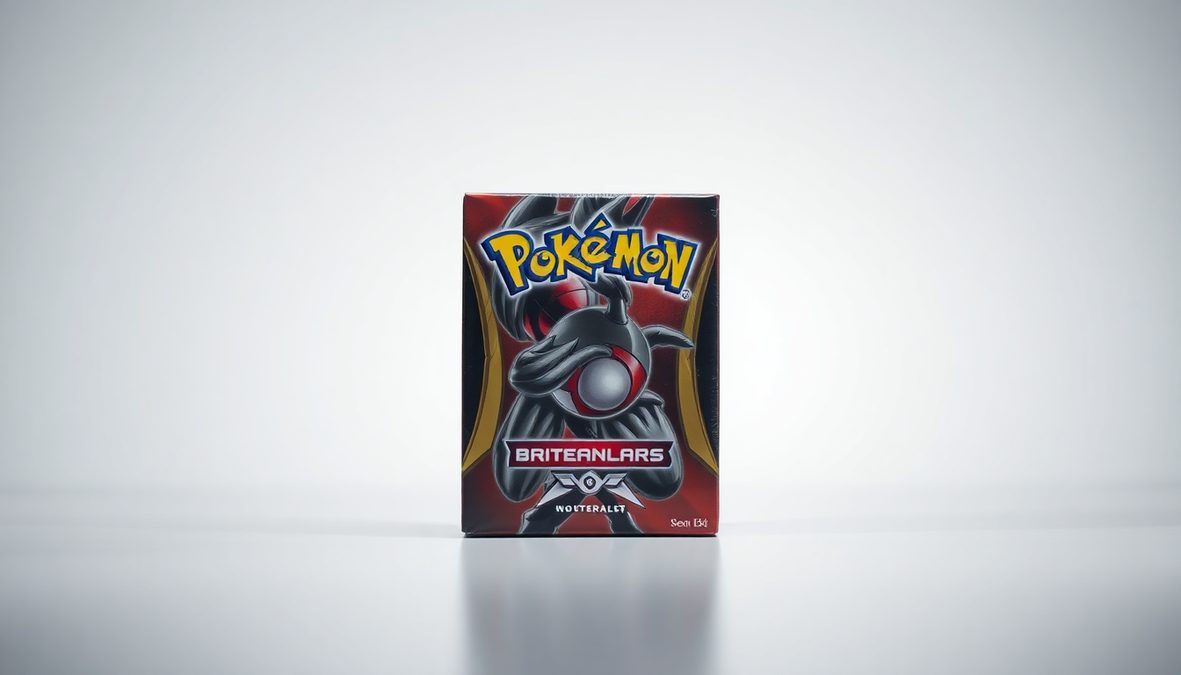
A PSA-graded Base Set 1st Edition booster box sold for $47,520 in February 2024—down 40% from its 2021 peak of $80,000. That price collapse tells you everything about sealed Pokemon product as an investment class: volatile, illiquid, and deeply dependent on speculator sentiment rather than card fundamentals.
Sealed Pokemon product refers to any unopened TCG item still in its original factory packaging: booster boxes, Elite Trainer Boxes, blisters, collection boxes, tins. These items contain randomized packs with unknown contents, distinguishing them from graded singles or opened product. Collectors buy sealed product to open for pulls, hold as sealed investments, or resell based on appreciation. The sealed market operates parallel to singles markets but follows different price mechanics—scarcity of sealed units matters more than individual card values inside.
You're looking at a market segment where a Prismatic Evolutions booster box hit $450 in January 2025 (320% over MSRP), while Modern Horizons 3 Play Boosters sit at $95 (21% below distributor pricing). Understanding sealed product economics matters whether you crack packs or stack boxes.
How Sealed Pokemon Product Works: Distribution to Secondary Market
Pokemon distributes sealed product through three channels: hobby stores (local game shops), mass retail (Target, Walmart, GameStop), and online exclusive releases through Pokemon Center. Each channel receives different allocations and sometimes different products entirely. Pokemon Center exclusives like Ultra-Premium Collections never hit retail shelves. Hobby stores get allocated product based on previous purchase volume and wholesale account standing.
Distributors like Southern Hobby and GTS sell to retailers at wholesale, typically 30-40% below MSRP for standard releases. A $144 MSRP booster box costs retailers $90-100 wholesale. Elite Trainer Boxes with $49.99 MSRP run $30-33 wholesale. These margins explain why retail stores can discount aging product—they still profit at 15-20% below MSRP.
Print runs determine sealed product availability. Pokemon prints in waves: first print runs ship 2-3 months after set launch, second prints follow if demand warrants, third prints are rare. First edition markings disappeared after Base Set, Neo Genesis, and Team Rocket, but English sets still have identifiable print variations through pack weight, box codes, and pull rate differences. Japanese sets maintain edition markings—1st edition, unlimited, and sometimes special editions.
The secondary market kicks in when retail sellout happens. Scalpers buy retail allocations, flippers purchase wholesale, and collectors compete at above-MSRP prices. TCGplayer, eBay, Facebook groups, and dedicated sealed product dealers form this secondary ecosystem. Prices disconnect from MSRP based on expected value (EV) calculations: if the chase cards inside justify the box price, sealed product climbs. When EV drops below sealed pricing, boxes fall.
Reading Box Codes and Print Run Indicators
Pokemon booster boxes carry printed codes on the bottom flap indicating manufacturing date and facility. These codes—like "22B" or "36A"—help identify print runs, though Pokemon doesn't officially confirm the system. First print boxes typically have lower numerical codes and command premiums for sets where pull rates or card versions changed between prints.
Evolving Skies provides the clearest example: first print boxes (codes 19-24) contained the notorious Umbreon VMAX alt art at roughly 1:800 packs based on community data. Later prints may have adjusted rates, though Pokemon never confirms. Collectors pay 10-15% premiums for verified first print Evolving Skies boxes at $180-195 versus $165 for later prints.
Factory Sealing and Resealing Risks
Authentic Pokemon sealed product uses specific shrink wrap thickness, box sealing methods, and pack arrangements. Booster boxes have tight shrink wrap with minimal loose plastic, clean seal lines without bubbling, and packs arranged in consistent patterns (3x4 for most sets, 6x6 for Japanese). Elite Trainer Boxes use factory-cut shrink wrap with flush edges and no tape.
Resealed product plagues the market, especially vintage sealed items. Scammers open boxes, remove hits, replace with bulk packs, and reshrink using heat guns. Red flags include loose shrink wrap, off-center wrapping, tape residue, pack arrangement inconsistencies, and weight discrepancies. A sealed Base Set booster box should weigh exactly 428 grams—5 grams off suggests pack swapping.
Graded sealed product from companies like AFA (Action Figure Authority) eliminates resealing concerns. AFA grades sealed boxes and ETBs based on condition, assigns numerical grades, and encases items in tamper-evident holders. A 9.0 AFA graded Crown Zenith Elite Trainer Box sells for $180 versus $90-100 raw, but you're paying for authenticity guarantee and condition verification.
Common Misconceptions About Sealed Pokemon Product
Misconception 1: Sealed product always appreciates over time. False, and provably so across dozens of modern sets. Chilling Reign booster boxes cost retailers $95 wholesale in June 2021, sold at $130-140 retail through summer 2021, then crashed to $85-90 by November 2024. You lose money holding sealed Chilling Reign for three years. Fusion Strike, Battle Styles, Vivid Voltage, Rebel Clash, Darkness Ablaze—all trade below or near original wholesale three years post-release.
The truth: sealed product appreciates only when demand for sealed units exceeds remaining supply AND the expected value of opening justifies the sealed price. Most modern sets print sufficiently to saturate collector demand. Pokemon printed Fusion Strike so heavily that booster boxes still flood the market at $80-85, barely above wholesale. When your "investment" trades at distributor cost years later, you haven't invested—you've warehoused unsold inventory.
Sets appreciate when pull rates contain cards that maintain value (Moonbreon in Evolving Skies, Giratina V alt in Lost Origin) or when nostalgia demand hits (HGSS-era sealed product climbing in 2023-2024). Crown Zenith boxes demonstrate the pattern: launched at $120 retail December 2022, dropped to $95 by March 2023 (oversupply), recovered to $140-150 by January 2025 (Giratina SAR holding $180-200, Iron Hands ex SAR steady at $140-160).
Misconception 2: Japanese sealed product is safer than English. The opposite often applies for modern releases. Japanese sets print smaller runs with clearer edition markings and more controlled distribution, but English sets benefit from broader global collector bases and higher liquid markets. A sealed Japanese Prismatic Evolutions equivalent (Terastal Fest ex) box runs ¥8,000-9,000 ($52-59 USD), while English Prismatic Evolutions hits $450. Japanese vintage crushes English—a sealed Japanese Base Set box reaches $15,000-18,000 versus $47,000 for English 1st Edition—but modern Japanese sealed faces competition from cheaper singles prices and lower sealed demand.
Japanese collectors crack packs more consistently than Western collectors, reducing sealed box demand. English-market collectors exhibit stronger sealed hoarding behavior, creating artificial scarcity. This cultural difference impacts sealed appreciation rates.
Misconception 3: Graded sealed boxes are always worth the premium. AFA grading costs $80-150 depending on service level and declared value, plus shipping and insurance. You're paying $100+ to grade a $200 booster box. Does the market return that premium?
For modern sealed product (2020-present), rarely. An AFA 9.0 Surging Sparks booster box sells for $140-150 versus $115-120 raw—a $25-30 premium barely covers grading costs. Buyers don't fear resealing on readily available modern sealed product. For vintage sealed (pre-2010), absolutely. An AFA 8.5 Base Set Unlimited booster box commands $8,000-9,000 versus $5,500-6,500 raw, a $2,000-2,500 premium justifying grading expenses. The resealing risk on 25-year-old products demands third-party verification.
Practical Implications for TCG Collectors and Pack Openers
Your decision to buy sealed product versus singles depends entirely on your goal. If you want specific cards, singles beat sealed 95% of the time on pure economics. Prismatic Evolutions demonstrates: you want Pikachu ex SAR ($280), Eevee ex SAR ($220), Umbreon ex SAR ($180). Expected cost opening sealed boxes? Based on observed pull rates of 1 SAR per 2.5 boxes average, you'll spend $1,125 in sealed product ($450 per box × 2.5 boxes) to hit one random SAR. That same $1,125 buys all three chase cards with money left over.
But expected value calculations miss the gambling entertainment value. You pay a premium to experience the dopamine hit of pulling rather than purchasing. Quantifying that entertainment cost matters: if opening sealed product costs you $300 in negative EV to acquire cards you could buy for singles prices, you've paid $300 for the experience. Worth it? Personal choice, but recognize the cost.
Sealed product makes economic sense in specific scenarios:
1. Set completion through sealed opening. Building master sets (every card including reverse holos) favors sealed boxes. Stellar Crown master sets require roughly 8-10 booster boxes at $100 each ($800-1,000) versus $1,100-1,300 buying singles because common/uncommon/trainer bulk only comes efficiently through opening. The crossover point hits when you need 60%+ of the set.
2. Anticipated scarcity plays. Identifying undersupplied products before market recognition generates returns. Pokemon Go ETBs sat at MSRP ($49.99) through late 2022, climbed to $140-150 by mid-2023 as supply dried up and Mewtwo V/Radiant Charizard held value. Early buyers at MSRP tripled money in 9 months. Scarlet & Violet base ETBs followed similar patterns: available at $42-45 in April 2023, now $75-80 (Pokemon ex cards maintaining better value than anticipated).
3. Long-term vintage holds (10+ years). XY-era sealed product (2013-2016) spent 5-6 years underwater, trading at or below original wholesale. BREAKthrough, BREAKpoint, Fates Collide boxes sat at $75-80 from 2016-2021. Suddenly in 2022-2023, nostalgia demand kicked in: those same boxes hit $180-220. Eight-year holds returned 180-220% gains. Patient capital wins with sealed vintage—but you're illiquid for years.
Calculating Expected Value on Sealed Product
Expected value (EV) equals the average value of cards you'll pull from a sealed product, calculated by multiplying each possible pull by its probability and summing results. Take Prismatic Evolutions booster boxes at $450 with 36 packs:
6-8 regular ex cards per box at $4-12 each: ~$50
1-2 special illustration rares (SIR) at $15-60 each: ~$40
1 hyper rare every 1.5 boxes at $60-120: ~$55
1 SAR every 2.5 boxes at $180-350: ~$90
Regular holos, reverses, trainers: ~$15
Total EV: approximately $250 per box. You're paying $450 for $250 in expected card value—negative $200 EV per box. This gap represents the entertainment premium, sealed scarcity premium, and the small chance you hit multiple SARs or high-end pulls that exceed average.
Contrast with Surging Sparks at $115-120 per box:
5-7 regular ex cards: ~$30
1-2 illustration rares: ~$25
1 hyper rare per box: ~$25
1 SAR every 3 boxes: ~$35
Bulk: ~$10
Total EV: approximately $125. You're paying $115-120 for $125 in expected value—slightly positive EV. Surging Sparks boxes at current pricing offer reasonable opening economics, though individual variance means many boxes pull under EV.
Sealed Storage and Preservation
Sealed product degrades without proper storage. Humid environments cause shrink wrap adhesion to cardboard boxes, creating permanent "shrink wrap staining" that reduces value 15-30% on vintage sealed. Temperature fluctuations cause box warping. Light exposure fades box art. Professional sealed collectors use climate-controlled storage (65-70°F, 40-50% humidity), UV-protective shelving, and avoid stacking heavy items on boxes.
For long-term sealed holds (5+ years), consider these preservation steps:
Store boxes upright, not stacked, preventing crushing
Use silica gel packets in storage bins to control humidity
Photograph box codes and factory sealing for future authentication
Keep original distributor receipts proving purchase provenance
Consider mylar wrapping for additional protection (controversial—some collectors view additional wrapping as suspicious)
A properly stored 10-year-old booster box looks factory fresh. Poor storage turns that same box into a damaged product selling 30-40% below market.
Related Sealed Product Topics to Explore
Vintage Sealed Pokemon Product: Pre-2010 sealed items follow entirely different economics. Unlimited Base Set, Jungle, Fossil blister packs run $800-1,200 each (not per box—per single pack). Sealed Team Rocket 1st Edition boxes hit $25,000-30,000. Supply scarcity drives these markets; almost no sealed product survived 20+ years unopened. Resealing risks peak with vintage items—only buy graded vintage sealed or from verified sources with provenance documentation.
Pokemon Center Exclusive Products: Ultra-Premium Collections, special ETBs, and Pokemon Center-exclusive boxes create artificial scarcity through limited distribution. The Crown Zenith Pokemon Center Elite Trainer Box (includes metal coins and premium sleeves) sold for $69.99 at launch, now trades at $140-160. These products combine sealed collectability with exclusive components that singles buyers can't replicate. Strategy: buy Pokemon Center exclusives at MSRP when available—they consistently outperform mass retail equivalents.
International Sealed Product Arbitrage: Price differences between regions create opportunities. Japanese booster boxes cost ¥5,000-6,000 retail ($32-39 USD) versus $110-120 for English equivalents. Cards pull at identical or better rates (Japanese quality control reputation). If you're collecting for personal opening rather than investment, importing Japanese sealed product cuts costs 65-70%. Risks: shipping costs ($30-50), customs delays, and lower resale liquidity if you decide to sell sealed rather than open.
Graded Pack Collecting: Individual Pokemon packs receive PSA grading—yes, single packs. A PSA 10 Base Set 1st Edition Charizard art pack sells for $3,500-4,500 versus $150-200 for heavy raw packs. Pack collecting focuses on artwork, pack condition, and edition marking rather than contents. This subset combines sealed product preservation with collectible packaging appeal. Most pack collectors never intend to open—the sealed pack itself is the collectible item.
ETB vs Booster Box Economics: Elite Trainer Boxes contain 9 packs, damage counters, sleeves, and dice at $49.99 MSRP ($5.55 per pack). Booster boxes contain 36 packs at $143.64 MSRP ($3.99 per pack). You pay 39% more per pack for ETB accessories. Pull rates are identical—9 packs from an ETB have the same odds as any 9 packs from a booster box. ETBs make sense when you value accessories or when box supply constrains availability. Booster boxes win on pure card-per-dollar efficiency. The sealed market sometimes inverts this: Prismatic Evolutions ETBs trade at $95-110 (matching pack rates with booster boxes at $450) because ETB supply exceeded box supply at launch.
Modern sealed Pokemon product exists in a speculative bubble partially deflated from 2021 peaks but still elevated above historical norms. Your approach should prioritize opening enjoyment or strategic scarcity plays over blind "sealed always goes up" assumptions. Calculate EV, understand print runs, verify authenticity, and store properly. The $47,000 Base Set box started as a $100 retail product—but so did thousands of other boxes now worth $100. Survivorship bias colors sealed product narratives. Most sealed products don't moon. Some do. Know which is which before you buy.