POKEMON PACK OPENING: PULL RATES, EXPECTED VALUE, AND WHAT ACTUALLY MATTERS
Pokemon pack opening explained: pull rates, expected value, and when opening packs makes financial sense versus buying singles.
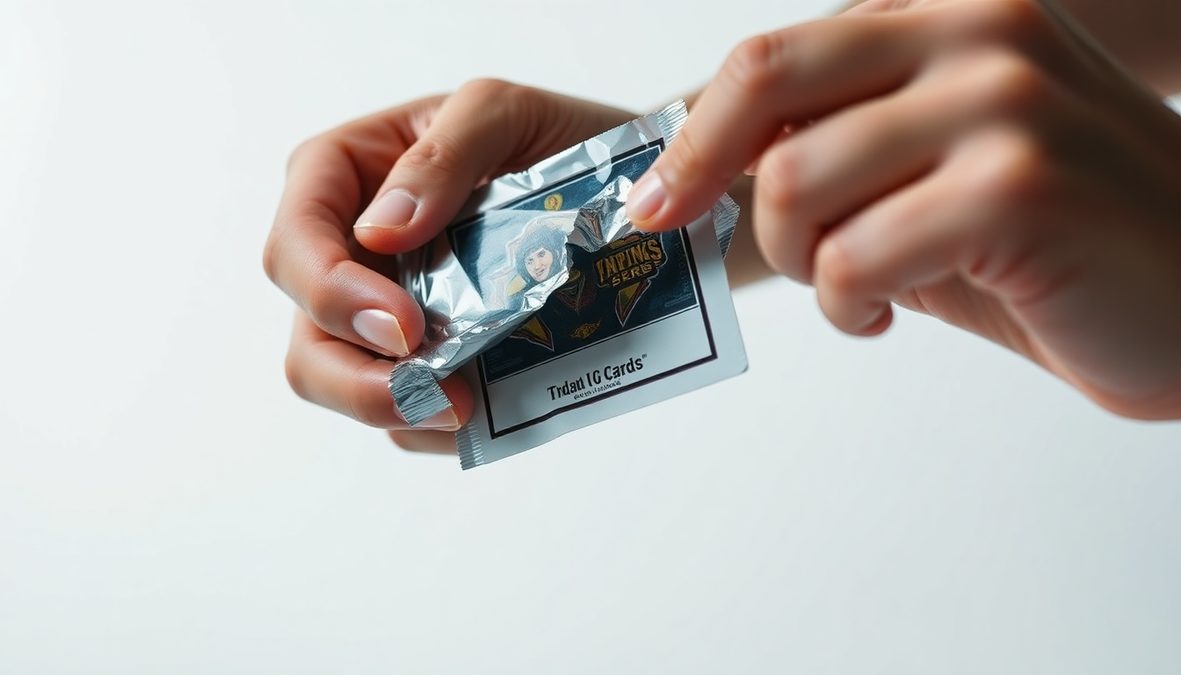
You slide your thumb under the seal of a Prismatic Evolutions pack. Ten cards inside. Maybe a hit worth $40. Maybe bulk worth $0.50 total. The math says your $5.99 got you -$1.50 in expected value, but you rip it anyway because that's the game.
Pokemon pack opening is the practice of purchasing sealed booster packs to reveal randomized cards, driven by chase cards, pull rate variance, and the psychological appeal of random rewards. Most modern sets deliver negative expected value per pack, meaning you'll lose money over time compared to buying singles, but understanding pull rates and set structure reveals when opening makes financial sense versus when you're just gambling with extra steps.
How Pokemon Pack Opening Actually Works
Every Pokemon booster contains a predetermined slot structure. Modern standard sets like Surging Sparks or Stellar Crown include 10 cards: one reverse holo (guaranteed), one rare or better in the back slot, three uncommons, and five commons. The rare slot runs on weighted probabilities—you're not getting a Special Illustration Rare (SIR) every pack.
Pull rates vary dramatically by rarity tier. Standard sets typically deliver:
Common/Uncommon: guaranteed in specific slots
Rare: approximately 1 in 3 packs
Holo Rare: approximately 1 in 3 packs
Ultra Rare (ex, VMAX, V): approximately 1 in 6 packs
Special Illustration Rare (SIR): approximately 1 in 100-150 packs
Hyper Rare/Gold: approximately 1 in 40-60 packs
Prismatic Evolutions breaks this mold with different ratios. The set runs roughly 1 in 5 packs for full art trainers and 1 in 30-50 packs for the chase Eeveelution illustration rares. That Eevee ex SIR you want? You're looking at 1 in 300+ pack odds based on early opening data.
Booster boxes contain 36 packs and typically guarantee 6-7 hits (cards above holo rare). Elite Trainer Boxes hold 9 packs with no hit guarantees—you might pull three ultra rares or literally zero. Single loose packs from retailers are pure variance with no safety net. The mathematics change entirely based on format.
Booster Box Pull Patterns
Factory collation creates patterns in booster boxes. You won't find two God Packs (all hits) in the same box. Most boxes deliver a predictable hit count within one card variance. Paradox Rift boxes, for instance, consistently produced 6-8 ultra rares, with certain slot positions more likely to contain better cards.
This isn't guaranteed by Pokemon, but factory case studies show strong evidence. Weighing packs doesn't work anymore—Pokemon added code cards of varying weights specifically to prevent scale sorting—but box mapping based on pull sequence remains viable for some sets.
Special Set Mechanics
Special sets like Crown Zenith, Shining Fates, and 151 use different pack structures entirely. These sets often include 4-5 cards per pack with higher hit rates. Crown Zenith averaged 1 ultra rare per 2.5 packs. The increased hit rate doesn't mean positive expected value—those sets also cost $6.99-$7.99 per pack retail and have smaller card pools where most hits bottom out at $2-$5 on TCGplayer.
Holiday sets, promotional boxes, and collection boxes add another layer. The Pokemon Company occasionally seeds these with guaranteed promos plus randomized packs, creating mixed expected value scenarios where the promo carries most of the value.
Common Misconceptions About Pokemon Pack Opening Debunked
"You can tell hot packs by weight or feel" sits at the top of persistent myths. Modern Pokemon packs include deliberately variable code card weights. Green code cards weigh more than white code cards, creating weight differences unrelated to card content. You cannot reliably identify valuable packs through physical manipulation at retail stores. Anyone claiming otherwise either got lucky or runs confirmation bias.
The practice died around 2016 when Pokemon implemented the two-weight code card system. Prior to that, reverse holos and holos added measurable weight. Now? A pack with seven green codes and commons weighs more than a pack with a $50 Illustration Rare and white code cards. Pack searching is dead. Move on.
"Booster boxes have better pull rates than loose packs" represents half-truth territory. Boxes guarantee certain minimums—you'll get those 6-7 hits—but loose packs from the same case have identical individual odds. The difference is variance smoothing. Open 36 loose packs and you might get 3 hits or 12 hits. Open a box and you're locked into 6-8.
The expected value per pack remains identical, but risk distribution shifts. If you're opening one pack, source doesn't matter. If you're opening 36 packs, boxes reduce downside variance but also cap your upside. You won't pull 15 ultra rares from a box, but you definitely could from 36 random loose packs (astronomically unlikely, but mathematically possible).
"First edition and older packs have better value" confuses secondary market prices with opening value. A Base Set 1st Edition pack costs $400-$600 raw. That Charizard you're chasing? It appears in roughly 1 in 3 boxes (1 in 100+ packs). Even a PSA 9 sells for $3,000-$4,000, and PSA 10 hits $20,000+. But you're also likely pulling a Machamp or Mewtwo worth $50-$150 graded.
Run the math: spend $600 on a pack for a 1% Charizard chance and 99% chance of a $5-$30 card. You need to hit multiple vintage holos just to break even. The packs themselves hold value as sealed collectibles, not as positive expected value rips. Opening vintage is capital destruction unless you're content with the experience itself.
"Pull rates are rigged based on where you buy" shows up constantly on Reddit and YouTube comments. Big box stores, local game stores, online retailers—all receive identical product from the same distribution chain. Pokemon doesn't seed special ratios for Walmart versus your LGS. Print runs vary (first print may differ slightly from later waves), but retailer doesn't matter.
What does create discrepancies? Returned product and resealed packs. Some retailers accept returns on trading cards, creating opportunities for bad actors to swap contents. Always check seals carefully. Official Pokemon packs have specific crimp patterns and seal quality. If it looks tampered, it probably is.
Pokemon Pack Opening Economics: When Opening Makes Sense
Expected value (EV) calculations reveal the uncomfortable truth: most Pokemon pack opening sessions lose money. Take Temporal Forces, a recent mainline set. Booster boxes sold for $110-$130 at release. The set contains 162 cards with marquee hits like Dialga VSTAR Secret at $20-$25 and Iron Thorns ex SIR at $30-$35.
Run the numbers on 36 packs:
6 ultra rare pulls average (mix of ex cards, full arts, gold cards)
Median ex card: $3-$5
Top SIRs: $30-$80
Expected box value: $70-$90 in singles
You spent $120 to pull $80 in cards. Negative $40 EV. This pattern repeats across nearly every modern set. Obsidian Flames, Paldea Evolved, Paradox Rift—all negative EV when box prices stabilize at market rates. The singles market adjusts because supply (opened packs) meets demand (players and collectors buying specific cards).
When Opening Beats Buying Singles
Three scenarios flip the equation:
Immediate post-release when singles prices haven't crashed yet. Prismatic Evolutions dropped January 17, 2025. Week one, booster boxes sold for $160-$180. Umbreon ex SIR sold for $180-$200 on eBay. Glaceon ex SIR hit $120-$140. Early openers who pulled chase cards and immediately sold captured pre-crash prices before supply flooded the market. By week three, those same cards dropped 30-40% as more product opened.
Sets with flat value distribution. 151 represented an unusual case where nearly every ultra rare maintained $8-$15 pricing and Master Ball reverse holos added $5-$20 per pack variance. Box EV hovered near box cost for months. You weren't making money, but you weren't bleeding it either. Compare that to sets where three cards hold all the value and 40+ ultra rares sit at $2-$3.
Sealed appreciation outpacing singles. This requires patience measured in years, not months. Evolving Skies boxes sold for $120-$140 at release in 2021. By late 2024, those same boxes traded at $250-$300 sealed. The Umbreon VMAX Alternate Art inside climbed from $200 to $400-$500 PSA 10. If you bought boxes as sealed collectibles and held, you won. If you opened them in 2021, you lost unless you hit Umbreon or Rayquaza VMAX AA.
The Real Cost: Opportunity Cost
Every dollar spent on packs is a dollar not spent on singles. Want that Moonbreon (Umbreon VMAX Alternate Art from Evolving Skies)? Market price sits around $350-$400 raw, $500-$600 PSA 9, $800-$1,200 PSA 10. You could open Evolving Skies boxes at $280 each, needing roughly 8-12 boxes on average to hit one Moonbreon based on 1 in 250-300 pack odds.
That's $2,240-$3,360 in boxes to pull one $400 card, plus whatever else you hit along the way. Even accounting for other alt arts (Rayquaza, Sylveon, Leafeon, Glaceon all maintaining $100-$250 values), you're spending $2,500+ to pull $1,000-$1,500 in singles. Just buy the Moonbreon.
The psychological component matters, though. Opening packs delivers dopamine hits that buying singles doesn't. You're paying a premium for the experience, the anticipation, the 3am rip session with friends. That's legitimate if you acknowledge the cost. Entertainment spending isn't investing.
Pokemon Pack Opening Strategies for Different Goals
Your approach should match your objective. Opening for fun operates under different rules than opening for profit or collection completion.
For Entertainment and Experience
Buy what excites you. Prismatic Evolutions delivers consistent dopamine because nearly every pack contains some form of special card—reverse holo Eevee and evolution artwork looks phenomenal even on commons. You'll lose money, but the entertainment value per dollar compares favorably to other hobbies. A night at the bar costs $50-$100. A movie for two costs $40-$50. An Elite Trainer Box at $49.99 provides 2-3 hours of opening entertainment.
Chase the sets you care about. If you collected as a kid in the Neo era, opening Neo Destiny packs at $200-$300 each makes zero financial sense but might provide irreplaceable nostalgia value. That's valid spending if your budget allows.
Avoid vintage packs unless money truly doesn't matter. Spending $600 on a Base Set 1st Edition pack for a 99% chance of pulling $40 in cards is entertainment, not investing. Acknowledge it as such.
For Collection Completion
Math says buy singles. The last 10% of any set costs more than the first 90%. Common/uncommon sets run $10-$30 complete. Holo rares add another $50-$100. Ultra rares add $200-$500 depending on chase cards. Opening your way to completion costs 3-5x more than buying a complete set.
Exception: master sets including reverse holos. Reverse holo completion through singles costs absurd money because nobody lists Caterpie reverse holo for $0.50. They list it for $2-$3 because searching inventory for specific reverse commons takes effort. Opening bulk packs from eBay lots ($0.75-$1 per pack for old stock) actually makes sense for reverse holo hunting.
For Profit (Good Luck)
You're competing against distribution companies, stores with wholesale access, and YouTube channels buying pallets. Your local game store pays $85-$95 per booster box. You pay $110-$130 retail. You start down $20-$30 per box before opening a single pack.
Profit requires edges:
Volume wholesale access: Buying at distributor pricing ($85-$90 per box)
Early release timing: Opening and flipping before prices crash
Grading arbitrage: Pulling gradable cards, sending to PSA/BGS, selling graded copies above raw prices plus grading costs
Sealed appreciation: Buying at release, holding sealed for years
The grading arbitrage path demands capital and patience. PSA 10 rates on modern Pokemon sit at 30-50% depending on set and card. A $20 raw card might hit $60-$80 PSA 10, but grading costs $25-$50 per card depending on service level and turnaround time. You need to submit 20+ cards to smooth variance, meaning $500-$1,000 in grading fees before selling a single card.
Few make money opening Pokemon packs consistently. Those who do operate at scale with significant capital, wholesale access, or content creation revenue subsidizing opening costs. Your $130 booster box won't cut it.
Related Topics Worth Understanding
Set composition and rarity distribution varies dramatically between standard sets, special sets, and promotional products. Crown Zenith included a Galarian Gallery subset with different pull rates than main set cards. Understanding these structures prevents buying the wrong product for your goals.
Grading economics and population reports determine whether raw pulls are worth slabbing. A Charizard ex SIR from Obsidian Flames sells for $80-$100 raw but $150-$200 PSA 10. Check PSA population reports—if 2,000 PSA 10s exist versus 200 PSA 9s, the grade spread collapses. Grading makes sense when 10s command 2-3x multipliers over raw and population supports scarcity.
Market timing and price trends separate smart buying from FOMO buying. Prismatic Evolutions boxes jumped from $130 pre-release to $180-$200 release week due to hype and Umbreon chase cards. Two weeks later, they settled back to $140-$150 as supply normalized. Buying release week meant overpaying $40-$60 per box. Waiting two weeks saved 25%.
Japanese versus English product offers different risk/reward profiles. Japanese booster boxes cost less ($40-$60), contain fewer packs (30), but feature higher quality control and sometimes better pull rates. However, the secondary market for Japanese cards runs 20-40% below English equivalents for most cards. Cultural preference drives this—Western collectors prefer English. The arbitrage exists but requires understanding both markets.
You opened packs because that's what collectors do. The math says buy singles. Your wallet agrees. But you'll rip another Prismatic Evolutions pack tomorrow anyway, chasing that Umbreon that'll probably never come. At least now you know exactly how much you're paying for the entertainment.