MYSTERY CARD PACK: WHAT YOU'RE ACTUALLY BUYING AND THE REAL MATH BEHIND THEM
Mystery card packs are repackaged TCG products with terrible expected value. Here's the real math behind what you're buying and why singles are better.
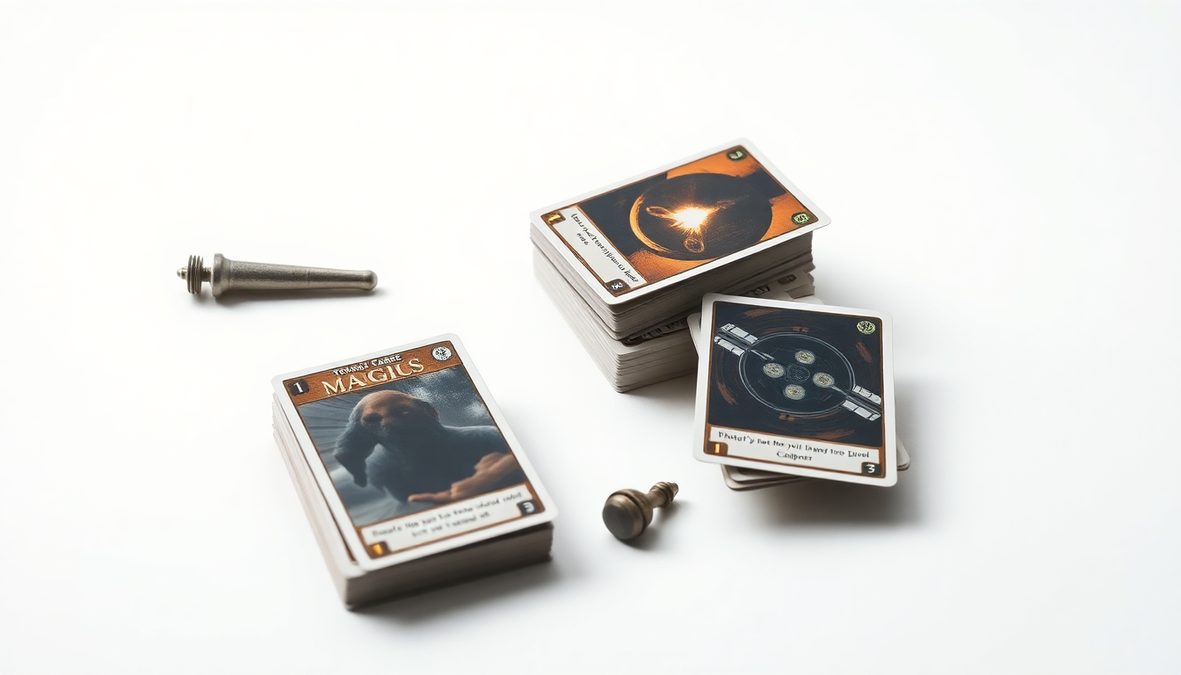
You're at your local game store checkout and spot a $10 mystery card pack promising "guaranteed hits." The shrink wrap glistens. The employee says someone pulled a Moonbreon from one last week. Your hand's already reaching for your wallet.
A mystery card pack is a repackaged product containing cards from various sets, typically assembled by third-party vendors rather than official manufacturers, with advertised "guarantees" that almost never match the actual expected value of the contents. These packs differ fundamentally from factory-sealed product because you're trusting a middleman's curation rather than manufacturer randomization.
The mystery pack market exploded between 2020-2023 alongside general TCG speculation. Walk into any big-box retailer's card aisle and you'll find them: MJ Holding mystery cubes at Target, Fairfield Company repacks at Walmart, GameStop's mystery boxes. Online sellers on eBay and Amazon run countless variations. Most promise one graded card, or three holos, or a vintage card. The packaging looks official. The price seems reasonable compared to booster boxes.
Here's what collectors need to understand: mystery packs exist to move bulk product at markup. A vendor buys collections, separates chase cards for individual sale, then repackages commons and low-value hits into attractive mystery offerings. The economics only work if the vendor profits, which means the average buyer loses on expected value.
How Mystery Card Pack Products Actually Work
Mystery pack vendors operate on volume and information asymmetry. They know exactly what's inside (or at minimum, know the average value of their repack inventory). You don't.
The typical assembly process starts with bulk purchasing. Vendors buy collection lots, unsearched boomer boxes, return pallets from retailers, and overstock from distributors. A $5,000 collection lot might contain two chase cards worth $800 each, twenty mid-tier cards at $20-40, and thousands of bulk commons. The vendor sells those chase cards individually on TCGplayer for $750 each (below market to move quickly). The mid-tier cards get listed or held. Everything else becomes mystery pack fodder.
The guaranteed hit becomes the value anchor. A pack promises "one graded card included!" That graded card is a PSA 8 Pikachu common from Obsidian Flames worth $3 raw. The grading cost the vendor $8-10 per card through bulk submission pricing. Add the slab and suddenly a $3 card becomes "a graded Pokémon card" that sounds valuable to uninformed buyers.
Mystery packs targeting Magic: The Gathering use similar tactics. A $15 mystery pack might guarantee "three rares and one mythic." Those rares are draft chaff from Streets of New Capenna worth $0.25 on Card Kingdom. The mythic is Ziatora's Proving from the same set at $1.50. Total card value: $2.25. The remaining cards are bulk commons. You paid $15 for under $3 in singles value.
The Graded Card Loophole
Graded mystery packs represent the most misleading category. Vendors discovered that slabbing bulk cards in PSA or CGC holders creates perceived value disconnected from actual market prices.
A CGC 9 Diglett from Pokemon 151 costs maybe $4 on eBay sold comparables. But to someone unfamiliar with grading economics, "CGC 9" sounds premium. The mystery pack vendor charges $12-15 and the buyer feels they got a deal on a "professionally graded card."
Real talk: grading bulk only makes financial sense at submission tiers below $8-10 per card. PSA's bulk service at 65-day turnaround costs $19 per card minimum now. BGS runs $20-25. Vendors use these services when grading was cheaper (2019-2020) or submit through bulk club memberships and offshore alternatives that reduce per-card costs to $5-7. The slab manufacturing cost is under $1. That's how they profit.
Online vs. Retail Mystery Card Pack Differences
Physical retail mystery packs from MJ Holding and Fairfield at Target or Walmart operate under different constraints than online sellers. Retail vendors face chargebacks and need consistent product that doesn't generate complaints. Their mystery cubes typically contain newer set bulk with legitimate pack insertion rates.
A $20 MJ Holding cube might include three random packs from recent sets (Obsidian Flames, Paldean Fates, Temporal Forces) plus a promo card. The packs are real factory-sealed product. The promo is bulk. You're paying $6.67 per pack when those same packs retail for $4.49. The "mystery" is which sets you get, but you're overpaying $2-3 per pack for the surprise element.
Online mystery packs from eBay or Amazon sellers carry higher risk. No physical storefront means less accountability. A seller can advertise "vintage cards included" and include a Base Set 2 Ponyta worth $0.50. Technically vintage. Technically not false advertising. Practically worthless.
Common Misconceptions About Mystery Packs Debunked
Misconception 1: "Someone pulled a $500 card, so these packs have good odds." Every mystery pack seller highlights their best pulls. It's selection bias at industrial scale. One buyer hitting a Chase Rainbow Rare Charizard from Crown Zenith doesn't make the product +EV when 500 other buyers got bulk.
Calculate actual probability. If a vendor sells 1,000 mystery packs at $15 each ($15,000 revenue) and includes ten chase cards worth $100-200 each ($1,500 total value), the odds of getting a chase are 1%. The other 99% of buyers paid $15 for $2-5 in card value. The vendor grossed $15,000, paid maybe $4,000 in product costs and $2,000 in labor/materials, and netted $9,000. That's where your money went.
Misconception 2: "Graded cards in mystery packs hold significant premium value." A graded card has value based on the card itself, not the slab. A PSA 10 Charizard Base Set Unlimited sells for $2,800 because Charizard is iconic and PSA 10s are scarce. A PSA 9 Fidough from Scarlet & Violet base costs $4 because Fidough is a common nobody wants.
Check eBay sold listings before buying graded mystery packs. Search "PSA 9 [set name] common" and filter by sold items. You'll see pages of sub-$5 sales. The slab doesn't magically add value. Population reports matter. Card desirability matters. Grade matters relative to population (PSA 9 on a card with 5,000 PSA 10s means nothing).
Misconception 3: "Mystery packs are good for building collections cheaply." Singles are always more cost-effective than randomized product for targeted collecting. If you need specific cards from Prismatic Evolutions, buy them individually on TCGplayer. A playset of Eevee holos costs $8-12 in singles. A mystery pack promising "Prismatic Evolutions cards" costs $15 and contains random commons you don't need.
Mystery packs only make marginal sense if you genuinely want random bulk for casual play or don't care about EV. Even then, buying a $20 bulk lot of 1,000 cards on Facebook Marketplace beats mystery pack pricing.
Misconception 4: "Reputable sellers wouldn't scam on mystery packs." Scam implies illegal fraud. Most mystery pack vendors operate legally within truth-in-advertising laws. They promise "hits" and deliver hits (just worthless ones). They promise "graded cards" and include them (just bulk). The deception is legal: exploiting buyer ignorance about card values.
Some eBay sellers with 99%+ feedback ratings run mystery pack businesses. High feedback doesn't mean good value. It means they ship quickly and fulfill their advertised promises. You still lose money on EV, you just lose it from a reliable vendor who sends exactly what they described.
Mystery Card Pack Economics: The Real Expected Value
Expected value calculation for mystery packs requires knowing contents, which vendors deliberately obscure. We can estimate based on advertised guarantees and market norms.
Example 1: $10 Mystery Pack with "Three Holos and One Promo"
Typical contents:
Three holo rares from sets 1-2 years old (Fusion Strike, Lost Origin, Silver Tempest)
One promo card (likely a Pokémon Center exclusive or McDonald's promo)
Seven common/uncommon bulk cards
Market value breakdown:
Holo rares averaging $0.50-1.50 each: $2.25
Promo card (McDonald's Pikachu 2023): $1.00
Bulk cards at $0.02 each: $0.14
Total card value: $3.39
Cost: $10
Net loss: -$6.61 (-66% EV)
Example 2: $25 Mystery Pack with "One Graded Card PSA/CGC"
Typical contents:
One CGC 9 or PSA 9 common/uncommon from recent sets
Two holo rares
One reverse holo
Ten bulk cards
Market value breakdown:
CGC 9 Shroodle from Scarlet & Violet: $4.00
Two holo rares at $0.75 each: $1.50
Reverse holo: $0.30
Bulk cards: $0.20
Total card value: $6.00
Cost: $25
Net loss: -$19.00 (-76% EV)
Example 3: $50 "Premium" Mystery Box with "Guaranteed Vintage Card"
Typical contents:
One Base Set 2 or Legendary Collection common/uncommon
Five modern holo rares
Two modern V or VMAX cards
One jumbo promo card
Twenty bulk cards
Market value breakdown:
Base Set 2 Machop: $0.75
Five holos at $1 each: $5.00
Two V/VMAX at $2 each (Morpeko V, Duraludon V): $4.00
Jumbo promo: $3.00
Bulk: $0.40
Total card value: $13.15
Cost: $50
Net loss: -$36.85 (-74% EV)
These calculations assume honest vendors including advertised contents. Dishonest vendors worsen EV by substituting lower-value alternatives or including damaged cards that tank value further.
When Mystery Packs Might Be Worth It
Contrarian take: mystery packs make sense in exactly one scenario—complete gambling entertainment where you accept total loss.
If you'd spend $15 at a casino or on lottery scratchers for the dopamine hit, a mystery pack provides similar entertainment value. You're paying for the experience of opening unknown contents, not card value. Budget it as pure entertainment spending, not investment or collection building.
Some collectors enjoy mystery packs as grab-bags for kids or casual play. A $10 mystery pack keeps a child entertained for an hour and provides cards for kitchen-table games. The negative EV doesn't matter if the alternative is buying $10 of fast food that disappears in fifteen minutes.
For serious collectors, pack openers focused on ROI, or anyone trying to complete sets efficiently, mystery packs are wealth destruction. Buy singles. Open factory-sealed booster boxes. Avoid the mystery pack markup.
Practical Implications for TCG Collectors and Pack Openers
Mystery card packs teach an important lesson about TCG economics: whenever someone inserts themselves between you and the product, they take a cut. Factory-sealed product from Pokémon, Wizards of the Coast, Konami, or Bandai has transparent odds (sometimes, when they publish them). Pull rates follow statistical distributions. Over enough boxes, EV approaches predictability.
Mystery packs destroy that transparency. You're trusting a vendor who profits from information asymmetry. The house always wins, and the house is the repack vendor.
For pack openers chasing high-value pulls: Buy factory-sealed booster boxes from reputable distributors. A Prismatic Evolutions booster box costs $140-160 and contains 36 packs with published pull rates for illustration rares and special illustration rares. You might still hit negative EV (most sets run -15% to -35% EV on release), but at least you know the odds. Mystery packs offer worse odds with zero transparency.
For collectors building sets: Use TCGplayer shopping cart optimizer or Card Kingdom buylist. A complete Prismatic Evolutions master set costs $800-1200 depending on timing and condition preferences. Buying 100 mystery packs at $10 each hoping to assemble that set costs $1,000 and leaves you with mostly bulk from other sets. Singles win every time.
For value hunters flipping cards: Mystery packs are -EV by design, which means they're -EV for flipping too. The only profitable angle is buying mystery pack inventory wholesale and becoming a vendor yourself. Even then, profit margins are thin ($3-5 per pack) and require volume to justify the labor.
For parents buying for kids: Consider the McDonald's Pokémon TCG Happy Meals ($5-7) or dollar store TCG packs (actual licensed product at $1.25). Both provide cards at better value than $10-15 mystery packs. Alternatively, buy bulk lots from local collectors on Facebook Marketplace. A $40 bulk lot of 2,000-3,000 cards gives your kid more opening experiences than three mystery packs.
The Grading Economy Distortion
Mystery packs reveal how grading has become detached from collecting fundamentals. Grading was meant to authenticate valuable vintage cards and establish condition standards for high-end transactions. A PSA 10 Black Lotus Alpha needs authentication. A BGS 9.5 Tropical Mega Battle Tropical Wind needs third-party verification.
The mystery pack industry corrupted grading into marketing. Vendors slab bulk cards purely to create perceived value. This floods population reports with worthless slabs that clog the grading queue for legitimate submissions and confuse newer collectors who assume "graded = valuable."
PSA has graded over 87 million cards as of 2024. BGS and CGC add tens of millions more. The vast majority of slabs are modern bulk worth less than the grading cost. Check PSA Population Report for common cards from recent sets—population counts in thousands for PSA 9s and 10s. High population destroys scarcity premium.
When you buy a mystery pack with "guaranteed graded card," you're paying for a piece of plastic with a sticker. The card inside is worthless. The vendor paid $5-8 to grade it, which seems irrational until you realize they're selling it to you for $15-25 in a mystery pack. They still profit.
Alternative Products Worth Your Money
If you like the surprise element but want better value, several alternatives beat mystery packs:
Factory-sealed vintage packs: Expensive but authentic gambling. An Unlimited Base Set booster pack costs $400-600. It might contain Charizard. It probably doesn't. But the pull rates are known, the product is verifiable, and the sealed pack itself holds value. A mystery pack is worthless the moment you open it.
Elite Trainer Boxes: Pokémon Elite Trainer Boxes ($50-60) include eight packs, dice, markers, and storage. You're paying $6.25-7.50 per pack, which is $1-2 above MSRP, but you get accessories and the packs are factory-sealed. Obsidian Flames ETBs hit $45 on sale. That's $5.62 per pack for legitimate product.
Build & Battle Boxes: Prerelease Build & Battle boxes ($25-30) include four packs and a guaranteed promo card that's usually playable or collectible. Temporal Forces Build & Battle featured Walking Wake ex as the promo, which traded at $8-12. Combined with four legitimate packs, EV approaches reasonable.
Japanese booster boxes: Japanese Pokémon boxes offer better pull rates than English equivalents. A Pokemon Card 151 Japanese box costs $70-90 and includes 30 packs with better full art and illustration rare rates. Pull rates are 3-4x better than English sets. You're paying $2.33-3 per pack for objectively better odds.
The Psychology Behind Mystery Card Pack Sales
Mystery packs exploit cognitive biases that affect all TCG collectors. Understanding these biases helps you make rational purchasing decisions instead of emotional ones.
Availability heuristic: You remember dramatic pulls. The local game store customer who pulled Umbreon ex SAR from a mystery pack sticks in your memory. The fifty other customers who bought mystery packs that week and pulled nothing don't. Your brain overweights available information (the big hit) and underweights absent information (all the misses).
Sunk cost fallacy: After buying three bad mystery packs, you feel compelled to buy more to "make back" your losses. This is how casinos profit and how mystery pack vendors retain customers. Each purchase is independent. Previous losses don't influence future probabilities.
Anchoring: Vendors anchor you with retail pricing of included products. "Contains $50 worth of cards!" the label screams. But that $50 is based on TCGplayer high listings, not sold prices or realistic market value. A card listed at $20 that never sells isn't worth $20. Sold comparables matter. The vendor knows most buyers don't check.
Variable ratio reinforcement: Mystery packs create addiction-like purchase patterns through random reward schedules. Slot machines use the same mechanism. Occasional wins (pulling something decent) reinforce the behavior more strongly than consistent wins would. You keep buying because the next pack might be The One.
Breaking these patterns requires conscious effort. Before buying a mystery pack, ask: "Would I pay this price for the guaranteed minimum contents?" A $15 mystery pack with guaranteed three commons is really a $15 purchase of three commons. The possibility of better pulls is noise. If you wouldn't pay $15 for three specific commons from that era/set, don't buy the pack.
Related Topics to Explore Further
Set pull rates and expected value: Understanding published pull rates for modern sets lets you calculate actual expected value from booster boxes versus mystery pack vendor claims. Archive Drops covers set-by-set pull rate analysis.
Grading service economics: How much grading actually costs, when it makes financial sense, and how population reports affect card values. Mystery packs abuse grading; understanding grading economics helps you spot the manipulation.
Bulk card buying strategies: If you want volume cards for casual play, buying bulk lots locally or online beats mystery pack pricing by 80-90%. Learn where to find legitimate bulk deals.
Singles arbitrage and price tracking: Tools like TCGplayer market price history, eBay sold listings, and Card Kingdom buylist values let you identify actual card values versus mystery pack marketing claims.
Set completion math: The statistical reality of completing modern sets through pack opening versus singles buying. Spoiler: singles win by enormous margins for everything except the smallest sets.
Mystery card packs are a tax on impatience and information asymmetry. Vendors profit because buyers don't do math. Now you know the math. Your wallet thanks you.