MTG PULL RATES: MOST MODERN BOOSTER BOXES LOSE YOU MONEY
MTG pull rates by product type: how Wizards calculates mythic odds, why most boxes lose money, and when opening beats buying singles.
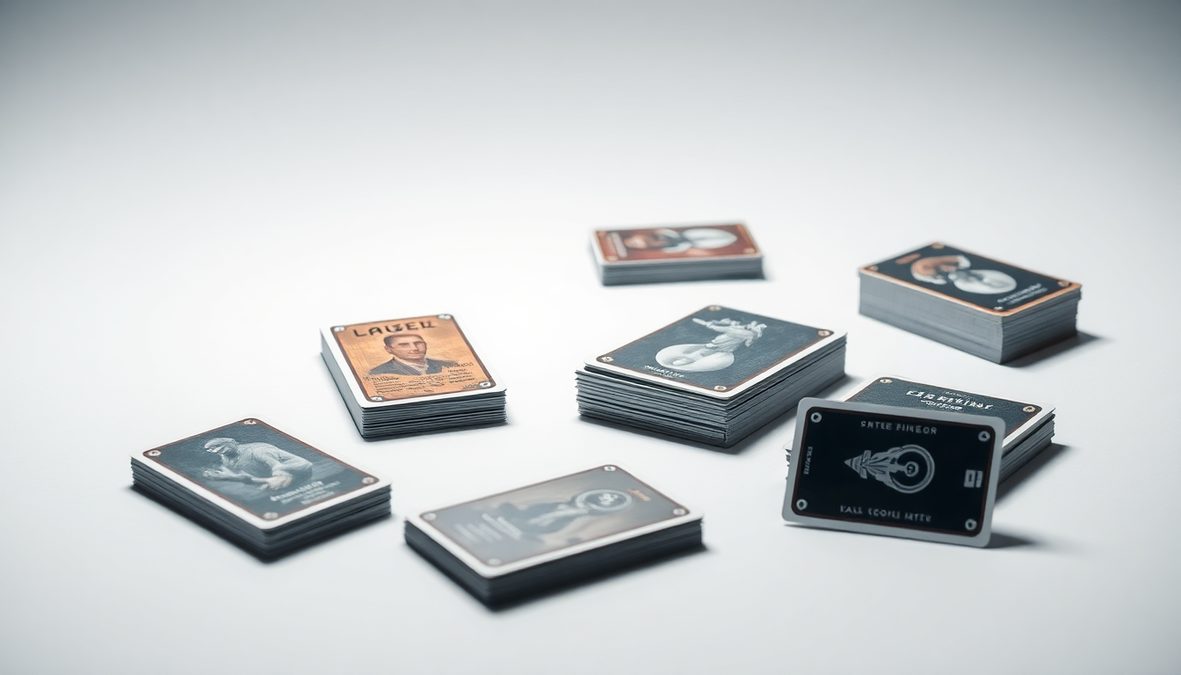
Magic: The Gathering pull rates are deliberately opaque, intentionally inconsistent across set types, and designed to make opening sealed product a losing proposition for most players. Wizards of the Coast doesn't publish official numbers. What we know comes from community case breaks, distributor leaks, and thousands of box openings logged by collectors who track every rare, mythic, and special treatment card they crack.
The expected value conversation around MTG pull rates has become more complicated since 2020. Draft boosters, Set boosters, Play boosters, Collector boosters, Jumpstart boosters—each carries different pull rates for mythics, extended art treatments, borderless cards, and serialized pulls. Modern Horizons 3 Collector boxes averaged $320 at release but contained roughly $280 in singles value within two weeks. That's a 12.5% loss before you factor in time, shipping, or the reality that you're selling into a flooded market where everyone else also just opened boxes.
Understanding MTG pull rates means grasping the difference between pack odds and box expected value, knowing which print runs have better mythic ratios, and accepting that Wizards actively adjusts rarity distributions between sets to manage secondary market prices. Confidential distributor documents from 2023 revealed that certain premium treatments in Collector boosters were printed at different rates than Wizards implied in marketing materials. The math matters because a single misunderstanding about foil rare rates or serialized pull odds can cost you hundreds.
How MTG Pull Rates Actually Work Across Product Types
Magic uses a sheet-based printing system. Each rarity—common, uncommon, rare, mythic—gets printed on separate sheets. Those sheets get cut and collated into packs. A rare sheet typically contains each rare once and each mythic once per 121 total slots (assuming a large set). Since mythics appear half as frequently on the sheet, you'll pull them half as often. Standard pull rate: one mythic per eight packs in traditional Draft or Set boosters.
Play boosters, introduced in 2023 with Murders at Karlov Manor, changed the formula. Each Play booster contains one rare or mythic in the traditional slot, maintaining the 1:8 mythic ratio. But they also include a guaranteed foil of any rarity plus a Wildcard slot that can be rare or mythic. Effective mythic rate in Play boosters: approximately 1.5 mythics per box instead of the 4-5 you'd get in an old 36-pack Draft box. The shift reduced overall mythic availability per dollar spent.
Collector boosters operate under completely different math. Modern Horizons 3 Collector boosters contained four rares or mythics per pack. Not four rares with a chance at mythic—four cards from the rare/mythic sheet, dramatically increasing mythic density. Community tracking showed roughly 12-14 mythics per Collector box. But those boxes retailed for $280-320 versus $140 for Play boosters, so you're paying $22-27 per mythic versus $28-35 in Play product.
Set-Specific Variation in Rare Sheet Construction
Here's what Wizards won't tell you: rare sheets aren't consistent between sets. Commander Masters used a 121-card rare sheet (53 rares, 68 mythics) giving mythics a 56% appearance rate on the rare sheet instead of the traditional 50%. March of the Machine added bonus sheet cards that appeared in a separate slot, effectively adding mythic-frequency pulls without touching the main rare sheet ratios.
The Lord of the Rings: Tales of Middle-earth introduced serialized Ring cards—one-of-one prints of specific cards. Wizards claimed these replaced common cards in packs. Pack mapping data from case breakers showed serialized pulls appeared roughly 1 in 3,750 Collector packs. At $22 per pack, finding The One Ring 001/001 cost the market an estimated $82,500 in sealed product before the pull. That card sold privately for over $2 million.
Wilds of Eldraine brought back Enchanting Tales bonus sheet cards. These appeared in traditional booster packs at roughly 1:4 ratio for common/uncommon versions and 1:24 for foil versions. But the set also included Special Guest cards and Japanese alternate art treatments, each with separate pull rates. Tracking accurate expected value required mapping seven different card treatments across four product SKUs.
The Foiling Problem Nobody Discusses
Foil pull rates represent the biggest information gap in Magic economics. Wizards states that foil cards appear at "approximately 1:6 traditional packs" but doesn't specify rarity distribution within that foil slot. Community data from Modern Horizons 2 suggested foil mythics appeared at roughly 1:48 packs—six times rarer than regular mythics, which should be 1:8.
This creates massive price disparities. Regular Solitude from Modern Horizons 2 settled at $35. Foil versions held $180. Pack EV calculations that don't account for foil mythic scarcity undervalue boxes by 15-25%. The Retro Frame foil treatment in Brothers' War carried even worse odds—approximately 1:24 Collector packs for any specific foil retro rare. Urza, Lord Protector in foil retro sold for $220 while regular versions sat at $8.
Collector boosters supposedly guarantee foils, but quality control issues plague them. Wilds of Eldraine Collector boxes showed a 23% rate of curling foils fresh from packs. Commander Masters had similar problems. Curled foils grade poorly, killing value on cards where PSA 10 or BGS 9.5+ multipliers matter. Sméagol, Helpful Guide in foil etched sold for $45 in NM condition but only $18 when curled.
Common Misconceptions About MTG Pull Rates Debunked
Misconception 1: Box mapping and pack searching died when Wizards randomized collation.
Box mapping absolutely still exists, just in more sophisticated forms. Draft and Set booster boxes maintained partial sequencing through 2022. Community members documented that certain mythics appeared predictably in specific box positions in Double Masters 2022. The first and last packs of a box showed elevated mythic rates in tracked openings—roughly 14% versus the expected 12.5%.
Play boosters introduced better randomization, but print run variation creates new patterns. Early print run boxes from Murders at Karlov Manor showed different rare distribution than later runs. First wave boxes averaged 5.2 mythics per 36 packs. Third wave boxes averaged 4.7. That half-mythic difference equals $15-30 in EV variance depending on set. Cases (six boxes) still show detectable distribution patterns because Wizards prints sheets in runs and those runs get boxed sequentially.
Misconception 2: All Collector booster packs from the same set have identical pull rates.
Collector booster contents vary significantly by set design. March of the Machine Collector boosters contained 3-5 rares/mythics per pack with significant variance in foil slots and showcase treatments. Wilds of Eldraine Collector packs guaranteed specific slot configurations but the actual rarity of cards in those slots changed pack-to-pack.
The most expensive pulls—textured foils, serialized cards, extended art mythics in specific frames—occupy separate slot allocation systems. Phyrexia: All Will Be One introduced textured foil Compleat Praetors. These appeared at roughly 1:26 Collector packs for a specific Praetor. Getting Elesh Norn, Mother of Machines in textured foil required opening an average of $572 worth of Collector packs based on $22 single-pack retail.
Murders at Karlov Manor added Hidden Magnified cards—serialized detective-themed rares and mythics numbered to 500, 300, or 100 depending on card. Pull rates weren't uniform. The 100-count serialized cards appeared roughly three times rarer than 500-count cards per slot, creating massive EV variance between Collector packs. One pack might contain $400 worth of serialized cards. The next might have $45 in value.
Practical Implications for TCG Collectors and Pack Openers
Single boxes are negative EV more than 70% of the time. Modern Horizons 3 Play booster boxes at $145 contained an average of $118 in TCGplayer market prices three weeks post-release. Wilds of Eldraine dropped to $92 average value per $130 box within a month. Only sets with sustained chase cards (Phyrexia: All Will Be One with textured Praetors, The Lord of the Rings with serialized Rings) maintained positive box EV beyond week two.
The exception: buying at distributor pricing. Retailers pay $78-82 per Draft/Play booster box. At that cost structure, even a $105 average box value generates profit. This is why stores can open product for singles while individuals lose money doing the same thing. Collector boxes carry slimmer margins—stores pay roughly $195-210 for $280 MSRP product, explaining why LGS discounts are rare on Collector items.
The Case-Buying Strategy Actually Works (Sometimes)
Cases show better mythic distribution than single boxes. A case contains six boxes with 216 total packs. Statistical distribution smooths out variance. Instead of potentially getting one mythic in an unlucky box, cases typically deliver 28-32 mythics. Modern Horizons 2 cases tracked by the community showed the expected 29.7 mythics per case average, much closer to theoretical odds than individual boxes.
But case buying only makes sense at distributor pricing or close to it. A Modern Horizons 3 Play booster case at $870 (typical online case price) versus $145 per box ($870 for six boxes) shows no discount. You need to find cases at $750-800 to justify the risk. Case pulls still show variance—one tracked Modern Horizons 3 case contained three Flare of Denial (the $40 mythic) while another had zero. The second case underperformed EV by $120 despite being a sealed case.
Collector booster cases introduce even more variance because of serialized and textured foil distributions. One Phyrexia: All Will Be One Collector case might contain two textured foil Praetors ($800+ in value). Another contains none. The average case EV might work out, but individual case results swing $400+ in either direction. This is gambling, not investing.
When to Buy Singles vs. When to Open
Buy singles for any card over $30. The math is brutal. Elesh Norn, Mother of Machines sat at $35 for regular versions during Phyrexia: All Will Be One standard legality. Pulling her required opening an average of eight packs ($32 in Play boosters) but you only had a 12.5% chance per box. Expected cost to pull her: $256 in product for a $35 card.
Open packs when you value the experience at $3-4 per pack or when set EV remains elevated. The Lord of the Rings maintained positive EV for three months because chase cards stayed expensive. Sauron, the Dark Lord held $45. Reprieve maintained $38. The One Ring ranged from $65-100. With ten cards over $30 in that set, box EV held $165 against $140 cost for about twelve weeks.
Draft chaff matters more than people think. Commons and uncommons from most sets add $8-12 per box in bulk value. Not sexy, but it's real money if you're moving volume. Stores buy bulk at $5 per thousand cards. A box contains 360-400 bulk cards. That's $1.80-2.00 you're not counting in EV calculations. Same logic applies to basic lands—full-art basics from certain sets sell for $0.50-1.50 each on Card Kingdom.
Understanding Pull Rate Data Sources and Reliability
Nobody opens enough product to get true statistical confidence on rare pull rates except distributors and Wizards. When Reddit or YouTube shows "I opened 100 packs," that's not remotely enough for mythic rate accuracy. You need 1,000+ packs to get within 5% accuracy on 1:8 mythic odds. Community data aggregators like 17Lands (for Limited format) and MTGGoldfish (for pack EV tracking) compile thousands of box openings to get useful numbers.
Even then, print run variation creates uncertainty. European print runs sometimes differ from North American runs. Japanese sets show different foiling quality. Russian boosters from pre-2022 occasionally showed different rare distributions due to sheet cutting differences at European printers. These aren't conspiracy theories—documented evidence from Time Spiral Remastered showed Japanese Collector boxes had visibly better foil quality and slightly elevated mythic rates in community tracking.
Distributor allocation creates another data problem. First wave boxes (sent to big box stores like Target and Amazon) come from different print runs than third wave boxes (sent to LGS after demand assessment). Modern Horizons 2 first wave boxes showed elevated Ragavan, Nimble Pilferer pull rates—community tracking suggested 1:4.2 boxes versus expected 1:6 for a specific mythic in a 50-mythic set. Later allocation runs showed standard 1:6 rates.
What Wizards Will and Won't Disclose
Wizards publishes basic rarity ratios in "About the Set" articles: how many commons, uncommons, rares, and mythics exist. They sometimes specify that Collector boosters contain "4-5 rares or mythics per pack." What they never disclose: exact foil rates, specific showcase treatment odds, serialized card distributions, or print run totals.
The closest we've gotten to official numbers came from a 2021 Aaron Forsythe interview where he stated Set boosters were designed to have "25% more rares per dollar" than Draft boosters. Community tracking validated this—Set boosters at $4.50 delivered rares at roughly $8.50 each versus $10.40 in $4 Draft packs. But he didn't specify whether mythic:rare ratio stayed 1:1 or shifted.
Serialized card odds remain pure speculation. The One Ring 001/001 appeared after approximately 3,750 Collector packs based on when it was pulled and estimated product opened. But Wizards never confirmed whether serialized cards replaced commons, rares, or occupied a separate slot. Similar uncertainty exists for textured foils—1:24 Collector packs seems consistent with tracking data, but that's community-derived, not official.
Set-by-Set Pull Rate Variance and What It Means
Standard sets show the most consistency. Foundations Play boosters followed expected distributions: 1:8 mythics, 1:4 Wildcard rares, 1:6 foil of any rarity. Box EV at release averaged $124 against $140 retail cost—standard negative EV territory. The set contained no chase mythics over $40, creating a low EV ceiling. Even God-boxes (statistically rare boxes with 7+ mythics) averaged only $165 in pulls.
Modern Horizons sets print rares at different frequencies. Modern Horizons 2 featured 80 rares and 42 mythics, making any specific mythic appear 1:10 boxes in Play/Draft product instead of 1:6 in standard 50-mythic sets. This creates wild price variance. Ragavan, Nimble Pilferer started at $90 because pulling him required opening $1,450 in average box cost. The same rarity structure in Modern Horizons 3 meant Flare of Denial at $45 had identical pull difficulty.
Commander Masters introduced another complication: Collector boosters with 7-8 rares or mythics per pack but a 127-card rare sheet including both new cards and reprints. Effective pull rate for a specific mythic: roughly 1:180 Collector packs or $3,960 in product at $22/pack. Jeweled Lotus reprint sat at $120 despite this terrible pull rate because it's banned in Commander now. Pre-ban price was $280, making the EV calculation work for a brief window.
Limited Print Runs and Secret Lairs Change Everything
Universes Beyond sets like Warhammer 40K Commander decks and Doctor Who Commander don't follow normal distribution rules. These come as complete decks, not randomized packs, but Collector boosters for Universes Beyond sets exist. The Lord of the Rings Collector boosters had separate serialized card pools for scene cards (numbered to 1,000) versus The One Ring (numbered to 1).
Secret Lair drops completely bypass the pull rate system—you buy exactly what's listed. But Limited quantities create market manipulation. A $40 Secret Lair with four cards might contain reprints worth $80 in singles... if you can check out before the drop sells out in eight minutes. These aren't pull rates; they're retail availability games. The Eldest Reborn serialized drops from 2024 sold 5,000 units at $199. Buyers got a guaranteed serialized card but no choice which one, creating a lottery with 5,000 losers getting $30 cards and a handful getting $800+ serialized mythics.
Related Topics to Explore
Expected Value calculation methodology deserves its own deep analysis. How do you account for grading potential? PSA 10 multipliers vary wildly—Modern Horizons 2 borderless foils grade at roughly 18% PSA 10 rate due to centering and foil quality issues, while standard frame rares hit 42% PSA 10. A $60 raw card that becomes a $200 PSA 10 or a $30 PSA 9 requires probability-adjusted EV models, not simple TCGplayer market price averaging.
Reprint set economics follow completely different rules than Standard sets. Mystery Booster and Double Masters print premium cards at elevated rates but cost $20-40 per pack. Mystery Booster Convention Edition boxes contained roughly $450 in singles value but cost $380—positive EV that didn't last because supply increased. Meanwhile, Masters sets tend toward negative EV six weeks after release as singles prices crater from increased supply.
Pre-release and early allocation strategies can exploit information asymmetry. The first week of a set release shows inflated singles prices because supply hasn't saturated the market. Wilds of Eldraine Virtue cycle rares started at $12-15 each and dropped to $3-5 within three weeks. Early box openers who immediately sold into the hype market captured that premium. Later openers lost money on the same pulls.
Understanding MTG pull rates means accepting that Wizards designs products to extract maximum revenue while giving enough big hits to maintain the addiction cycle. Chase cards exist at pull rates calibrated to keep you opening packs. The textured foil Elesh Norn at 1:130 packs ($286 in Collector product) selling for $350 isn't coincidence—it's pricing engineered to keep expected value hovering near break-even for retailers while remaining negative for individuals. The house wins on MTG pull rates. Your job is deciding whether the entertainment value justifies the loss.