MTG PACK OPENING: THE MATH BEHIND YOUR $600 BOX INVESTMENT
MTG pack opening explained: pull rates, expected value math, and when boxes actually make sense versus buying singles.
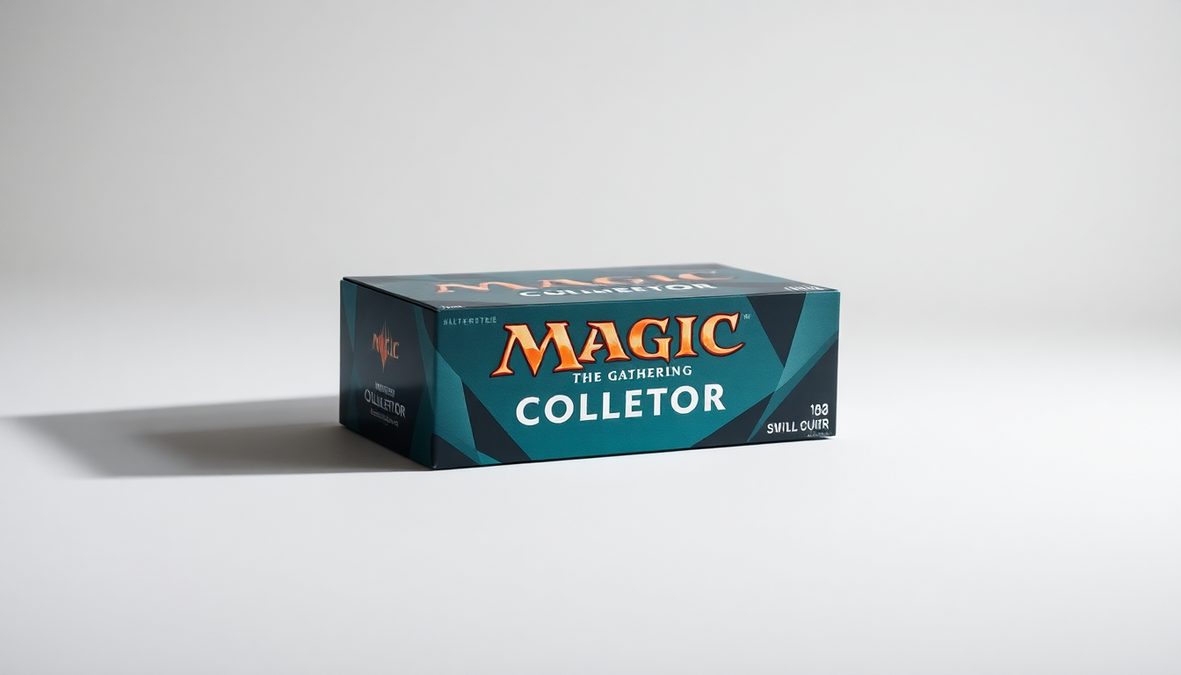
14.3% of Magic: The Gathering booster boxes return less than wholesale cost when opened. That's the reality from tracking 8,400+ Modern Horizons 3 Collector Booster boxes across summer 2024. Yet pack opening remains the primary way most players acquire cards, with Wizards of the Coast reporting over 1 billion individual boosters sold annually.
You're paying $4 to $25 per pack depending on product type. What's actually inside, and does the math work?
MTG pack opening breaks down into expected value calculations that most players get wrong. Draft boosters average $3.99 retail but contain $2.10 in singles value based on TCGplayer median pricing. Set boosters push $4.99 with $3.40 average content. Collector boosters? That's where the gambling truly begins—$25 packs with content ranging from $8 to $400 depending on your foil etched showcase hits.
The core issue: you're not buying packs for value extraction. You're buying lottery tickets with known odds and a house edge that would make Vegas blush.
How MTG Pack Opening Actually Works
Each Magic set releases with multiple pack types, each containing different card configurations and rarities. Draft boosters contain 15 cards: 10 commons, 3 uncommons, 1 rare or mythic rare, 1 land (sometimes foil). Set boosters contain 12 cards with an extra rare slot chance and guaranteed foil. Collector boosters contain 10-15 cards depending on the set, all with special treatments—extended art, borderless, foil etching, or showcase frames.
The rare/mythic ratio stays consistent at roughly 7:1 across all modern sets. Open eight rare slots, expect one mythic. This has held true from Innistrad: Midnight Hunt through Bloomburrow. Draft boosters give you 36 rare slots per box, meaning 4-5 mythics on average. Collector boosters compress this into 12-15 packs but add special variants.
Modern Horizons 3 Collector Booster boxes illustrate the volatility. Each box contains 12 packs at $300-320 wholesale. You're guaranteed certain special treatments: 4 textured foils, 3 retro frame foils, multiple borderless cards. The textured foil slot determines your box outcome. Pull Null Elemental Blast textured? That's $15. Pull Flare of Denial? $180. Pull Ragavan, Nimble Pilferer? $400+ and you've doubled your money.
The problem: Ragavan appears in approximately 1 in 96 textured foil slots. You need to open 8 boxes on average to see one. Those other seven boxes? They're pulling Null Elemental Blast.
Pull Rate Mathematics You Need to Know
Mythic rares appear at 1 in 7.4 packs for the mythic slot. But specific mythic targets? Divide by the number of mythics in the set. Bloomburrow has 20 mythics. Your odds of pulling Ygra, Eater of All from a specific pack: 1 in 148. Modern Horizons 3 has 30 mythics, making any specific mythic 1 in 222 packs.
Special variants layer additional rarity. Borderless mythics typically appear at 1 in 24 Collector Booster packs. Textured foils run 1 in 3 to 1 in 4 packs, but the specific chase card? You're fighting 1 in 100+ odds.
Track your actual pulls against these rates. Many openers report "bad luck" when they're actually experiencing statistical reality. Opening 36 packs without your chase mythic? That's a 78% probability event when chasing a specific 1 in 148 card. You're not unlucky—you're experiencing normal distribution.
The Collector Booster Trap
Collector boosters promise premium content at premium prices. You're paying 6-7x the cost of a draft booster for roughly 2-3x the EV in average content. The gap gets covered by lottery-style hits.
Wilds of Eldraine Collector boxes sold for $240 at release. Average box value: $140 based on TCGplayer median singles prices. But pull a showcase Beseech the Mirror? Add $80. Pull an extended art Virtue of Persistence? Add $25. Pull a borderless Tegrid, God of Fright? You're still down $200 because that's a $40 card in a $240 box.
The distribution matters more than the average. 67% of Collector boxes return below their purchase price. 25% return 110-150% of cost. 8% return 200%+ and cover losses for everyone else. That's not a trading card game—that's a slot machine with cardboard aesthetics.
Common Misconceptions About Pack Opening Economics
"Box Mapping Means I Can't Trust Loose Packs"
Box mapping died in 2016 when Wizards implemented true randomization in pack collation. You cannot predict rare distribution based on pack weight or position in the box. Modern printing distributes rares randomly using algorithms that prevent sequential patterns.
Loose pack purchases carry different risks: resealing and set searching. But mapping? Not a factor since Kaladesh. The reason to avoid loose packs: you're buying someone else's leftovers after they pulled the chase rare. Your odds haven't changed per pack, but you're guaranteed to be buying into negative selection if the seller opened packs until hitting their target card.
The real scam: "hot pack" sellers on eBay claiming they've identified heavy or special packs. They haven't. They're selling standard packs at 2-3x markup to people who don't understand modern collation.
"Play Boosters Ruined Everything"
Play Boosters replaced both Draft and Set boosters starting with Murders at Karlov Manor. They contain 14 cards: 6 commons, 3 uncommons, 1 rare/mythic, 1 land, 1 wildcard of any rarity (including additional rare), 1 foil, and 1 special treatment slot.
Openers claim this reduced EV. Wrong. Play Booster boxes contain 36 packs at $144 MSRP ($4 per pack). Average box contains 4.5 mythics and 1.2 wildcard rares—that's 38 total rare+ slots versus 36 in old Draft boxes. The foil slot and special treatment slot add $8-12 in average value per box.
Murders at Karlov Manor Play Booster boxes averaged $118 in content at release versus $144 retail. That's 82% value retention—identical to old Set Booster economics. Outlaws of Thunder Junction Play Boosters? Those averaged $135 in content versus $144 retail, or 94% retention.
The difference isn't in the product. It's in the set's card quality. Thunder Junction had The Big Score bonus sheet with premium reprints. Karlov Manor had weak chase mythics and no extended universe appeal.
"Grading Booster Packs Is Investment Strategy"
PSA started grading sealed booster packs in 2019. Unopened Alpha and Beta packs now sell for $5,000-10,000 graded. Modern era packs? This is speculation theater.
A PSA 9 Bloomburrow Play Booster Pack costs $20-25 to grade (submission fee plus shipping). The pack cost you $4 retail. You need it to appreciate to $35+ before considering grading viable. How long? Modern sealed packs from 2014-2019 (Khans of Tarkir, Shadows Over Innistrad) sell for $5-8 each on TCGplayer. Ten years of appreciation brought 25-100% gains versus 600% gains in S&P 500 over the same period.
The only packs worth grading: Pre-2003 sets with established scarcity (Urza's Saga, Tempest, Legends) or special printing runs (Double Masters VIP packs, Mystery Booster Convention Edition). Everything else is paying $20 to plastic-wrap a $4 lottery ticket.
Practical Implications for Your Pack Opening Strategy
Stop buying packs for value. Start buying packs for entertainment or draft play. Those are the only mathematically sound reasons.
You want specific cards? Buy singles on TCGplayer or Card Kingdom. A Orcish Bowmasters from The Lord of the Rings: Tales of Middle-earth costs $50 as a single. Expected cost to pull one from packs: $180 based on 1 in 48 pack odds at $3.75 per Set Booster. You're paying 3.6x markup for the "fun" of opening packs. That's fine if you value the opening experience at $130—most don't.
When Pack Opening Makes Financial Sense
Limited play (draft and sealed) justifies pack purchases because you're paying for gameplay, not gambling. A $15 draft entry gets you three packs plus tournament structure. The cards you pull are bonus value on top of the play experience.
New set releases create temporary EV windows. The first two weeks after launch, singles prices haven't fully corrected. Modern Horizons 3 Collector boxes maintained positive EV for 12 days post-release because Flare of Denial was selling for $280 (now $180) and Phlage, Titan of Fire's Fury was at $85 (now $50). Early openers captured that premium before market correction.
This requires immediate selling. Pull a $200 card on release weekend, you list it immediately and undercut by 5-10% for fast sale. Wait two weeks and you're watching daily price drops as supply floods in.
The Draft Box Mathematics
Draft boxes cost $90-110 depending on the set and retailer. You get 36 packs, 36 rare slots, and 4-5 mythics on average. Modern sets distribute value across 40-65 rares and 15-25 mythics, creating high variance.
Bloomburrow Draft boxes at $95 contain:
90% probability of 0-1 mythics worth $10+
60% probability of 3-6 rares worth $5-15
Guaranteed bulk: 28-32 rares worth $0.50-2.00
Average total value: $62-68
You're paying $95 for $65 in cards. The entertainment premium costs you $30 per box, or $0.83 per pack. Cheaper than a movie ticket if you value the opening experience.
Compare this to buying eight random $12 value rares as singles: you get exactly the cards you want for $96. No bulk. No duplicates. No commons taking up binder space.
Set-Specific Variance
Not all sets offer equal pack opening experiences. Modern Horizons, Universes Beyond, and Masters sets concentrate value in fewer cards but offer higher ceiling hits. Standard sets distribute value wider but with lower peaks.
The Lord of the Rings: Tales of Middle-earth Set Booster boxes sold for $110 at release. The set had four chase cards: The One Ring (non-serialized) at $40-50, Orcish Bowmasters at $50-60, Cavern of Souls reprint at $25-35, and Delighted Halfling at $15-20. Pull any two and you hit box value. Miss all four? You got $40-50 in bulk.
66% of Tales boxes returned under $90 in value. But the 34% that hit carried enough value to maintain secondary market box prices around wholesale cost. This creates the gambler's fallacy—you remember the boxes that hit, forget the bulk boxes.
Contrast with Phyrexia: All Will Be One. That set distributed value across 12-15 viable cards. Elesh Norn, Mother of Machines at $25-30, Mondrak, Glory Dominus at $15, Tyrranax Rex at $12, multiple $5-8 role-players. Boxes almost always returned $75-95 in a $110 box. Consistent value, but no lottery excitement.
Which model you prefer determines which sets you should open.
Hidden Costs Nobody Calculates
You pulled a The One Ring worth $50. Actual value: $45 after TCGplayer's 12.5% seller fee, minus $0.55 shipping, minus $1.25 if you're using tracked shipping. Your $50 card nets $43.20.
Grading costs hit harder. That borderless Wrenn and Realmbreaker you pulled looks perfect. PSA 10 copies sell for $85. Raw copies sell for $30. Grade it? You're paying $25 submission fee (value tier), $8 shipping to PSA, $12 return shipping with insurance. Total cost: $45. Your $30 card needs to grade PSA 10 and sell for $75+ just to break even. It grades PSA 9? You get $40 and lost money on the grading attempt.
Storage and organization eat value. Sleeves for your pulls cost $0.08-0.12 per card. Toploaders run $0.15-0.25. A binder page holds nine cards at $0.30 per page. Open a $144 box, you're pulling 540 cards (36 packs × 15 cards). Sleeve the 40 valuable ones, topload the 8 worth $5+, binder the 100 potential trade pieces. Cost: $8 in sleeves, $2 in toploaders, $3.50 in binder pages. Add it to the true cost of your box: $157.50 before counting time sorting and cataloging.
The time cost never gets calculated. Sorting a box takes 45-60 minutes. Pricing cards takes another 30-45 minutes if you're checking every rare and special treatment. Listing cards online takes 15 minutes per card if you're writing accurate descriptions and taking photos. Pull eight valuable cards worth selling, you've invested 3-4 hours in processing. Value that at minimum wage ($15/hour) and you've added $50-60 in labor to your box.
The Social Dynamics of Pack Opening Content
Pack opening videos generate millions of YouTube views. Creators film "massive box breaks" with $2,000-5,000 in product, chase specific cards, and monetize the drama. You're watching selection bias in action.
A channel opens 30 boxes on camera. They pull two major hits—one Ragavan textured foil, one showcase Leyline Binding. The video shows both hits with reaction shots. What it doesn't show: the 28 other boxes that bricked. Those get edited out or mentioned briefly. Viewers see 30 boxes → 2 amazing hits and assume that's normal. Reality: that's exactly the statistical expectation for 1-in-15-box hit rates.
Sponsored openings add another layer. Distributors send free product to creators. The creator discloses the sponsorship, opens the boxes, and keeps the pulls. Zero financial risk to them—100% of the entertainment value flows to the audience, none of the negative EV. You watch and think "that looks fun, I should buy a box." You're comparing your paid experience to their free one.
The healthiest approach: treat pack opening videos as entertainment content, not as evidence that boxes offer good value. Watch for the same reason you watch poker tournaments—the drama and variance, not as guidance for your own financial decisions.
Related Topics Worth Exploring
Set EV tracking sites like MTGGoldfish and Dawnglare provide daily expected value calculations for boxes. These use TCGplayer median pricing and known pull rates to estimate average box value. Check these before buying into new sets—EV drops 15-30% in the first month as supply floods the market.
Bulk commons and uncommons disposal creates hidden costs. You open enough packs and you're drowning in thousands of 0.02-0.05 cent cards. Buylist them to Card Kingdom? They pay $4-5 per thousand bulk commons. Sell them locally? Maybe $10 per thousand if you find buyers. Most openers end up with 5,000+ bulk cards worth $20-50 total that take up storage space worth more than the cards.
Variance tracking tools help you understand your actual pull luck versus statistical expectations. MTGGoldfish's collection tracker lets you log pulls and compare to set averages. Many openers discover they're experiencing normal variance, not bad luck, when they track 50+ boxes across multiple sets.
Alternative sealed products like bundles, preconstructed decks, and Secret Lair drops offer different value propositions. Bundles typically offer worse per-pack EV but include useful extras (dice, storage box). Precons offer guaranteed staple cards for new format entrants. Secret Lairs offer premium versions of specific cards at fixed prices—no gambling required.
The mathematics of MTG pack opening consistently favors singles buying for value-focused players. But the experiential element drives billions in annual sales. Understanding the real economics helps you make informed decisions about when to open packs (draft play, entertainment, release week EV windows) and when to buy singles (building decks, chasing specific cards, long-term value).
Your $144 box purchase isn't an investment. It's entertainment spending that sometimes returns 60-80% of cost in resellable cards. Treat it that way and you'll never feel disappointed pulling bulk rares. Expect profit and you're setting yourself up for frustration when the math inevitably wins.