HOW TO START COLLECTING POKEMON CARDS WITHOUT WASTING MONEY ON DEAD SETS
Learn how to start collecting Pokemon cards without wasting money on negative-EV boxes. Singles vs sealed, pull rates, market timing, and storage.
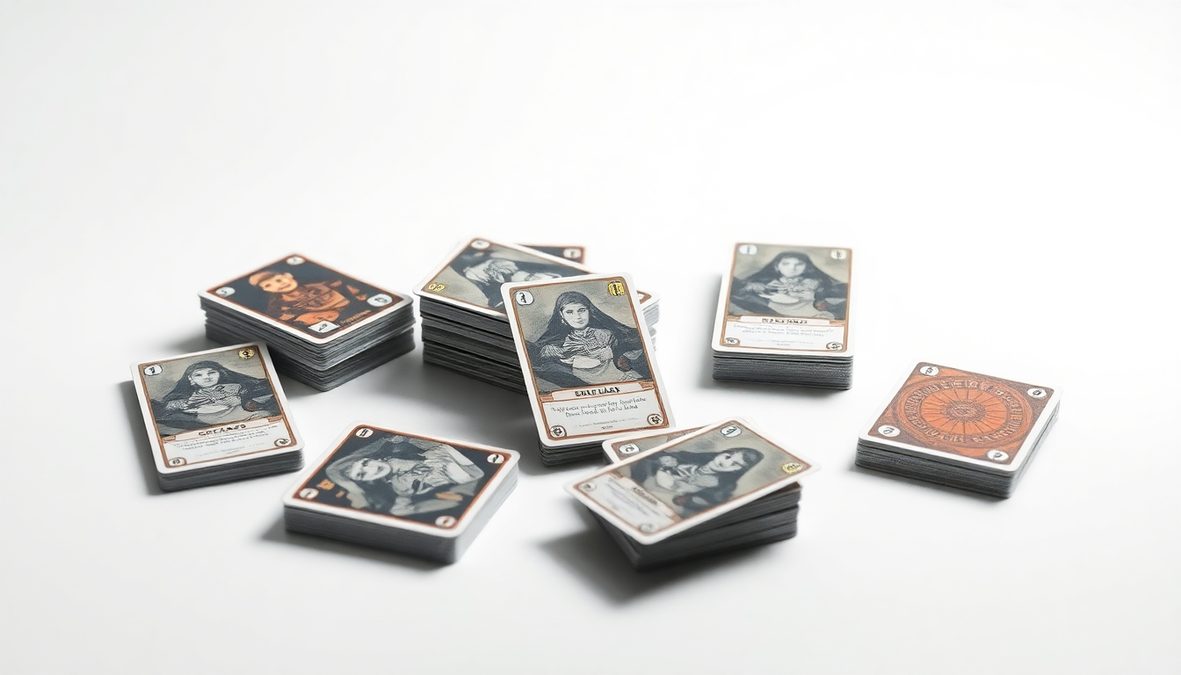
Should you buy that $120 Scarlet & Violet booster box, or are you about to flush money down a negative-EV hole?
How to start collecting Pokemon cards comes down to one decision: chase singles or crack packs. Singles maximize value. Packs maximize fun. Most new collectors blow their budget on the wrong products at the wrong time, buying hyped sets six months too late when prices have corrected and chase cards have tanked 40%.
You need a plan before you spend a dollar. Modern Pokemon has 4-6 major English releases per year, Japanese sets every 8-10 weeks, and a secondary market that moves faster than most stocks. A Charizard ex SAR from Obsidian Flames sold for $400 in September 2023. By March 2024, raw copies hit $180. That's a 55% drop in six months.
Here's what actually works.
Understanding Modern Pokemon Card Products and How to Start Collecting Pokemon Cards
Pokemon releases product in tiers, and new collectors routinely waste money on the wrong ones.
Booster boxes contain 36 packs (English) or 30 packs (Japanese). You're paying for volume and variance. A Prismatic Evolutions booster box at $220 MSRP offers terrible expected value on sealed product—chase cards like Eevee ex SAR appear at roughly 1 per 2-3 boxes, and that card peaked at $180 before settling around $100. Do the math: you're spending $440-$660 for a $100 pull. Japanese boxes run $50-$80 and offer tighter pull rates but smaller chase card markets.
Elite Trainer Boxes are overpriced for what you get. Eight packs, dice, sleeves, and energy cards for $50-$60 retail. The accessories are worth maybe $10. You're paying $40-$50 for eight packs when you could buy a booster box at $4.50-$6 per pack instead of $6.25-$7.50. The only ETB worth buying is the Charizard Ultra-Premium Collection type products, and only if you want the promos.
Build & Battle boxes give you four packs plus a guaranteed promo and evolution lines. They're designed for prerelease events. At $20-$25, they're acceptable if you want playable cards for actual Pokemon TCG gameplay, but collectors skip them.
Sleeved boosters from big-box retailers (Target, Walmart) are repack hell. Three packs in a plastic sleeve for $12-$15. You're paying $4-$5 per pack for random old stock. Never buy these.
Japanese vs English: Japanese booster boxes are cheaper per pack but have smaller print runs. A card that's $50 in Japanese might be $150 in English due to American collector demand. English has worse quality control—centering issues, print lines, edge whitening straight from pack. Japanese cards grade better on average, which matters if you're building a PSA 10 collection.
The best entry point? Singles for specific cards you want, then sealed product for sets with strong hit rates if you enjoy opening.
Calculate Expected Value Before You Rip
Expected value (EV) is the average value you'll pull from a box based on pull rates and current market prices.
Temporal Forces booster boxes sold for $90-$100 in March 2024. The set had no chase card above $60 (Walking Wake ex SAR topped at $55), and pull rates gave you roughly 6-7 ultra rares per box. Quick math: even if you hit the SAR, you're pulling $80-$100 in value from a $100 box. Factor in bulk commons worth maybe $5-$10 total, and you're at break-even or slight negative.
Compare that to Evolving Skies in 2021. Boxes cost $120-$140 retail. Umbreon VMAX Alternate Art alone was $400+. Rayquaza VMAX Alt, Sylveon VMAX Alt, Leafeon VMAX Alt—the set had seven alt arts above $100. Even with terrible luck, you'd hit one or two valuable cards per box. That's positive EV.
Modern sets rarely offer positive EV on sealed product. The house always wins unless you're buying at distributor pricing or hitting lottery pulls. You're paying for the experience of opening packs, not for profit.
Check TCGplayer market prices weekly. Use sites like pricecharting.com for historical data. If a booster box costs more than the average total pull value from that box, you're gambling with negative odds.
Where Pull Rates Actually Matter
Pokemon uses rarity tiers: common, uncommon, rare, double rare, ultra rare, illustration rare, special illustration rare, hyper rare.
Special Illustration Rares (SAR) appear roughly once every 2-3 boxes on average in modern Scarlet & Violet sets. Some sets skew worse—Paldean Fates had SAR rates closer to 1 per 4 boxes for certain chase cards.
Alternate arts in Sword & Shield era sets ran around 1 per 3-4 boxes. These are the Moonbreon-type cards (Umbreon VMAX Alt from Evolving Skies, the $500+ card that defined 2021-2022 collecting).
Rainbow rares and gold cards are more common than SARs, usually 2-3 per box, but they're worth less. A rainbow rare Charizard ex might be $30 while the SAR version hits $200.
You can open ten boxes of a set and never see the specific chase card you want. That's variance. Or you can buy the single for current market price and skip the $900 gamble.
Common Misconceptions About How to Start Collecting Pokemon Cards
Misconception 1: Graded cards are always worth more
PSA 10 premiums only matter for chase cards and vintage. A bulk rare from Paldea Evolved doesn't jump from $1 raw to $50 as a PSA 10. Grading costs $25-$150+ per card depending on service and turnaround time. You need a raw card worth at least $100-$150 before grading makes financial sense, and it needs realistic PSA 10 potential.
English modern cards have awful centering. You'll see visibly off-center cards straight from fresh packs. Japanese cards center better but cost more to grade (shipping to PSA or using CGC/BGS domestically). A $50 raw card that grades PSA 9 instead of PSA 10 might drop to $40 in graded value after you've paid $30 to grade it. You just lost money and liquidity.
The PSA 10 premium exists for iconic cards. Charizard ex SAR from Obsidian Flames: $180 raw, $400-$450 PSA 10. That's a meaningful 2.2-2.5x multiplier. But most modern ultra rares? PSA 10 sells for 1.2-1.4x raw price. Not worth the grading fee and three-month wait.
Misconception 2: Old packs are better investments than new packs
Vintage sealed product (Base Set, Jungle, Fossil) costs $300-$5,000+ per pack depending on weight and set. You're paying for nostalgia and scarcity, not pull value. A heavy Base Set pack might contain a Charizard worth $10,000+ in PSA 10, but probably contains a Magneton and some commons.
Modern sealed product depreciates fast. That $180 Fusion Strike booster box from 2021? Now $80-$90. The set was overprinted and has weak chase cards (Mew VMAX Alt was the only card above $100, now $80). Print runs have increased dramatically since 2021—Pokemon Company ramped up production after the COVID shortage.
The modern reprint era means most sets from 2020 forward will never see Base Set scarcity. Exceptions exist (Japanese Dream League, Shiny Star V, maybe Evolving Skies long-term), but betting on sealed modern product requires picking the right set, which is harder than it looks.
Misconception 3: You should complete full sets
Master sets (every card including all variations, languages, errors) are for psychopaths with unlimited budgets. A master set of Crown Zenith includes 200+ cards across regular, reverse holo, and gallery variants. Even a basic set completion of 151 from the 151 set costs $600-$800 if you're buying singles for the Charizard ex and Mew ex.
Set completion made sense in the Wizards of the Coast era (1999-2003) when sets had 64-102 cards. Modern sets have 200+ cards plus secret rares. Chasing completion is a trap. You'll overpay for bulk rares just to fill binder slots, money better spent on a single chase card you actually want.
Build a focused collection. Pick a Pokemon (Eeveelutions), a type (Dragon-types), an artist (Mitsuhiro Arita, 5ban Graphics), or a mechanic (ex cards, VMAX, etc.). You'll have a coherent collection worth more than scattered incomplete sets.
Practical Implications: The Real Strategy for Starting a Collection in 2024-2025
Start with singles. Period.
If you want Umbreon ex SAR from Twilight Masquerade, buy it on TCGplayer for current market price ($60-$80). Don't buy 20 booster packs at $5 each ($100 total) hoping to pull it at <3% odds. You'll get $40 in bulk and maybe one other ultra rare worth $8.
When to buy sealed product: Sets with flat hit distribution and multiple chase cards you'd be happy pulling. Prismatic Evolutions has nine Eeveelution ex cards, all selling for $30-$150. If you love Eevee, a booster box gives you 6-8 hits with decent odds of landing something you want. That's acceptable variance.
When to avoid sealed: Sets with one or two chase cards and nothing else (Obsidian Flames, Paldean Fates). Sets that have already spiked and corrected (Fusion Strike, Astral Radiance). Sets with confirmed overprinting (most standard Scarlet & Violet expansions).
The $500 Starter Collection
You have $500 to start collecting Pokemon cards. Here's how to maximize value:
$200 on singles: Pick 3-5 chase cards you genuinely want. Umbreon ex SAR ($70), Iono SAR from Paldea Evolved ($80), Charizard ex from 151 ($50). You now own specific cards you love instead of random pulls.
$150 on one Japanese booster box: Japanese sets offer better quality control and tighter pull rates. A box of Ruler of the Black Flame or Raging Surf costs $70-$80. You'll pull 8-10 ultra rares minimum. Save the other $70-$80 for a second box or different set.
$100 on supplies: KMC Perfect Fit inner sleeves ($5 per 100), Dragon Shield outer sleeves ($12 per 100), a proper binder with side-loading pages ($30-$40), top loaders for raw cards ($15 per 25), and penny sleeves for bulk ($3 per 100). Don't store cards in cheap binders that damage edges.
$50 on loose packs from a recent set: Buy ten packs of the newest release for fun. Rip them. You'll probably pull $20-$30 in value and spend $50, but you'll learn what current pull rates feel like and whether you enjoy the opening experience.
This approach gives you guaranteed chase cards, sealed product opening experience, and proper storage. You're not dumping $500 into a case of boxes hoping to hit.
Timing the Market
Pokemon card prices follow predictable patterns.
Pre-release hype drives prices up. Before Prismatic Evolutions dropped, pre-sale listings had Eevee ex SAR at $250-$300. A week after release, it settled to $120-$150. Two months later, $80-$100. Early adopters paid 3x final market price.
Wait 4-8 weeks after set release to buy singles. Initial supply floods the market, prices correct downward, and you'll pay 30-50% less than week-one prices. Exceptions: true short-printed cards (certain Japanese promos, limited distribution sets like Pokemon Go).
Avoid holiday releases unless you're opening for fun. Prices spike in November-December due to gift buying, then crater in January when sellers liquidate. A Charizard that's $200 in December might be $140 in February.
eBay sold comparables matter more than TCGplayer listings. Filter by "sold items" to see what cards actually sell for, not what sellers hope they'll sell for. A card listed at $100 that only sells for $70 is a $70 card.
Building a Collection Strategy: Long-Term vs Short-Term Collecting
You're either collecting for personal enjoyment or financial return. Most people lie to themselves and claim both.
Personal enjoyment collectors don't care about EV. You want cards you love. Buy singles, ignore market fluctuations, store cards properly, and enjoy your binder. This is the healthier approach. You'll spend less money chasing a $200 Moonbreon across 40 boxes when you could buy it outright for $200.
Financial return collectors are speculators. You're buying sealed product at distributor pricing, holding for 3-5+ years, and hoping for 2-3x returns. This requires capital, storage space, and timing skill. Most people fail at this because they buy at retail instead of wholesale, or they pick the wrong sets (you're not getting rich on Fusion Strike boxes).
The hybrid trap: Convincing yourself that buying $2,000 in booster boxes is "investing in a hobby." No, you're gambling on pull rates and hoping your hits cover costs. If you pull $1,200 in cards from $2,000 in boxes, you didn't invest—you lost $800 and got cardboard.
Be honest about your goals. If you want specific cards, buy them. If you want to open packs, accept the entertainment cost. If you want financial return, you need wholesale access and patience.
What to Actually Collect
Vintage Wizards of the Coast era (1999-2003): Base Set through Skyridge. High entry cost, established market, real scarcity. A PSA 10 1st Edition Charizard is $300,000+. A PSA 7 is $5,000-$8,000. Even non-holos from these sets hold value. Risk: counterfeits are everywhere at high grades.
Modern chase cards (2020-present): Alternate arts, SARs, and illustration rares from sets with popular Pokemon. Umbreon VMAX Alt, Giratina VSTAR Alt, Iono SAR, Charizard ex SAR. These are the "new vintage" cards that might appreciate over 10+ years. Many will also crater to $20-$40 as supply increases.
Japanese exclusive cards: Dream League, Tag All Stars, VMAX Climax. These sets never got English releases and have lower print runs. Cards from these sets (especially character rares) hold value better than English equivalents.
Sealed product: Only buy sealed if you're getting distributor pricing ($75-$85 for booster boxes) and you're willing to hold 3-5 years minimum. Modern sealed product is negative EV short-term. Long-term is a coin flip based on print run and set quality.
Graded vintage slabs: PSA 7-9 vintage holos are more affordable than raw NM copies sometimes due to market inefficiencies. A PSA 8 Base Set Charizard at $2,800 might be a better buy than a raw NM copy at $2,500 because the PSA 8 is guaranteed authentic and graded.
Avoid low-value bulk collecting. Don't buy 10,000 commons hoping they'll spike. They won't. Storage costs alone will exceed any appreciation.
Related Topics to Explore
Grading economics and when it makes sense: Deep dive into PSA vs BGS vs CGC pricing, turnaround times, and the actual PSA 10 premium for different card eras.
Pull rates by set: Statistical breakdowns of booster box pull rates for major sets (Evolving Skies, 151, Prismatic Evolutions) with real case opening data.
Japanese vs English collecting: Why Japanese cards grade better, how pricing differs between markets, and which Japanese sets are worth importing.
Identifying resealed and fake product: How to spot resealed booster boxes, fake packs, and counterfeit high-value singles before you buy.
Storage and preservation: Proper card storage to prevent edge wear, binder ring damage, and why penny sleeves matter even for bulk.
The bottom line: how to start collecting Pokemon cards depends on whether you want the cards or the gambling rush. Singles eliminate variance. Sealed product is entertainment with occasional upside. Most collectors would build better collections spending $500 on ten specific chase cards than $500 on random sealed product hoping to hit. The market doesn't care about your nostalgia or your hope that this box will finally contain the alt art you want. Do the math, buy what you actually want, and skip the negative-EV traps.