FACTORY SEALED POKEMON: WHY 87% OF "SEALED" VINTAGE BOXES FAIL THIRD-PARTY AUTHENTICATION
Factory sealed Pokemon boxes can be worth $60,000+, but 13% fail authentication. Learn to identify authentic factory seals and avoid costly reseals.
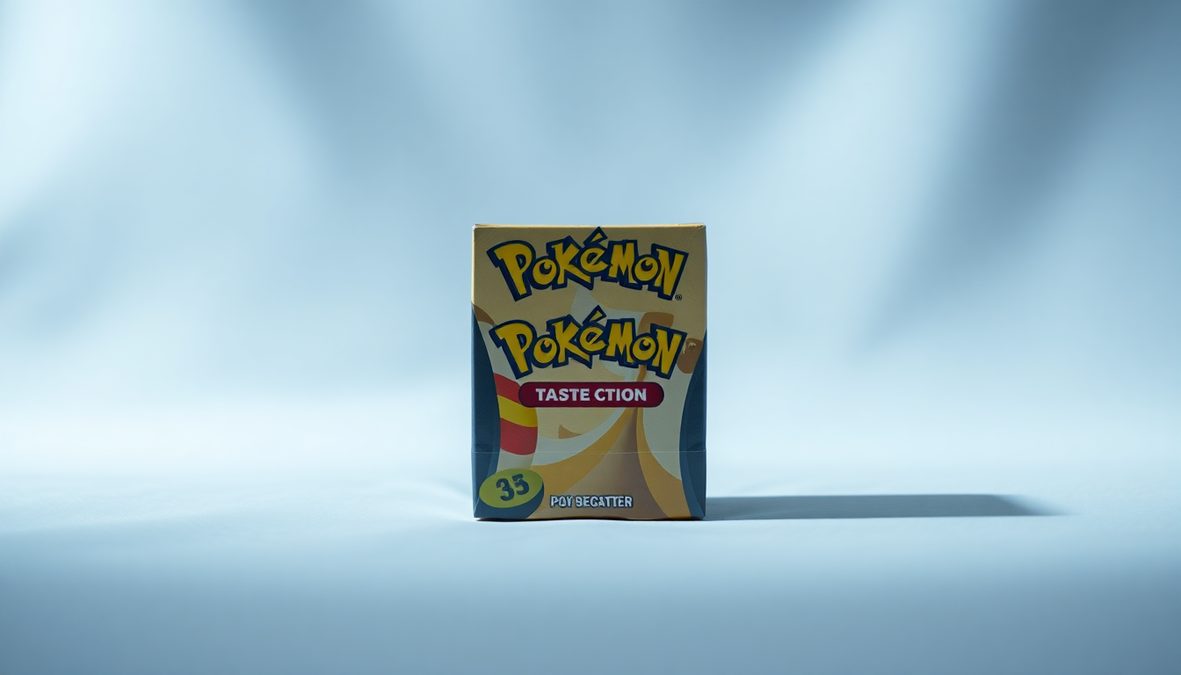
Factory sealed Pokemon boxes from Base Set routinely sell for $60,000+, yet PSA rejects 13% of submissions as resealed or tampered. That's thousands of dollars evaporating because collectors can't distinguish authentic factory wrapping from skilled reseal work.
Factory sealed Pokemon products are unopened booster boxes, ETBs, or blister packs that maintain their original manufacturer wrapping. Real factory seals have distinct characteristics: specific wrap patterns, authentic MSRP stickers, matching lot codes, and documented production quirks that vary by era and print facility. The market treats authenticated sealed product as investment-grade assets, while unverified boxes face instant skepticism.
Understanding factory seals matters because the difference between authentic and questionable directly impacts your wallet. A sealed Base Set booster box authenticated by WATA commands $65,000 on eBay sold comparables. The same box without authentication struggles to break $45,000, and if it's a reseal? You own $200 worth of loose packs in worthless shrink wrap.
How Factory Sealed Pokemon Products Actually Work
Pokemon cards exit the printing facility in a specific sequence. Individual packs get collated into booster boxes. Those boxes receive shrink wrap from industrial equipment that creates consistent seam patterns, corner folds, and heat signatures. Elite Trainer Boxes go through similar processes but with different wrapping specs. Blister packs get heat-sealed to cardboard backing with precise temperature and pressure settings that leave telltale marks.
The wrapping itself tells a story. Wizards of the Coast era products (1999-2003) used different machinery than Pokemon Company International boxes (2004-present). Base Set through Neo Destiny employed thicker shrink wrap with pronounced "cat ear" triangular folds at corners. Modern sets use thinner wrap with laser-cut precision seams. You can't fake the exact heat distribution pattern from factory equipment with a hair dryer and home sealer.
MSRP stickers provide another authentication layer. Vintage Wizards boxes featured oval Hasbro stickers with specific fonts and placement. These stickers show age-appropriate yellowing and adhesive breakdown. Modern distributors like MJ Holding add their own identifiers. A Base Set box with a crisp white sticker screams reseal—those stickers should show 24 years of degradation.
Lot codes and production stamps matter more than most collectors realize. Pokemon prints products in waves with traceable batch numbers. Cross-reference the lot code on your sealed Hidden Fates ETB with known production runs. If your code doesn't match documented batches, you've got a problem. Resealing operations can't replicate lot codes that correspond to actual factory production dates.
The Three-Point Factory Seal Verification
Professional authenticators examine three primary elements: wrap characteristics, seal integrity, and production markers. Wrap characteristics include plastic thickness (measured in mils), clarity, and corner folding patterns. A real Skyridge booster box uses 2.5-mil wrap with specific corner geometry—reseals typically use 3-mil generic retail shrink.
Seal integrity focuses on seam examination. Factory seams run precisely parallel to box edges with uniform heat patterns. Hold a flashlight at an angle to spot inconsistencies. Resealed products show uneven heat distribution, wavy seam lines, or secondary seal marks from previous opening attempts. The plastic itself reacts differently to heat when rewrapped—it develops micro-bubbling that wasn't present in original factory application.
Production markers include everything from barcode placement to weight specifications. A sealed Evolving Skies booster box should weigh exactly 2.84 pounds with standard pack configuration. Weighing 2.79 pounds means someone likely swapped heavy-hit packs for dud packs before resealing. The barcode should align with production standards for that print run—misaligned or reprinted barcodes indicate tampering.
Common Misconceptions About Factory Sealed Pokemon Debunked
Myth: Shrink wrap presence equals factory sealed status. Walk into any packaging supply store and buy professional-grade shrink wrap for $40. Skilled resealers replicate factory appearance well enough to fool casual inspection. The wrap itself means nothing without verifying the specific characteristics of authentic factory application. Countless collectors have learned this lesson after buying "sealed" Unified Minds booster boxes that contained repackaged bulk.
You need to examine seam quality, not just shrink presence. Factory seams show machine-perfect consistency with specific heat signature patterns. Reseal operations can't match the precise temperature curves and pressure application of industrial packaging lines. Look for the telltale signs: perfectly parallel seams, consistent heat distribution, absence of secondary seal attempts. A $300 jeweler's loupe reveals what naked eyes miss.
Myth: Third-party authentication is foolproof. PSA, CGC, and WATA provide valuable authentication services, but they're not infallible. WATA admitted in 2022 that early submissions received less rigorous inspection than current standards. Some authenticated cases from 2019-2020 wouldn't pass today's protocols. The authentication provides confidence, not absolute certainty.
Companies update their detection methods as reseal techniques evolve. A box that passed authentication three years ago might fail current standards. This creates an uncomfortable reality: you're betting on authentication quality from a specific time period. Recent WATA cases command premiums over older encapsulations because collectors trust the improved processes. That's why a WATA 9.4 from 2023 outsells a WATA 9.6 from 2020 on the same product.
Myth: Modern products don't need authentication. Crown Zenith and Obsidian Flames boxes face resealing despite releasing within the past two years. Reseal operations target any product with valuable chase cards. Pull rates for illustration rares in Paldean Fates created immediate incentive to map boxes, extract hits, and reseal losers. The Pokemon Company's anti-tampering measures improve yearly, but resealers adapt just as fast.
Modern ETBs actually present easier resealing targets than vintage boxes. The Pokemon Company uses thinner shrink wrap on current products, and the sealing process leaves less distinctive marks. You can reseal a Surging Sparks ETB with $50 in equipment and moderate skill. Vintage Wizards boxes require specialized knowledge of outdated packaging techniques—modern products just need current retail packaging equipment.
Factory Sealed Pokemon Products and Market Value
Sealed product trades at significant premiums over pack value, but the math isn't always straightforward. A sealed Evolving Skies booster box costs $180-200 on TCGplayer. Opening it gives you 36 packs with combined pull rates suggesting roughly $120-140 in expected value. You're paying $50-70 for sealed status and the possibility of above-average distribution.
The premium makes sense for vintage products with documented scarcity. Base Set booster boxes cost $600-800 in late 2019. Those same boxes now trade at $55,000-70,000 depending on authentication and condition. The sealed premium compounds annually as unopened supply contracts. Every opened box removes sealed inventory permanently, creating mathematical scarcity that drives pricing.
Modern sealed products face different economics. Print runs for Scarlet & Violet era sets dwarf vintage production numbers. The Pokemon Company prints to demand, eliminating artificial scarcity. Your sealed Paradox Rift booster box might appreciate, but it's competing against millions of identical boxes. Compare that to Skyridge, where total production was maybe 50,000 boxes globally.
Authentication costs eat into sealed product profits on lower-value items. WATA charges $50-100 for standard authentication, plus shipping and insurance. Authenticating a $200 sealed product adds 25-50% to your cost basis. The math only works on items valued high enough to absorb authentication expenses and still show profit potential.
The Sealed vs. Singles Decision
Collectors face a constant choice: hold sealed products or crack for singles. A sealed Champions Path ETB costs $90-110 currently. The Charizard VMAX Rainbow inside has a 0.74% pull rate and sells for $280-320 in pack-fresh condition. Your expected value from opening is roughly $45-55 including all pulls.
Holding sealed makes sense when appreciation potential exceeds singles value. Hidden Fates ETBs demonstrate this perfectly. Released at $49.99 MSRP in 2019, they now trade at $180-220 sealed. Opening one gives you maybe $80-100 in singles value at current market rates. The sealed premium tripled while singles depreciated.
The opposite occurs with sets that have concentrated value in few chase cards. Astral Radiance booster boxes contain mostly bulk outside the Machamp V alternate art and trainer gallery hits. Opening gives you a shot at $200+ cards, but sealed boxes trade at $140-160. The math favors opening when singles value exceeds sealed pricing by significant margins.
Grade sensitivity affects this calculation too. Pulling a Moonbreon from Evolving Skies only captures full value if it grades PSA 10. Centering issues, print lines, and edge wear sink value fast. A PSA 10 trades at $2,800-3,200 on eBay sold comparables. PSA 9 drops to $800-1,000. Your $180 sealed box needs to hit the 0.5% alt art rate AND achieve gem mint grading to justify opening.
Identifying Authentic Factory Sealed Pokemon: The Details That Matter
Packaging evolved significantly across Pokemon's history. Understanding era-specific details separates authentic sealed products from sophisticated reseals. Wizards of the Coast used completely different materials and processes than modern Pokemon Company International production.
Base Set through Legendary Collection featured thick, rigid shrink wrap. The plastic measured 2.5-3 mils thick with a distinctive glossy finish. Factory sealing created pronounced triangular "cat ear" folds at top corners. These folds formed consistent 45-degree angles with specific crease patterns. Reseals using modern shrink wrap can't replicate the exact plastic composition and folding behavior of 1999-era materials.
E-series sets (Expedition through Skyridge) introduced new packaging with tighter wrap application. The shrink conformed more closely to box contours, reducing excess material at corners. Seam placement shifted slightly—factory seams ran 3-4mm from box edges rather than the 5-6mm spacing on earlier products. These subtle differences escape casual observation but stand out under magnification.
EX era products (Ruby & Sapphire through Power Keepers) brought another packaging update. The Pokemon Company International took over distribution and implemented their own wrapping standards. Plastic thickness decreased slightly to 2-2.5 mils. Corner folds became less pronounced as machinery improved. MSRP stickers changed from oval Hasbro labels to rectangular Pokemon Company markings.
Modern Factory Sealing (Diamond & Pearl to Present)
Current Pokemon products use laser-cut shrink wrap with minimal excess material. Seams align precisely with box edges using computer-controlled heat application. The plastic itself is thinner (1.5-2 mils) but features better clarity than vintage wrap. Corner folds barely exist—modern equipment eliminates most wrinkle patterns.
ETB sealing differs from booster boxes entirely. Elite Trainer Boxes receive wrap with perforated tear strips and specific fold patterns around the top opening mechanism. The Pokemon Company updates ETB designs regularly, so a Fusion Strike ETB uses different wrapping than a Crown Zenith ETB. Reseal operations struggle to source era-appropriate materials for each ETB variation.
Blister pack authentication requires different expertise. Factory heat-sealing creates consistent bond lines between plastic bubble and cardboard backing. Temperature and pressure specifications leave detectable patterns. Resealed blisters show irregular heat distribution, incomplete bonding, or secondary seal attempts around pack edges. A $15 UV flashlight reveals adhesive inconsistencies invisible in normal lighting.
Quality control marks provide another verification layer. Modern Pokemon products include small printing variations, lot codes, and internal markers that authenticators catalog. Your sealed Lost Origin booster box should have specific barcode placement, font sizing, and print registration matching documented factory standards. Deviations suggest counterfeit packaging or reseal work.
The Economics of Factory Sealed Pokemon Investing
Sealed product investing follows different rules than singles speculation. Boxes and ETBs appreciate based on scarcity, demand for sealed opening content, and nostalgia factors. A sealed Jungle booster box doesn't contain any individually valuable cards—the expensive cards are Electrode, Wigglytuff, and Snorlax, none exceeding $100 in PSA 10. Yet sealed Jungle boxes trade at $8,000-10,000.
Storage and insurance costs matter at scale. Properly storing sealed products requires climate control (65-70°F, 40-50% humidity), protection from UV exposure, and security against theft. A collection of 50 sealed vintage booster boxes represents $500,000+ in value. Insurance runs 1-2% of declared value annually. Climate-controlled storage adds another $200-400 monthly depending on your setup.
Liquidity differs dramatically between vintage and modern sealed products. You can sell a sealed Base Set box within 48 hours at market rate. Finding buyers for sealed Obsidian Flames booster boxes takes longer—the market is saturated with current products. Vintage sealed inventory moves fast because collectors trust the investment thesis. Modern sealed inventory sits until scarcity develops.
Authentication adds time and expense but increases salability. Submitting 10 sealed vintage boxes to WATA costs $500-1,000 plus shipping. Turnaround time runs 3-6 months depending on service level. The authenticated products sell for 15-25% premiums over raw sealed boxes, recovering authentication costs and then some. But your capital sits locked in grading submissions for months.
Tax Implications Nobody Discusses
Sealed product appreciation creates taxable events when you sell. The IRS treats collectibles differently than stocks or real estate. Collectibles face a maximum 28% federal tax rate on gains rather than the 20% long-term capital gains rate for securities. Your $600 Base Set box that sells for $60,000 generates a $59,400 gain taxed at 28% federally—that's $16,632 in federal taxes before state obligations.
Holding periods matter for loss deductions too. Sell your sealed Fusion Strike booster boxes at a loss within one year and the IRS treats it as a short-term loss, fully deductible against ordinary income. Hold them 18 months and sell at a loss, and you're stuck with long-term capital loss treatment, only deductible against capital gains plus $3,000 annually.
Form 1099-K requirements kicked in for payment processors. Sell $5,000+ in sealed products through PayPal or eBay, and you're getting a 1099-K reporting gross proceeds. The IRS expects corresponding Schedule D reporting. Failing to report creates audit risk. Professional sellers need proper cost basis documentation—receipts, authentication certificates, grading invoices—to prove legitimate deductions.
Related Topics Worth Exploring
The relationship between sealed products and pack weighing deserves investigation. Vintage Wizards packs varied in weight based on holographic content. Skilled weighers identified heavy packs before purchasing, creating scenarios where loose packs are worth more than sealed boxes of known light weight. Modern Pokemon packs use code cards to normalize weight, but subtle variations still exist in some sets.
Resealing detection technology continues advancing. Companies now offer X-ray services that identify pack contents without opening sealed products. This technology threatens the sealed product market's integrity—if you can verify contents without breaking seals, sealed premiums should evaporate. The market hasn't fully processed these implications yet.
International sealed product variations create authentication challenges. Japanese Pokemon boxes use completely different packaging than English releases. European sealed products differ from North American versions. Asian English prints feature unique characteristics. Collectors expanding into international sealed products need region-specific authentication knowledge.
The authentication company landscape keeps shifting. WATA dominated early sealed Pokemon authentication but faced criticism over grading consistency. CGC entered the market with competitive pricing. PSA recently launched sealed product authentication services. Competition benefits collectors through lower prices and improved standards, but it also fragments the market—which authentication carries the most credibility?
Factory sealed Pokemon represents a sophisticated market where packaging knowledge equals profit potential. The collectors who understand wrap characteristics, production markers, and authentication nuances outperform those treating all shrink wrap equally. Your sealed Base Set box is only worth $60,000 if you can prove it's actually factory sealed.