ETB VS BOOSTER BOX: WHICH FORMAT ACTUALLY MAKES YOU MONEY IN 2025?
ETB vs booster box comparison: pull rates, cost per pack, promo value, and sealed ROI. Real math on which format wins for opening and investing.
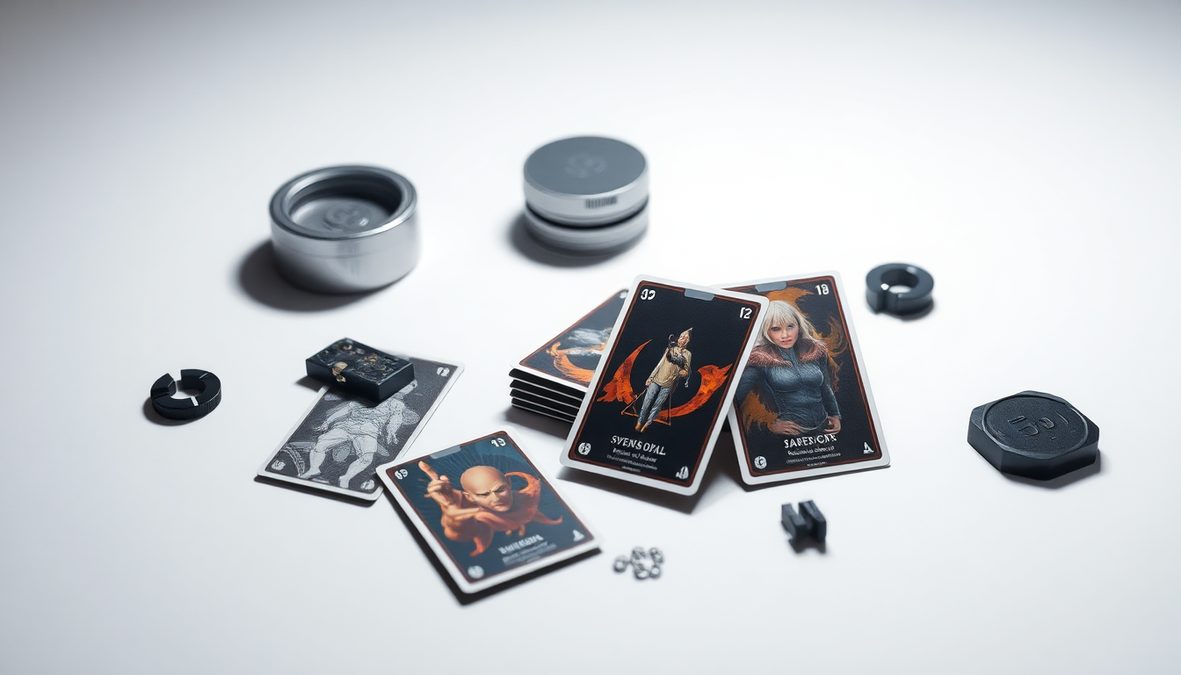
Should you drop $180 on a booster box or split that into two Elite Trainer Boxes? You're staring at both options on TCGplayer, and the choice matters more than most collectors realize.
Booster boxes win for pure pull rate efficiency and lower per-pack cost. An ETB vs booster box comparison isn't even close when you run the numbers—you're paying roughly $4 per pack in a booster box versus $5-6 per pack in an Elite Trainer Box. But that's not the full story. ETBs include dice, sleeves, energy cards, and those promo cards that occasionally spike hard. Scarlet & Violet ETBs with the Miraidon/Koraidon promos? Those were selling sealed for $65-75 within months of release.
Here's the breakdown that actually matters.
The Quick Math: ETB vs Booster Box Value Comparison
*Metric | Booster Box | Elite Trainer Box*
MSRP | $143.64 | $49.99
Packs Included | 36 | 9
Cost Per Pack | ~$4.00 | ~$5.55
Promo Cards | 0 | 1-2 (set dependent)
Extras | None | Sleeves, dice, energy, box, dividers
Seal Appeal (5yr) | High | Medium-High
Pull Rate Advantage | +44% more packs | Promo potential
Three booster boxes cost $430. You could buy eight ETBs for $400 and get 72 packs plus eight promo cards, sleeves sets, and accessories. But you'd still have fewer total packs and less consistent pull rates across multiple boxes.
The cost per pack spread is where booster boxes crush ETBs mathematically. Prismatic Evolutions booster boxes are selling for $240-260 on TCGplayer right now. That's $6.67-7.22 per pack. Prismatic Evolutions ETBs are going for $80-90, which works out to $8.89-10 per pack. You're paying a 33% premium for the packaging and accessories.
Pull Rates: Where the Booster Box vs ETB Gap Widens
Booster boxes give you four times the packs. That's not marketing—it's probability.
Modern Pokémon sets guarantee roughly one hit per three packs at minimum (ultra rare or better). A 36-pack booster box should net you 10-12 hits on average. An ETB with nine packs? You're looking at 3-4 hits, maybe five if variance smiles on you. The guaranteed pulls don't scale linearly because of how Pokémon structures their set ratios.
Special Illustration Rares (SIRs) in Scarlet & Violet sets appear at roughly 1:60 pack rates. You need volume to hit these. Temporal Forces SIRs like the Iron Leaves at $45 or the Dialga at $38 aren't showing up in your single ETB. A booster box gives you a 46% chance to pull at least one SIR. An ETB? About 14%.
Surging Sparks demonstrated this brutally. The Pikachu ex SAR sits at 0.42% pull rate (1:238 packs). You'd need 6.6 booster boxes on average to hit one. That's 26.4 ETBs. The math makes booster cases look almost reasonable for chase cards at those odds.
Set-Specific Pull Rate Exceptions
Not all sets punish ETB buyers equally.
Obsidian Flames had one fascinating quirk—the Illustration Rare pull rates were slightly higher in the first month, and ETB promo Lechonk actually held $12-15 value for sealed collector demand. Small sets with lower chase card counts sometimes make ETBs more viable because you're not chasing 0.5% SARs across a massive set list.
Pokemon 151 ETBs remain stupid expensive ($120-140) because the promo Bulbasaur, Charmander, and Squirtle cards carried premium nostalgia value. The booster boxes are $280-320. You're paying $7.78-8.89 per pack either way. That's a set where ETB vs booster box becomes a coin flip based on whether you want the promo trifecta.
Crown Zenith, conversely, was all about the Galarian Gallery subset. Those cards appeared roughly 1:4.5 packs. Booster boxes gave you 7-8 gallery cards on average. ETBs gave you 2, maybe 3. The Moonbreon-hunting collectors needed volume, period.
Magic: The Gathering Changes the Equation
MTG draft boxes contain 36 packs at $115-130 MSRP ($3.19-3.61 per pack). Set boosters run 30 packs for $130-145 ($4.33-4.83 per pack). Bundles (the MTG equivalent of ETBs) include 8 set boosters for $45-50 ($5.63-6.25 per pack).
Play Boosters replaced draft and set boosters in 2023, but the math holds: draft boxes give you 36 packs for roughly $3.60 each, while bundles charge $6+ per pack.
Wilds of Eldraine bundles came with a borderless Restless Cottage promo that spiked to $8-10. That narrowed the value gap slightly. But you're still paying a 60-70% premium per pack for some basic lands, a spindown die, and a cardboard box.
One Piece Card Game bundles (8 packs, $40 MSRP, $5 per pack) versus booster boxes (24 packs, $96 MSRP, $4 per pack) follow identical logic. The OP-09 bundle promo Shanks looked gorgeous and holds $15-18, but you're sacrificing pull rate efficiency for a single guaranteed card.
The Extras: Do Sleeves and Dice Actually Matter?
ETB defenders point to the accessories. Fair point—let's price them.
A set of 65 sleeves costs $4-8 for decent quality (Dragon Shield, Ultra Pro). Acrylic damage counters run $8-12. Energy cards are functionally free if you've opened any product. Dice cost $6-10 for a matching set. The cardboard box and dividers have maybe $2-3 of utility if you're organizing bulk.
Add it up: $20-35 in accessories per ETB. Subtract that from the $50 MSRP and you're paying $15-30 for nine packs, or $1.67-3.33 per pack. That's competitive with booster boxes on a pure pack cost basis.
Except you're not buying ETBs for the accessories alone. You're buying them for the promo cards and the sealed product speculation potential.
Promo Card Economics
Scarlet & Violet base set ETB promos (Miraidon, Koraidon) were bulk at release. Six months later, the Miraidon promo was $8-10 on TCGplayer. The Koraidon promo sat at $6-7. Not life-changing, but enough to recover $15-20 of the ETB cost if you bought multiples and flipped the promos.
Evolving Skies ETBs came with Sylveon VMAX and Umbreon VMAX promos. The Umbreon promo hit $35-40 in PSA 10 within a year. That's a $25-30 gain over raw pricing. Suddenly your $50 ETB cost drops to $20-25 for nine packs when you grade and sell the promo.
The promo play only works if you call the hype correctly. Paldea Evolved ETB promos (Quaquaval, Meowscarada, Skeledirge) went straight to bulk. Obsidian Flames Lechonk promo had meme value but nothing sustainable. You're gambling that your $50 ETB includes a $20+ promo that appreciates.
Booster boxes include zero promos. Zero accessories. You're paying for packs and pull rates, nothing else. That's actually a feature, not a bug, if you're focused on opening product rather than speculating on sealed.
Sealed Product Investment: Booster Box vs ETB Long-Term
Five-year sealed ETBs rarely match booster box returns, but the exceptions are spectacular.
Hidden Fates ETBs sit at $180-220 today. MSRP was $50. That's a 260-340% return over five years. Hidden Fates Shiny Vault subset drove that—shiny Charizard GX at $220 PSA 10, shiny Mewtwo GX at $80, shiny Rayquaza GX at $120. The ETBs included shiny Gyarados GX promos worth $15-20 raw.
Hidden Fates tins, by comparison, returned less because they lacked promo cards and had less shelf appeal. The booster boxes... didn't exist as a regular product for Hidden Fates. The set was released in pin collections, tins, and ETBs primarily, which created artificial ETB scarcity.
Evolving Skies ETBs are $100-120 sealed. MSRP was $50. Evolving Skies booster boxes are $280-320 sealed. MSRP was $144. The ETBs doubled. The booster boxes nearly doubled. Both won, but booster boxes won harder in absolute dollar terms ($136-176 gain vs $50-70 gain).
Brilliant Stars tells a different story. ETBs are $65-75 sealed. Booster boxes are $180-200 sealed. That's a 30-50% ETB gain versus a 25-39% booster box gain. The ETBs actually outperformed on percentage returns because the Charizard VSTAR hype kept base sealed prices elevated, but the lower MSRP starting point gave ETBs better multiplier math.
The Case for Diversification
If you're sitting on $500 to deploy into sealed product, you have options:
Two booster boxes ($300) + four ETBs ($200): Covers both bases. You get 72 packs from boxes, 36 packs from ETBs, plus four promo cards and accessories. This hedges against ETB promo spikes while maintaining booster box pull rate advantage.
Three booster boxes ($450): Pure volume play. 108 packs. Maximum hits. Zero diversification if ETBs spike on promo scarcity.
Ten ETBs ($500): Promo card lottery ticket. 90 packs total, which is less than three booster boxes (108 packs), but you're betting on sealed ETB demand and promo appreciation.
The diversification play makes sense if you're uncertain which direction the set will trend. Prismatic Evolutions could go full Evolving Skies (booster boxes to $300+, ETBs to $130+), or it could flatten like Paldea Evolved (boxes at $160, ETBs at $60).
When to Choose ETB vs Booster Box: The Actual Decision Matrix
Pick a booster box if:
You're opening immediately and want maximum pulls
You're chasing specific ultra rares or SARs with low pull rates (under 1%)
You trust the set's long-term sealed growth and have storage space
You don't care about promo cards or accessories
You're buying cases (6 boxes) and need per-pack cost efficiency
You're a PSA/BGS submitter who needs volume for grading submissions
Pick ETBs if:
You're a casual opener buying 1-2 units for fun
The set's promo cards have hype potential (nostalgia characters, chase variants)
You actually use the sleeves, dice, and energy cards
You're giving sealed product as gifts (better presentation than a cardboard brick)
You're diversifying sealed holdings and want lower per-unit exposure
Storage space is limited (8 ETBs fit where 3 booster boxes sit)
Pick both if:
You have the budget and want to hedge sealed appreciation angles while maintaining opening volume. This is the Archive Drops recommended strategy for sets with strong fundamentals—buy a box for opening, grab 2-3 ETBs for sealed holds.
The Underrated ETB Play
Premium Collection ETBs break the mold entirely. Ultra-Premium Collections like the Scarlet & Violet Ultra-Premium Collection ($120 MSRP) included 16 packs, oversized cards, and metal dice. These weren't competing with booster boxes—they were competing with collector's taste for deluxe packaging.
Celebrations Ultra-Premium Collection is $350-400 sealed today. MSRP was $120. That's a 192-233% return in under four years. The 16 packs of Celebrations (a reprint-heavy set) drove none of that value. The gold metal cards, gold dice, and nostalgia packaging drove all of it.
If you're comparing standard ETBs versus booster boxes, ignore these premium SKUs. They're a separate investment thesis based on scarcity and presentation rather than pull rates or pack value.
The Verdict: Math Wins, But Context Matters
Booster boxes beat ETBs on cost per pack, total pulls, and chase card probability. The numbers aren't debatable—you're paying 30-50% more per pack in an ETB, you're getting 75% fewer packs, and your odds of hitting Special Illustration Rares or equivalent chase cards drop proportionally.
But ETBs beat booster boxes on promo card upside, sealed appreciation volatility (higher percentage gains when they hit), gift appeal, and accessibility for casual buyers. A $50 ETB is an impulse buy. A $260 booster box requires commitment.
If you're opening product, buy booster boxes. If you're speculating on sealed, buy booster boxes for established sets and ETBs for sets with strong promo cards or limited print runs. If you're a casual collector who opens 1-2 products per set, ETBs give you the full experience without the $200+ commitment.
The real answer? Most serious collectors end up buying both, allocating 70% of their budget to booster boxes for volume and 30% to ETBs for promo speculation and sealed diversity. That's the play that covers both sides of the ETB vs booster box equation without leaving money on the table.