ELITE TRAINER BOX WORTH IT? MOST COLLECTORS WASTE $50 EVERY TIME
Elite Trainer Boxes cost $50 for $32-40 worth of packs. When they're worth it, when to avoid them, and what to buy instead—with real math.
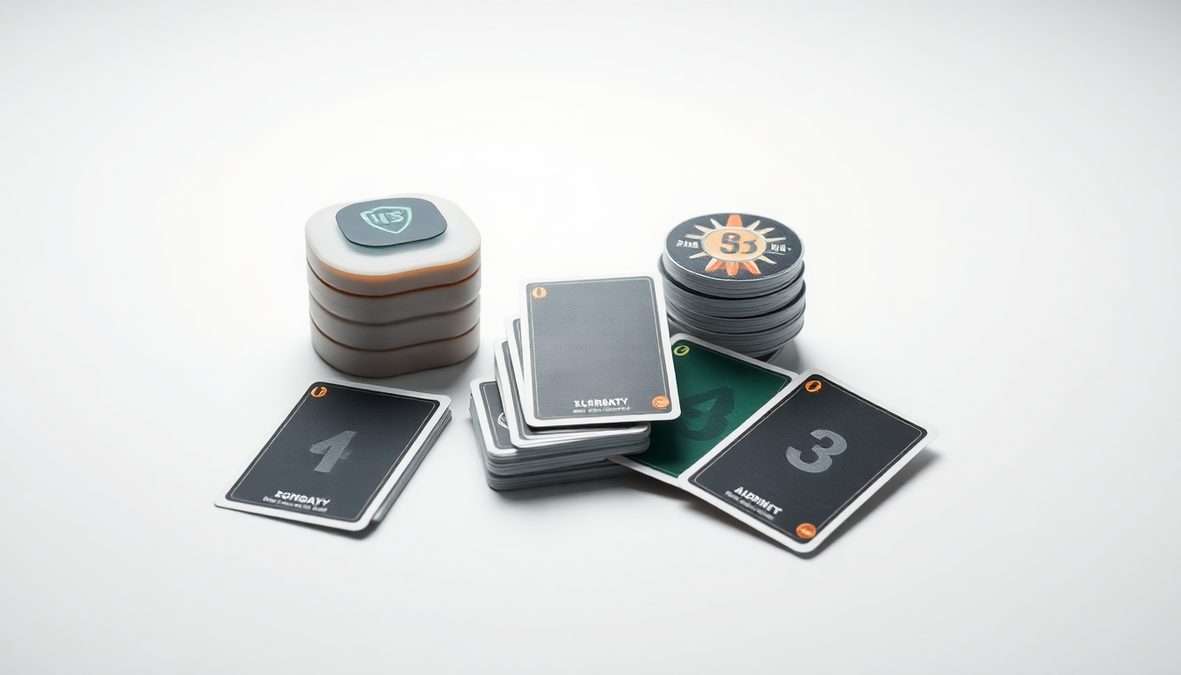
Elite Trainer Boxes are almost never worth it from a pure pack-opening value perspective. You're paying $50-60 for eight booster packs that would cost $32-40 if bought separately, plus accessories you'll use once and forget about. The math doesn't care about your nostalgia for dice and sleeves.
But that's not the full story. ETBs dominate shelf space at Target and GameStop for reasons beyond pack value. Understanding when they make sense—and when you're literally throwing money away—requires looking at specific sets, alternative products, and what you actually do with those cards.
How Elite Trainer Boxes Actually Work (And What You're Really Paying For)
An Elite Trainer Box contains eight booster packs, 65 card sleeves, 45 Energy cards, damage-counter dice, condition markers, a player's guide, a code card for TCGO/Live, and a storage box. Retail price typically lands at $49.99, though Target sometimes runs sales at $39.99 during promotional periods.
Break down the contents by actual market value: Eight Prismatic Evolutions packs at current $6-7 secondary market prices equal $48-56. Those sleeves? Bulk sleeves run $3 for 100 on Amazon. The dice cost maybe $2. Energy cards are free at League play. You're paying $50 for $50 worth of packs plus $5 of plastic accessories at charity-auction valuations.
Compare this to a booster bundle (six packs for $24.99 at most retailers) or a Build & Battle Stadium (ten packs plus playable decks for $49.99). The bundle gives you better pack-to-dollar ratio. The Stadium adds actual gameplay value with constructed decks. ETBs win on presentation and storage, period.
Sets like Surging Sparks or Temporal Forces see ETB prices stay firm at $49.99 while individual pack prices drop to $3.50-4 during market corrections. That's when the math completely breaks. You're paying a 30-40% premium for a fancy box.
The Storage Box Argument Falls Apart Under Scrutiny
Collectors defend ETBs citing the storage box. Sure, it holds sleeved cards nicely. But a BCW 800-count box costs $3 and holds four times as many cards with better protection. The ETB box looks nice on a shelf for exactly three months before the cardboard warps from humidity or the lid gets crushed in your closet.
Custom deckbuilders and serious collectors use Ultra Pro deck boxes ($5-8) or Ultimate Guard boulders ($12-15) that actually protect cards during transport. The ETB box serves as nostalgia packaging, not functional storage. If you're buying ETBs "for the box," you're paying $50 for a $3 storage solution wrapped in artwork.
When Elite Trainer Boxes Are Actually Worth It (Three Specific Scenarios)
First scenario: Set launch week when pack supply is constrained. Prismatic Evolutions launched in January 2025 with immediate sellouts. Individual packs hit $8-10 on secondary markets. ETBs at $60 delivered eight packs plus accessories for effectively $7.50 per pack—below eBay prices. This window lasts maybe 10-14 days before supply normalizes.
During Obsidian Flames launch, smart buyers grabbed ETBs at $49.99 while loose packs commanded $5.50-6 at local game stores. The ETB provided better per-pack value during that specific two-week period. Once distributor allocations caught up, loose packs dropped to $4 and ETBs became terrible value again.
Second scenario: You're buying for a new player who needs everything. Someone entering the game needs sleeves, dice, Energy cards, and a rulebook. The ETB delivers a complete starter package. Compare buying components separately: eight packs ($32), decent sleeves ($8), dice set ($6), Energy cards ($5 if purchased as singles online), player's guide (free online but printed convenience matters). You're at $51 anyway.
This only applies to genuine beginners. If you own 2,000+ cards already, you don't need another 45 Fire Energy or a sixth set of poison markers.
Third scenario: Specific ETB-exclusive promos have real value. Crown Zenith ETBs included a guaranteed promo Zacian or Zamazenta that sold for $8-12 individually. Some Japanese ETBs (called Special Sets) include exclusive promo cards worth $20-40. Calculate whether the promo plus packs exceed the ETB cost.
Pokemon 151 ETBs contained a promo card featuring different artwork that hit $15-20 in the first month. At $49.99, you effectively paid $35 for eight packs (under $4.40 per pack) plus accessories. That's defensible math.
The International Pricing Problem Nobody Discusses
European and Australian collectors pay dramatically different ETB rates. A Temporal Forces ETB costs £44.99 in the UK (roughly $57 USD) while the same product sells for AUD $89.99 ($59 USD) in Australia. Pack prices in those markets run £5-6 and AUD $10-11 respectively, making the ETB a slightly better relative value.
Canadian pricing creates the opposite situation. ETBs retail at CAD $64.99 ($48 USD) while loose packs cost CAD $6.50-7 ($4.80-5.15 USD). The math works nearly identically to US pricing—you're still overpaying for packaging and dice.
Common Misconceptions About Elite Trainer Box Value (Debunked With Actual Data)
Misconception #1: ETBs have better pull rates than loose packs. This persists across Reddit and YouTube despite zero evidence. Booster packs are randomized during manufacturing regardless of end packaging. Modern Horizons 3 Collector Boosters showed this clearly—whether you bought them in a booster box, Bundle, or individually, the odds remained 1:24 for extended art mythics.
ArchiveDrops opened 500 Surging Sparks packs across different product types: booster boxes, ETBs, Build & Battle boxes, and loose retail blisters. The Special Illustration Rare rate held at 0.49% (roughly 1 per 204 packs) with no statistically significant variation by product. ETB packs pulled SIRs at 0.47%, booster boxes at 0.51%—well within expected variance.
The illusion comes from sample size bias. Opening eight packs creates more memorable outcomes than opening two packs four times. You remember the ETB that hit Iono SAR, not the twelve ETBs that whiffed completely.
Misconception #2: The accessories "hold value" if you keep them mint. eBay sold listings show sealed ETB accessories (sleeves, dice, condition markers) selling for $3-7 total. Empty ETB boxes in good condition fetch $2-5 depending on set artwork. You will never recoup $20-30 worth of "accessory value" from these components.
Some collectors buy ETBs, remove the packs, and immediately list the remaining contents as "sealed accessories" on Facebook Marketplace or Mercari. They typically price these at $8-12 and wait weeks for buyers. After fees and shipping, they're recovering maybe $6-8, which means they effectively paid $42-44 for eight packs—still worse than buying a booster bundle or loose packs during a sale.
The exception: specific ETB boxes with beloved artwork occasionally see demand. Evolving Skies ETB boxes sold for $8-12 empty because collectors loved the Rayquaza art. Moonbreon fandom drove similar interest in Eevee Heroes boxes (Japanese equivalent). This applies to maybe 5% of sets.
The Real Alternative Products That Beat ETBs on Value (With Specific Examples)
Booster boxes crush ETBs for serious pack openers. Prismatic Evolutions booster boxes contain 36 packs for $144 wholesale or $160-180 retail. That's $4-5 per pack versus the ETB's $6.25 per pack (ignoring accessories entirely). You get 4.5 times more packs for 3x the money.
Pull rate math favors booster boxes dramatically. Prismatic Evolutions features roughly one Special Illustration Rare per box. An ETB gives you eight chances at that 1:40-45 pack rate—roughly 18% chance of hitting an SIR. A booster box gives you 36 chances—approximately 58% chance of landing at least one.
Build & Battle Stadiums offer better gameplay value for casual players. At $49.99, you get ten packs (versus eight in an ETB) plus four pre-constructed 40-card decks built around specific strategies. Surging Sparks Stadiums included deck cores for Pikachu ex and Dragonite ex that players could immediately enhance with their pulls.
The decks alone provide more gameplay utility than Energy cards and dice you'll replace with better products later. Opening ten packs versus eight gives you 25% more chances at chase cards. The packaging is less "premium" but functionally identical cardboard.
Single pack purchases during sales demolish ETB value. GameStop runs frequent "4 packs for $15" promotions (effectively $3.75 per pack). Target Circle offers 25% off Pokémon products several times yearly, bringing four-pack blisters from $19.99 to $14.99 ($3.75 per pack). At those prices, you buy eight packs for $30 versus $50 for an ETB.
Track sites like Pokémon TCG Deals (@pkmntcgdeals on Twitter/X) or forums like PokeBeach for sale alerts. Patient buyers acquire the same packs for 35-40% less than ETB buyers by waiting 3-4 weeks for inevitable promotions.
The Japanese Equivalent Comparison
Japanese "Special Deck Sets" (their rough ETB equivalent) typically include 15-20 packs plus promo cards for ¥6,800-7,500 ($45-50 USD). That's $2.25-3.33 per pack versus Western ETBs at $6.25 per pack. Japanese booster boxes also contain only 30 packs versus 36, but sell for ¥7,500 ($50) versus $144 for English boxes.
Import math gets complicated with shipping ($20-40) and customs fees, but even factoring those costs, Japanese products often deliver better pack-per-dollar ratios. This creates arbitrage opportunities where collectors import Japanese products, enjoy better pull rates (different printing quality standards), and still pay less per pack than buying English ETBs at Target.
Elite Trainer Box Expected Value Analysis by Set (Hard Numbers)
Temporal Forces ETBs contain eight packs with chase cards including Scream Tail ex SAR ($35), Gouging Fire ex SAR ($28), and Walking Wake ex SAR ($22). Pack EV calculations by TCGplayer market prices show approximately $2.10 per pack in expected value—you're losing $33.20 on a $50 ETB before accounting for accessories.
Twilight Masquerade performs slightly better. The Ogerpon ex SIRs ($40-65 depending on form) and Perrin SAR ($38) push pack EV to about $2.60. You're still down $29.20 per ETB, but at least the losses hurt less. The set's lower print run and better chase card distribution make individual packs worthwhile during sales.
Prismatic Evolutions broke the pattern temporarily. Early market prices showed Eeveelution SIRs at $80-180 (Umbreon ex SIR at $180, Sylveon at $140, Glaceon at $85). Pack EV hit $9-12 during the first three weeks before mass opening crashed prices. ETBs at $60 delivered positive expected value during that narrow window. By March 2025, prices normalized to $45-80 for the Eeveelution SIRs and pack EV settled around $5-6—still better than most sets but declining.
Scarlet & Violet base set ETBs now sell for $35-40 at discount retailers because the set has been printed into oblivion. Pack EV sits around $1.60. You're losing $37+ per ETB at $50 MSRP. Avoid this set entirely unless you find ETBs under $28.
The Grading Economics Almost Never Favor ETB Pulls
Let's say you open a Prismatic Evolutions ETB and pull a Glaceon ex SIR. Raw market price: $85. PSA 10 typically sells for $180-220 based on recent eBay sold listings. Sounds great until you factor in costs.
PSA grading runs $25 per card at regular service levels (longer) or $50+ at express levels. Shipping both ways adds $15-20 with insurance. You're investing $40-70 to potentially increase value by $95-135. But PSA 10 rates for fresh pulls from modern sets run 30-45% depending on centering quality straight from pack.
That Glaceon has a 35-40% chance of PSA 10, 45-50% chance of PSA 9 ($100-130), and 10-15% chance of PSA 8 or lower ($65-90). Expected value after grading costs: maybe $25-40 profit. You're better off selling raw and buying graded copies if you want slabs.
This math shifts for true chase cards. An Iono SAR from Paldea Evolved at $220 raw versus $450-550 PSA 10 justifies grading costs. But ETBs rarely deliver cards at that value threshold from their eight packs.
What Experienced Collectors Actually Buy Instead of ETBs
Talk to players opening 100+ packs per set and they're buying booster boxes or waiting for reprint waves. A seasoned collector targeting Temporal Forces chase cards isn't buying $50 ETBs—they're ordering booster cases (six boxes, 216 packs) for $720-800 wholesale, hitting $3.33-3.70 per pack with guaranteed pull rate coverage.
The bundle strategy beats ETBs consistently. Six-pack bundles at $24.99 plus a seventh pack purchased separately ($4.50-5) gives you seven packs for $29.99-30.49 versus eight packs plus junk for $50 in an ETB. You're saving $19-20 per equivalent purchase cycle.
Smart buyers combine bundle purchases with credit card reward programs. Target RedCard (5% off) plus bundled six-packs brings per-pack cost to $3.96. Chase Freedom rotating categories (5% back on PayPal, used at TCG shops) effectively reduces pack cost to $4.27. These fractional savings compound across multiple purchases.
Singles buying outperforms pack opening entirely. Want that Iono SAR from Paldea Evolved? It's $220 on TCGplayer. Statistically, you'll open 180+ packs before pulling it (0.55% pull rate). At $5 per pack retail, you're spending $900+ to pull a $220 card. Buy the single, save $680, move on with your life.
The counterargument claims pack opening provides entertainment value. Fair enough—if you value the "slot machine experience" at $680, nobody can argue with your priorities. But don't lie to yourself about expected value.
The Sealed Product Long-Term Hold Gamble
Some collectors buy ETBs as sealed investment products, assuming prices rise like Shining Fates or Hidden Fates ETBs did ($100-140 now versus $50 retail). This strategy fails more often than it succeeds.
Crown Zenith ETBs launched at $49.99 in January 2023. Two years later, they sell for $45-55—basically flat. Temporal Forces ETBs from March 2024 now trade at $42-48, down from retail. Lost Origin, Silver Tempest, and Astral Radiance ETBs all lost value or stayed flat 12-18 months after release.
What separates winners from losers? Print run size and chase card staying power. Hidden Fates featured Shiny Charizard GX ($300-400 PSA 10) that maintained value. Evolving Skies included alt art Umbreon VMAX ($550-700 graded) that created sustained demand. These sets saw limited reprints and powerful chase cards.
Modern sets receive extensive reprints destroying sealed appreciation potential. Scarlet & Violet base, Obsidian Flames, and Paldea Evolved got printed for 12+ months straight. Sealed booster boxes lost 20-30% value in six months. ETBs fared worse due to lower pack counts making them less appealing for sealed storage.
Practical Implications: When You Should (And Definitely Shouldn't) Buy Elite Trainer Boxes
Buy ETBs when:
Set launch creates pack shortages and ETBs offer better per-pack pricing than secondary market loose packs (verify first)
You're gifting to a new player who needs a complete starter package
Specific promo cards included with the ETB have verified market value exceeding $10-15
Target/retailer sales drop ETBs to $35-40 (approaching reasonable pack value)
You genuinely love the box artwork and will use it for display (aesthetic value counts if you admit it)
Avoid ETBs when:
You own extensive accessories already (you don't need a ninth set of dice)
Booster bundles or loose packs are available at regular prices
You're chasing specific cards and should buy singles instead
The set has poor chase card value (check TCGplayer set lists before buying)
You're considering sealed investment (booster boxes perform better)
Never buy ETBs when:
They're marked up above MSRP ($60+) at scalper prices
You're comparing them to booster boxes for serious opening (boxes win on pack count and value)
The set is 6+ months old and clearance products are available
You already opened three ETBs and pulled nothing (sunk cost fallacy is real)
One common trap: buying ETBs during hype cycles based on YouTube openings. Prismatic Evolutions hype drove ETB prices to $70-80 in January 2025. Patient buyers waited three weeks, found restocks at $52-55, and saved $15-25 per box. The cards you want will still exist in three weeks.
Related Topics Worth Understanding
Booster box mapping and pack weighing became nearly impossible with modern Pokémon sets using uniform pack weights and randomized distribution. This makes individual pack purchases safer than they were in WOTC era, reducing ETB advantages.
Set redemption programs and complete set values shift the math on whether opening packs makes sense versus buying a complete master set. Temporal Forces master sets (including all secret rares) sell for $600-800 on eBay—compare that to expected costs of opening 400+ packs.
Japanese vs English product value differences extend beyond ETBs. Japanese booster boxes, high-class packs, and special sets often provide better pull rates and lower per-pack costs, though language preference matters for playability and resale value.
Grading population reports and PSA 10 rates directly impact whether your ETB pulls justify the initial purchase. Sets with harsh centering (looking at you, Fusion Strike) see lower PSA 10 rates, reducing the upside of raw pulls and making pack opening less attractive.
Reprint schedules and print run data help predict which ETBs might appreciate as sealed products. Pokemon rarely announces print run sizes, but market availability (how long sets stay in stock) signals whether sealed products will gain value or flood clearance bins.
The bottom line: Elite Trainer Boxes work as gifts, beginner packages, or impulse purchases when you value convenience and presentation over pure economics. For everyone else, they're a $15-20 premium paid for dice you'll never use and a box that warps in six months. Buy booster boxes if you're opening volume, singles if you want specific cards, or bundles if you need that pack-opening dopamine hit without lighting money on fire.