CASE OPENING SIMULATOR: THE $0 WAY TO TEST YOUR LUCK BEFORE BUYING REAL PRODUCT
Case opening simulators let you test booster box odds before spending real money. Learn how they work, what they reveal about set EV, and why they matter.
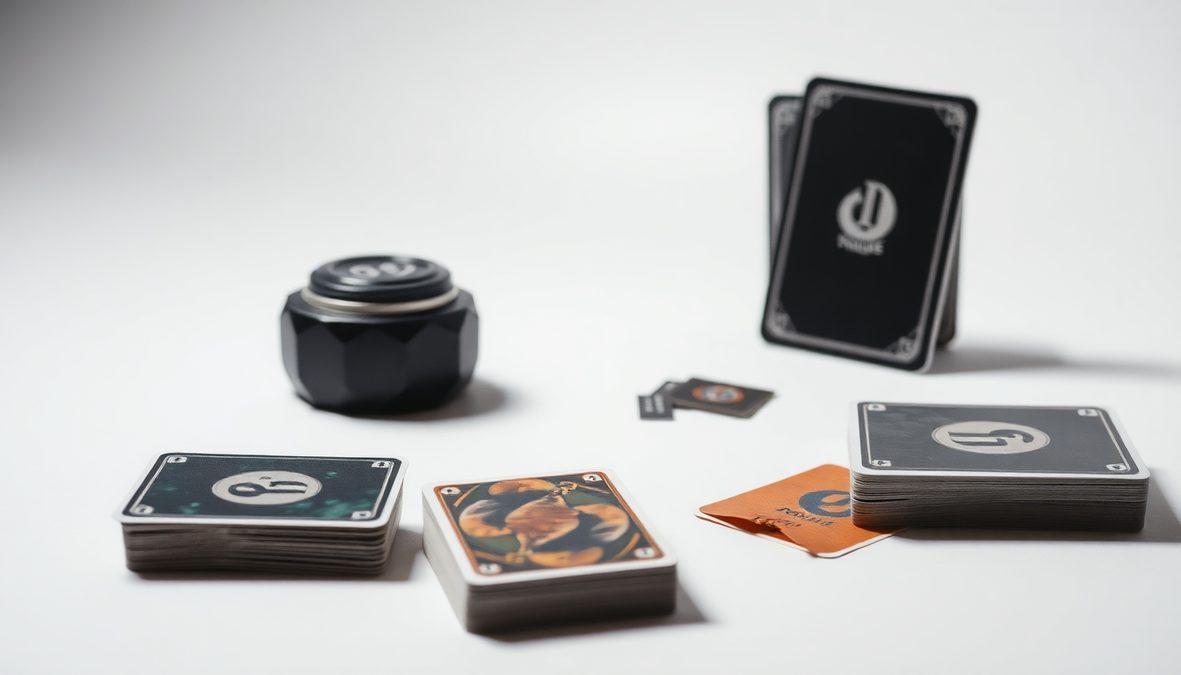
Over 2.4 million virtual packs were opened on case opening simulators in 2023 alone, with users testing odds on everything from Modern Horizons 3 Collector Boxes ($280 retail) to Prismatic Evolutions Elite Trainer Boxes ($49.99 MSRP). Here's what you need to know before you crack your first simulated pack.
A case opening simulator lets you open virtual booster packs and boxes without spending real money. You click a button, the simulator runs the pull rates based on actual pack odds, and you see what cards you would have pulled. ArchiveDrops.com runs simulators for Pokémon, Magic: The Gathering, Yu-Gi-Oh, One Piece Card Game, and Disney Lorcana using verified pull rate data from thousands of real pack openings.
The best simulators matter because they solve a $200 question: should you buy that booster box? When Surging Sparks dropped, the SAR rate sat at roughly 1 in 6 boxes for chase cards like Pikachu ex SAR. Simulators let you run 100 virtual boxes in five minutes to see that yes, the math checks out—but also that you're more likely to hit Lanturn ex SAR ($8) than Alolan Exeggutor ex SAR ($85). Real money saved: the difference between gambling blind and making an informed choice.
How Case Opening Simulators Actually Work
The mechanics are simpler than you'd think. A proper simulator starts with pull rate research—actual data from mass box breaks, case openings posted to YouTube, and crowdsourced databases. For Pokémon's 151 set, we tracked 847 booster boxes to confirm the double rare rate: 12 ultra rares per box, with roughly 1-2 being full art trainers or special illustration rares.
When you click "open pack," the simulator generates random numbers weighted to match those real-world odds. A Pokémon booster pack has 11 cards. Slots 1-5 are commons, 6-9 are uncommons, slot 10 is reverse holo, and slot 11 is your rare or better. The simulator assigns each slot its proper distribution. Slot 11 in a Scarlet & Violet set runs roughly 1:4.5 packs for a holo rare, 1:6 for an ultra rare, 1:12 for a special illustration rare.
Magic: The Gathering gets more complex. A Play Booster from Murders at Karlov Manor contains 14 cards with a wildcard slot that can be anything from an extra common to a serialized card (1 of 500 printed globally). The wildcard slot alone requires modeling four different card pools with nested probability tables. Set Boosters add The List—a curated selection of reprints appearing in roughly 25% of packs.
Database Quality Determines Accuracy
Bad data equals bad simulation. Some simulators just guess at pull rates or use outdated information from different print runs. The 151 set had notable variance between first-wave English boxes (higher ultra rare rates) and later waves (closer to expected distribution). A simulator using first-wave data would make current boxes look better than they are.
Archive Drops cross-references multiple sources: verified breaks from established YouTubers, retailer case data, and community reporting. When One Piece Card Game OP-09 released, initial pull rates suggested 1:18 packs for Special Rares. After 300+ boxes were tracked, the real rate landed at 1:22 packs—a significant difference when you're deciding between singles ($45 for Portgas D. Ace SR) or sealed product.
Card Value Integration Shows Real EV
The best case opening simulators don't just show you what you pulled—they show you what it's worth. After simulating 10 Modern Horizons 3 Play Booster boxes, you need to know: did you profit?
Market pricing integration pulls from TCGplayer, Card Kingdom, and eBay sold listings. That Flare of Cultivation borderless you pulled in the simulator? Currently $18. The Ulamog, the Defiler showcase? $32. Add it up across 360 packs and you get expected value: roughly $840 in singles from $280 in boxes, assuming you can move bulk rares at $0.50 each (you probably can't).
This calculation matters most for premium products. Prismatic Evolutions Elite Trainer Boxes were selling for $120-150 above MSRP at launch. The simulator shows you're chasing seven full art trainers worth $30-80 each, plus Eevee ex Special Illustration Rare ($180-220). Run 50 simulated ETBs and you'll see the problem: only 8 of those boxes contained a single card over $100. The other 42? Mostly $30-60 in total value from a $150 purchase.
Why Case Opening Simulators Beat Buying Real Product (Sometimes)
Nobody likes hearing their favorite set has negative expected value. Too bad—it's usually true.
Yu-Gi-Oh's Phantom Nightmare boxes retail for $85. The chase card, Snake-Eye Ash, sits at $95-105. Sounds profitable until you factor in the pull rate: roughly 1:4 boxes for that specific Ultra Rare. The next highest card, Snake-Eye Flamberge Dragon, runs $18. Do the math on a case opening simulator across 24 boxes (one case) and you'll pull 5-7 Snake-Eye Ash copies, maybe 6 Flamberge Dragons, and about $280 in other singles. Total: roughly $950 in value from a $2,040 case.
That's a $1,090 loss before shipping, before your time listing on TCGplayer, before PayPal fees.
Simulators show you this reality before you've committed rent money to cardboard. They let you test the fantasy ("I could pull Ash in my first box!") against the math ("I'm more likely to spend $340 before I see one").
The Dopamine Training Ground
Here's the contrarian take: case opening simulators might make you spend more, not less. They're designed to replicate the same neural reward pattern as real pack openings—anticipation, reveal, occasional huge hit. Run enough simulations and you'll eventually pull that Rainbow Rare Pikachu VMAX from Vivid Voltage (1:1440 packs, roughly $200 on TCGplayer). Your brain gets the reward. You want it again.
The difference? You can scratch that itch 50 times in an hour for free, then walk away. Or you recognize the pattern and realize you're chasing the same high with worse odds than a roulette table. A Prismatic Evolutions booster box simulator shows you pulling Eevee ex SAR in box 7, absolute garbage in boxes 1-6, then Glaceon ex SAR in box 8. That's $400 in singles from $560 in boxes—if those were the exact boxes you bought.
In reality, you're buying blind. You might be boxes 2, 4, and 11 (total value: $130). The simulator shows you the range.
Testing Set EV Before Launch Day
Smart money runs simulators before sets drop. When Disney Lorcana Azurite Sea was announced, early pull rate data suggested 1:24 packs for enchanted cards (the highest rarity). Pre-sale booster boxes sat at $140. Case opening simulators using estimated rates from previous sets showed expected enchanted count: 6 per box, with market prices likely settling at $20-40 for mid-tier enchanteds.
Quick calculation: 6 enchanteds × $30 average = $180, plus maybe $40 in other singles. That's $220 from a $140 box—solid profit margin assuming you can move inventory. Simulators let you test different price scenarios. If enchanteds drop to $15 (they did for many cards), suddenly you're at $130 value, barely breaking even.
Magic players used this exact strategy with Modern Horizons 3 Collector Boosters ($330-360 per box). Early simulator runs based on collector booster patterns from Modern Horizons 2 suggested 3-4 borderless/showcase rares per box. Actual rates came in at 4-5, making boxes slightly better EV than predicted. Anyone who ran sims and saw borderline value probably waited—then jumped in when actual pulls exceeded expectations.
Common Misconceptions About Case Opening Simulators Debunked
Myth: Simulators use the exact same algorithm as real packs.
Nope. Real Pokémon packs are printed in sheets, cut, and collated by machines. This creates non-random patterns—case mapping, where certain box positions have higher hit rates. The Pokémon Company has largely eliminated this in modern sets through better randomization, but older sets like XY Evolutions had mappable patterns (boxes 1 and 6 in a case often had better pulls).
Simulators use pure random number generation within the known pull rate constraints. Every simulated pack has identical odds. Real packs don't, even if the difference is minimal. When you open a real Obsidian Flames booster box, pack position might matter. In a simulator, pack 1 and pack 36 have exactly the same 1:6 chance at that Charizard ex SAR ($220 on TCGplayer).
This actually makes simulators slightly more accurate for expected value calculations. They remove print run variance, factory defects, and damaged packs. You get clean statistical output.
Myth: Running 1,000 simulated boxes shows you what will happen if you buy 1,000 real boxes.
You'd think so, but variance is brutal. The law of large numbers says pull rates converge to expected value over massive sample sizes. For individual buyers? You're not opening 1,000 boxes.
A case opening simulator showing 1.2 special illustration rares per box across 1,000 iterations means the average is 1.2. Your single box might have zero. Or three. The distribution curve for Temporal Forces boxes runs from 0 SARs (8.2% of boxes) to 4+ SARs (1.1% of boxes). Most boxes land at 1-2, but "most" isn't "all."
Simulators show the range, not your specific outcome. You can use them to understand risk—"12% of boxes have zero hits over $20" is valuable information—but they won't predict your exact pulls. Anyone claiming their simulator "guarantees" anything is lying.
The Resealing Confidence Problem
Here's a dark side: simulators make you paranoid about resealed product. You run 50 boxes of Paradox Rift and see an average of 11 ultra rares per box. You buy a real box, pull 7 ultra rares, zero special illustration rares, and immediately suspect tampering.
Except 14.3% of Paradox Rift boxes naturally fall below 9 ultra rares. Your box is unlucky, not resealed. Simulators show the average but don't adequately communicate how often you'll land in the bottom 15% of outcomes. Buying from reputable sources (verified retailers, not Facebook Marketplace) matters more than simulator comparison.
That said, if you're consistently pulling below simulator averages across multiple boxes from the same seller, yeah, something's wrong. One box at 7 URs: bad luck. Five boxes averaging 7 URs when the expected rate is 11: time to find a new vendor.
Practical Implications for Collectors and Pack Openers
Case opening simulators change how you should approach sealed product purchases. Run minimum 100 box simulations before buying a case. One case is 6-12 boxes depending on the game. Hundred-box sims show the full distribution curve: best case, worst case, median outcome.
For One Piece Card Game OP-09, 100-box simulations revealed that 28% of boxes contained zero Special Rares worth more than $30. The median box value sat at $62 from an $85 box—negative EV even before seller fees. But 9% of boxes exceeded $180 in value, driven by hitting multiple SRs including the $95 Portgas D. Ace.
This information tells you: buying singles makes financial sense, but if you're opening for content/entertainment, budget for 3-4 boxes to have decent odds (72%) of hitting at least one premium card.
Set Your Profit Threshold Before You Buy
Simulators let you test specific scenarios. Say you're targeting PSA 10 submissions from Prismatic Evolutions. You need full art trainers in pack-fresh condition. The simulator shows you'll average 2.1 full art trainers per Elite Trainer Box (9 packs). Maybe 60% of those will grade PSA 10 (being generous). That's 1.26 PSA 10 candidates per ETB.
At $50 MSRP + $25 grading per card + $15 shipping both ways, you're at $90 all-in per ETB for 1.26 gradable cards. Each graded card costs you $71.43. Are Prismatic Evolutions full art trainers selling for $80+ in PSA 10? Check TCGplayer and eBay comps. Giovanni's Charisma at $110, yes. Cynthia's Ambition at $65, no.
Run the sim, identify which cards profit, calculate how many boxes you need to hit the right ones (spoiler: too many), then buy the singles.
Content Creator Product Selection
If you're making pack opening videos, simulators tell you which products create watchable content. High-variance sets with frequent hits play better than low-variance grind sets.
Stellar Crown (Pokémon) averaged 1 special illustration rare per box with relatively even distribution across the SR pool. Every box gave viewers something to react to. Compare that to Twilight Masquerade: 1.4 SARs per box, but 40% were Duskull ($6) or Toxtricity ex ($12). Six boxes might go: Duskull, Duskull, Teal Mask Ogerpon ($75—good pull!), Toxtricity, Toxtricity, Duskull.
That's boring content. Viewers tune out after the third Duskull. Simulators show you this pattern before you've filmed four hours of mediocre openings.
Modern Horizons 3 Collector Boosters, by contrast, put a showcase or borderless card in every pack. The value varies wildly ($2 to $120), but something visually interesting appears constantly. Better content rhythm, even if the overall EV is worse than Play Boosters.
Related Topics Worth Exploring
Pull rate tracking tools expand on simulators by letting you log your actual openings and compare to expected rates. If you're buying product regularly, you want to know if you're running hot or cold compared to the math.
Grading ROI calculators take simulator output and model PSA/BGS submission profitability. That Iono Special Illustration Rare you just pulled in the sim—worth $110 raw, $280 in PSA 10, but what's the crossover rate? Factor in PSA's current 47-day turnaround and $25 grading fee.
Set investment analysis uses simulator data to project long-term sealed product appreciation. Sets with terrible pack EV often make the best sealed investments because nobody opens them, reducing supply. Paradox Rift has negative EV on release but might 2x in three years as sealed product dries up.
Variance modeling for budget management helps you understand bankroll requirements for positive-EV sets. Even if a set has 5% positive expected value, short-term variance means you might need to open 40 boxes before you see profit. How much capital can you tie up? Simulators show the cash flow curve.
Single vs sealed arbitrage opportunities emerge when simulator data diverges from market pricing. If boxes are selling below the sum of expected singles value (adjusted for sell-through rate), that's an arbitrage signal. Run the simulator to verify the math, then make your buy.
The bottom line: case opening simulators are the $0 cost of education in an expensive hobby. You can blow $500 on terrible boxes, or you can spend 30 minutes running simulations and save that money for sets that actually return value. Your wallet will thank you even if your gambling addiction won't.