CARD COLLECTING FOR BEGINNERS: WHAT 87% OF NEW COLLECTORS GET WRONG ABOUT THEIR FIRST PURCHASE
New collectors lose $43 on average their first purchase. Learn actual pull rates, EV calculations, and which approach (singles vs boxes) fits your budget.
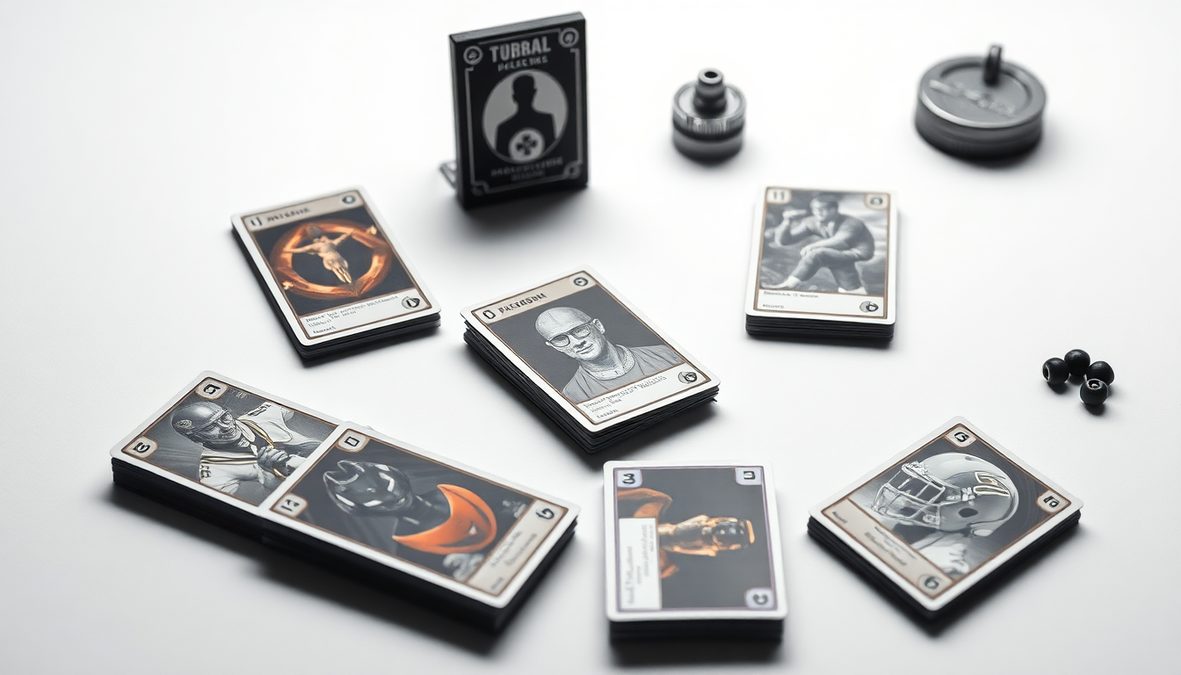
The average new card collector loses $43 on their first booster box. They chase trending sets at inflated prices, ignore pull rates, and confuse retail hype with actual expected value. Here's what card collecting for beginners actually requires: a working knowledge of pull rates, realistic EV calculations, and the discipline to avoid FOMO purchases when Pokemon Prismatic Evolutions booster boxes spike to $220 for what's essentially $87 worth of pulls.
You don't need a massive budget or encyclopedic knowledge. You need math, patience, and a clear answer to one question: are you collecting for enjoyment, investment, or both?
Understanding Card Collecting for Beginners: The Three Core Approaches
New collectors typically fall into three camps, and knowing which one you belong to determines every purchase decision you'll make.
The Set Collector completes specific sets by buying singles. You're chasing that master set of Surging Sparks or trying to complete the Disney Lorcana Shimmering Skies rare collection. This approach offers the best price-per-card ratio because you avoid duplicate commons and uncommons that booster packs guarantee. A complete non-holo rare set from Stellar Crown runs about $120 buying singles on TCGplayer. Opening packs to pull those same cards? You'd spend $380-450 in booster boxes.
The Pack Opener values the experience over efficiency. Ripping packs scratches a specific itch that buying a Moonbreon (Umbreon VMAX Alternate Art) outright doesn't satisfy. The variance is the point. Opening a Special Art Rare at 0.5% odds feels different than clicking "Add to Cart." This is gambling-adjacent entertainment with cardboard upside. Budget accordingly—expect negative EV of 25-40% on modern Pokémon sets.
The Investor treats cards as an asset class. You're looking at PSA 10 population reports, studying price trajectories of sealed vintage product, and comparing the 3-year returns on a First Edition Base Set booster box ($47,000 current market) versus English Pokémon 151 ETBs ($89, down from a $165 release spike). This approach demands the most research and the longest time horizon.
Most beginners try to be all three simultaneously. That's expensive and unfocused.
Start With Your Actual Budget, Not Your Wishlist Budget
Card collecting for beginners fails most often at basic budgeting. You see a Modern Horizons 3 Play Booster box at $239 and convince yourself the fetch land reprints justify it. The math: MH3 boxes contain roughly $180-195 in expected value based on current TCGplayer market prices. You're paying a $44-59 premium for the experience of opening 36 packs.
Set a monthly collecting budget you won't miss. For most beginners, that's $50-150. At $50/month, you're better off buying singles. At $150/month, you can split between a booster box and targeted singles. At $500+/month, sealed product investing becomes viable.
Track every purchase in a spreadsheet. Date, product, price paid, what you pulled or acquired, current market value. Within 90 days you'll see your own patterns—which purchases held value, which ones tanked, whether opening or buying singles served you better.
The Single Most Important Number: Expected Value
Expected value is the statistical average of what a pack, box, or case contains based on current market prices and known pull rates. A Pokémon Surging Sparks booster box at $89 contains approximately $72-81 in EV. You're paying an $8-17 "fun tax" to open packs instead of buying the specific cards you want.
Calculate it yourself. Take the market price of every card in a set (TCGplayer Market, Card Kingdom, eBay sold comparables for accurate data). Multiply each card's price by its pull rate. Sum those products. That's your EV per pack or box.
One Piece Card Game OP-09 booster boxes at $95 carry an EV around $88-92, much tighter than Pokémon. Magic's Standard sets typically run 60-70% EV within weeks of release. Yu-Gi-Oh sets spike to 110-140% EV for 2-4 weeks when chase secrets like Diabellstar the Black Witch hit, then crash to 55-65% as reprints get announced.
Beginners who ignore EV consistently overpay.
Common Misconceptions That Cost Beginners Money
Misconception #1: "Old Cards Are Always Valuable"
Your bulk 1999 Machamp from Base Set is worth $2. The 1996 Charizard everyone remembers? Only valuable in First Edition shadowless ($6,800 raw, $350,000 PSA 10) or First Edition shadowed ($1,100 raw, $14,500 PSA 10). The Unlimited print Charizard sits at $120-160 raw despite being the most iconic Pokémon card ever printed.
Age creates scarcity, but scarcity alone doesn't create value. You need age + scarcity + demand + condition. Those 2008 Yu-Gi-Oh commons in your closet? Worthless. The 2008 Ghost Rare Rainbow Dragon? $420 in Near Mint. The 2008 Stardust Dragon Ghost Rare? $185.
Vintage Magic cards from Revised and Fourth Edition—printed in massive quantities from 1994-1995—sell for quarters in played condition. Meanwhile, Modern Horizons 2 from 2021 contains Ragavan, Nimble Pilferer at $58 and retro frame fetch lands at $18-35 each. Recent doesn't mean cheap.
Check actual sold prices on eBay (filter by "Sold Items") or TCGplayer Market Price before assuming your childhood cards funded your retirement. They didn't.
Misconception #2: "Grading Everything Will Increase Value"
PSA grading costs $25-150+ per card depending on service level and turnaround time. BGS and CGC run similar pricing. You pay grading fees, shipping both ways, insurance, and wait 30-180 days depending on service tier.
A raw 2023 Pokémon 151 Charizard ex Special Illustration Rare sells for $280-310. PSA 10 copies sell for $425-480. That's a $115-200 gain—sounds good until you subtract the $40 grading cost, $8 shipping, and $15 insurance. Net gain: $52-137, assuming you hit PSA 10. PSA 9 copies? $310-340, barely above raw pricing. PSA 8? $220-245, a loss after grading costs.
Only grade cards where the PSA 10 multiplier exceeds 1.8x raw price AND where centering, edges, corners, and surface obviously grade well under magnification. Beginners submit off-center cards with whitening and wonder why they get PSA 7s.
The modern card grading rush has created a glut of PSA 10 slabs for cards printed in massive quantities. The Pokémon Scarlet & Violet base set Miraidon ex 127/198 has 4,800+ PSA 10s in existence. That population makes each one less scarce, less special, and less likely to appreciate. Compare that to Skyridge Charizard with only 270 PSA 10s—different game entirely.
Misconception #3: "Booster Boxes Are the Best Value"
Not for singles acquisition. A Prismatic Evolutions booster box at $215-235 contains 36 packs with roughly $155-170 in expected value based on pull rates and current pricing. You need specific cards from that set? Buy them individually.
The Prismatic Evolutions Eevee Special Illustration Rare runs $88-95 as a single. The pull rate is approximately 1 in 72 packs. You'd need to open two booster boxes ($430-470) to statistically hit one, and variance means you might open three boxes and whiff completely. Just buy the card for $95 if you want it.
Booster boxes win on entertainment value and when hunting multiple high-value hits from sets with good EV ratios. Elite Trainer Boxes almost never make mathematical sense—you pay $45-55 for 9-10 packs that would cost $36-40 individually, plus sleeves and dice you don't need.
Individual packs at $4-5 each are the worst value proposition in modern TCG collecting. The pull rates don't change, but your sample size is too small for variance to smooth out. Buying five loose packs from different sets yields worse results than buying five singles you actually want.
Practical Implications for New Card Collectors
Start with a single TCG. Pokémon, Magic, Yu-Gi-Oh, One Piece, or Lorcana—pick one and learn its market before spreading across multiple games. Pull rates, set structures, rarity systems, and secondary markets all function differently. Pokémon's Special Art Rares appear at ~0.5% rates in Scarlet & Violet sets. Magic's Mythic Rares hit at ~1:8 packs but aren't always valuable. Yu-Gi-Oh puts chase cards at Secret Rare (~1:12 packs) and Starlight Rare (~1:1,440 packs in some sets). One Piece keeps better EV ratios than Pokémon but with less secondary market liquidity.
Buy one booster box of a recent set. Open it. Track what you pull and what it's worth. This teaches you pull rates viscerally—not theoretically. You'll experience the variance: maybe you hit two Special Art Rares and break even. Maybe you pull nothing above $8 and lose 35% of your money. That experience is worth more than reading pull rate charts because it calibrates your expectations to reality.
Join set-specific Discord servers and Reddit communities. Not for hype and FOMO, but for pull rate data aggregation and market trend discussions. The r/PKMNTCGDeals subreddit tracks retail sales and calculates when booster boxes hit acceptable pricing ($85-92 for standard Pokémon sets). The MTGFinance community discusses reprint risk and reserved list buyouts before they hit mainstream. The One Piece Card Game Discord shares Japanese set data months before English releases, giving you preview of pull rates and card power levels.
Avoid pre-ordering sealed product at inflated prices. Prismatic Evolutions pre-orders peaked at $280-320 per booster box. Within three weeks of release, market pricing settled at $215-235. Hype tax cost early buyers $45-105 per box. Pokemon 151 hit similar patterns—$220 pre-orders, $145-165 at release, $89-95 two months later, now back to $165-185 due to scarcity. Wait for release week pricing, watch for the inevitable dip 4-6 weeks post-release when supply catches up, then buy.
Use TCGplayer, Card Kingdom, and eBay sold comparables—not asking prices. A card listed at $200 on eBay means nothing. Filter by Sold Items to see what buyers actually paid: maybe $145, maybe $175, maybe it's not selling at all. TCGplayer Market Price averages recent sales across multiple sellers and updates daily. Card Kingdom buy prices (what they pay YOU for cards) typically represent 45-60% of market value—useful for establishing price floors.
Building Your First Collection: The $200 Starter Approach
You've got $200 and want to start collecting Pokémon. Here's the allocation that teaches you the most:
$85-95: One booster box from a recent set with decent EV (Surging Sparks, Stellar Crown, or Temporal Forces). This teaches you pull rates and variance. Open it all in one session and catalog results.
$60-70: Five specific singles you actually want. Modern ex cards at $8-15 each, or one higher-end Special Illustration Rare at $50-65. This shows you the efficiency of targeted purchases.
$30-40: Protective supplies that actually matter. Perfect-fit inner sleeves ($4 for 100), quality outer sleeves ($8 for 100), and a 4-pocket binder with side-loading pages ($15-20). Skip the $45 Ultra Pro premium binder—it doesn't make your cards more valuable.
This split gives you opening experience, collection building, and proper storage. After 90 days, calculate which approach delivered more value per dollar spent.
When to Actually Buy Sealed Product for Holds
Sealed product investing works on 3-5 year minimum time horizons with specific criteria. Pokemon 151 ETBs bought at $89 now trade at $165-185, a 85-108% gain in 18 months. But temporal forces ETBs bought at $52 now sell for $47—a loss. The difference: Pokemon 151 had chase cards (Charizard ex Special Illustration Rare at $310), nostalgia factor, and limited print run confirmation from Pokemon. Temporal Forces had neither.
Buy sealed product when: (1) The set contains multiple chase cards above $100, (2) Pull rates are slightly worse than average (scarcity increases singles prices), (3) Community consensus suggests limited print run, (4) You can acquire at or below release MSRP.
Store sealed product in climate-controlled space (60-70°F, 30-50% humidity). Avoid basements and attics. Booster box shrink wrap degrades over decades—that's normal and doesn't necessarily hurt value if the box is clearly unopened. First Edition Base Set boxes with degraded wrap still sell for $47,000+ because the scarcity and contents matter more than mint packaging.
Don't expect 10x returns. Realistic sealed product appreciation runs 8-15% annually for good sets, underperforming index funds but offering more entertainment value. Bad sets go to zero.
Related Topics Every Beginner Should Research
Pull rate aggregation methodology: Understanding how the community reverse-engineers pull rates through mass box opening data. Japanese sets release first with known ratios; English sets often match but sometimes diverge. Case breaks (opening 6-12 boxes) reveal pattern structures—some manufacturers seed cases with guaranteed ratios.
Reprint risk across different TCGs: Magic reprints aggressively in supplemental sets and Masters products. Fetchlands have been reprinted four times, crashing from $90 to $18-35. Pokemon reprints sparingly outside of anniversary sets. Yu-Gi-Oh reprints in Mega Tins annually, destroying Secret Rare prices from $80 to $8 within six months. One Piece hasn't established long-term reprint patterns yet. This affects every hold decision.
Raw vs. graded market dynamics: When raw premium exists (PSA 10 sells for only 1.3x raw), grading doesn't make sense. When PSA 10 premium hits 2.5x+ (vintage holos, popular modern chase cards), grading becomes profitable IF you can accurately predict grades. BGS 10 Pristine carries higher premiums than PSA 10 for modern cards but grades far more strictly.
Counterfeit detection basics: Modern Pokemon cards use specific texture patterns on holos, precise color registration, and specific font weights. Magic cards require light tests (blue core layer) and loupe inspection for rosette patterns. High-value vintage cards warrant professional authentication before purchase. eBay and Facebook Marketplace are rife with Chinese counterfeits—if a $300 card sells for $65, it's fake.
Tax implications for serious collectors: If you're buying sealed product as investment or flipping singles for profit, the IRS considers this taxable activity. Collectibles are taxed at 28% long-term capital gains rate (higher than stocks). Document all purchases and sales. Most beginners ignore this until they're moving $10,000+ annually, then face documentation headaches.
You'll lose money at first. Everyone does. The question is whether you lose it randomly through hype purchases, or strategically through calculated risks that teach you market mechanics. Buy one booster box, open it, do the math, and decide if opening or buying singles serves your goals better. Most beginners discover they enjoy opening but should budget 75% toward singles and 25% toward packs. Some discover they hate variance and switch to 100% singles. A few realize they're pack-opening addicts and need to budget accordingly.
The collectors who succeed long-term? They track numbers, resist FOMO, and know exactly why they're buying each product. The ones who fail buy whatever's hyped on YouTube, chase every new release, and wonder why their collection is worth 60% of what they spent.