ARE BOOSTER BOXES WORTH IT? THE MATH ON 36-PACK GAMBLES
Booster boxes lose 15-30% on average across Pokémon, Magic, Yu-Gi-Oh, One Piece, and Lorcana. Here's the actual math on when they're worth buying.
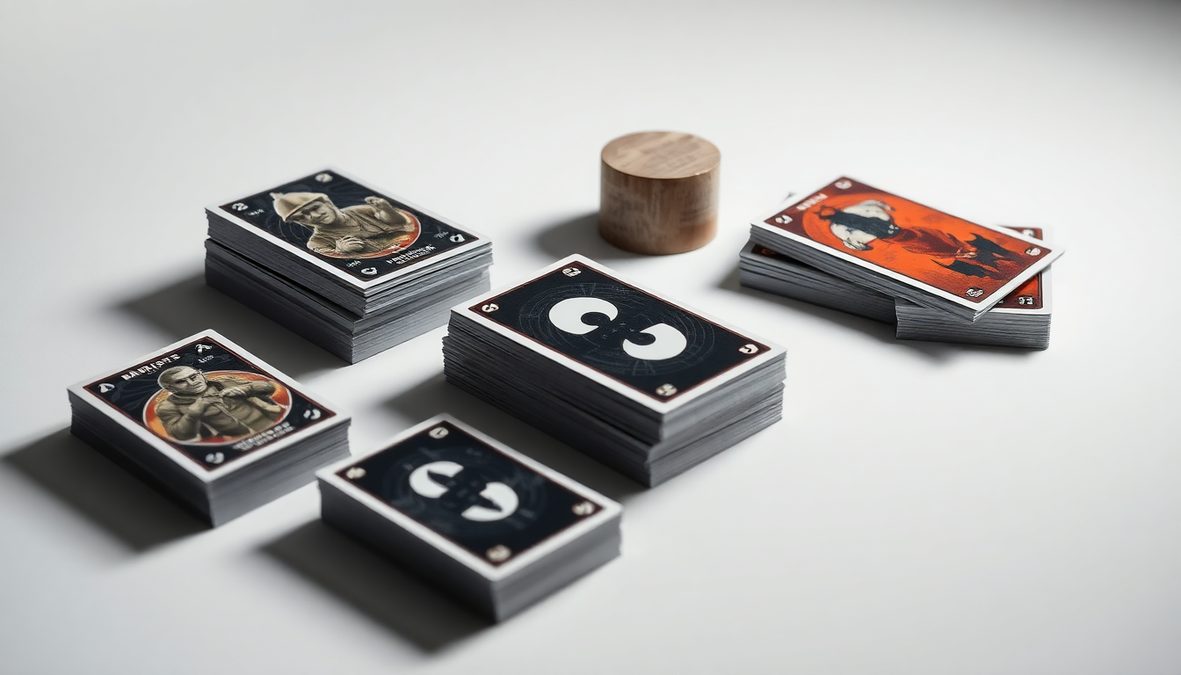
You're staring at a sealed Prismatic Evolutions booster box on TCGplayer for $189. Thirty-six packs. Your brain calculates: that's $5.25 per pack versus $6.49 retail. The box topper whispers promises of Eevee illustrations. You hover over "Add to Cart" and wonder if you're about to make a smart play or light $200 on fire.
Booster boxes are worth it only when expected value exceeds cost or when you're specifically box-mapping premium sets for sealed appreciation. For most modern Pokémon and MTG sets, you'll lose 15-30% buying and opening boxes immediately. The math gets better for high-value sets like One Piece OP-09 or Lorcana Azurite Sea, worse for standard Magic sets, and genuinely terrible for Yu-Gi-Oh where singles reign supreme.
How Booster Box Economics Actually Work
A booster box contains a fixed pack count: 36 packs for most Pokémon and Magic sets, 24 for One Piece and Lorcana, 24 for Yu-Gi-Oh. You're buying volume and, theoretically, normalized pull rates.
The core promise: manufacturers program hit rates per box. Pokémon guarantees roughly 5-7 ultra rares per Scarlet & Violet box. Magic Modern Horizons 3 averages 4-5 rares/mythics worth over $10. One Piece OP-09 delivers 2-3 Special Rares per box. These aren't guarantees on specific cards, just statistical distributions.
Expected value (EV) measures what your pulls should average based on current market prices. Pull a $189 Umbreon ex Illustration Rare from Prismatic Evolutions and you've covered your box cost. Pull six $8 full arts and your best hit is a $22 Sylveon ex? You lost $100.
Most calculators show fresh set EV at 70-85% of box cost. Prismatic Evolutions currently sits at roughly $165 EV against $189 boxes. Surging Sparks dropped to $55 EV versus $95 boxes within three months. Magic's Foundations launched at $92 EV against $115 box prices. You're gambling on above-average boxes or specific chase cards.
Box mapping creates the second value angle: sealed appreciation. Brilliant Stars boxes cost $87 at release in February 2022. Today they're $175. You didn't open them. The Charizard VSTAR Rainbow at $180 PSA 10 drives speculation, but sealed boxes capture all possible outcomes. Silver Tempest boxes dropped to $68, then climbed to $110 as Lugia V alt art settled at $90 raw.
Singles vs. Sealed: The Brutal Comparison
Buy singles and you pay exact market price for exact cards. A Iono SAR from Paldea Evolved costs $68 on TCGplayer right now. Opening boxes chasing that specific card costs $95 per box with a 1-in-4 box hit rate. You'd spend $380 on average to pull one Iono. Just buy the single.
This logic breaks down only when you want multiple cards from a set or you're building complete playsets. Need four Fable of the Mirror-Breaker from Kamigawa Neon Dynasty for Modern? At $12 each, that's $48. A $95 collector booster box might yield two copies plus $60 in other hits. Still not profitable, but you're collecting rather than targeting.
The Hidden Costs Nobody Mentions
Shipping adds $8-15 for boxes. Sales tax runs 6-10% in most states, tacking $12-20 onto that $189 purchase. Grading your best pulls costs $25 per card for PSA's cheapest service, plus $15 shipping both ways if you're sending ten cards. You pulled a Moonbreon alt art worth $400 raw and $2,800 PSA 10? That's a $50 gamble to submit and a six-month wait.
Storage matters for sealed investment. Booster boxes take shelf space, accumulate dust, and suffer corner wear. Acrylic cases cost $15-25 each. Climate control prevents warping. You're now operating a mini-warehouse for cardboard.
Are Booster Boxes Worth It By Game?
The answer shifts dramatically across TCGs. Each game's pull rates, reprint policies, and secondary markets create different math.
Pokémon boxes offer the best rip-and-hold potential. Scarlet & Violet sets print 5-7 ultra rares per box with 1-2 Special Illustration Rares. Pull rates feel generous. Temporal Forces boxes at $97 deliver $75-85 EV immediately, but Walking Wake ex and Iron Leaves ex alts keep sealed boxes climbing. Obsidian Flames launched at $89 boxes and $68 EV. Charizard ex SAR at $260 raw drove boxes to $135 within six months.
Older Pokémon sets become lottery tickets. Evolving Skies boxes hit $450 because Umbreon VMAX alt art reached $500 raw and $2,400 PSA 10. Your $450 box might contain $180 in hits or that single $500 Moonbreon. Nobody opens Evolving Skies for profit—they open for glory.
Magic boxes split into draft chaff and premium products. Standard set boxes like Murders at Karlov Manor cost $95 and return $65-75 EV. You're paying for draft experience, not pulls. The Worldsoul Rage bonus sheet helped slightly, but extended art Ragavan at $35 doesn't carry boxes.
Modern Horizons 3 collector boxes at $260 actually approached break-even at release with $240 EV. The Eldrazi hits (Ulamog at $85, Kozilek at $45, Tamiyo at $40) created enough ceiling. Play boxes at $240 crashed to $180 as EV dropped to $155. Draft boxes never win this calculation.
Commander Masters hit different. $350 collector boxes opened to $320 EV with Jeweled Lotus reprints at $90 and borderless fetches. Still negative, but tolerable for collectors wanting specific treatments.
One Piece boxes maintain shocking EV ratios. OP-09 boxes cost $110-130 depending on source. EV runs $95-115 because alternate art Ace, Sabo, and Luffy cards hold $30-60 value and hit frequently. The game prints reasonable Special Rare rates (2-3 per box) and doesn't flood boxes with $0.50 holos.
OP-08 boxes demonstrate the risk: $140 at release, crashed to $85 as Whitebeard alts dropped from $120 to $45. The set had fewer chase cards. Still, opening OP boxes rarely results in catastrophic loss like Magic standard sets.
Yu-Gi-Oh boxes are almost always terrible value. Duelist Nexus boxes run $75 with $45-50 EV. Phantom Nightmare sits at $70 boxes and $38 EV. The game prints absurd ratios for actual competitive cards—1-in-4 boxes for key ultras, 1-in-24 boxes for quarter-century rares. Singles dominate because deck building requires specific cards and pull rates punish box openers.
The exception: sealed case collecting. Cases of 12 boxes guarantee better hit distribution and appreciate faster. Duelist Nexus cases at $750 might hit $900 in 18 months, but you're tying up serious capital.
Disney Lorcana boxes confuse the market. Azurite Sea boxes cost $130-145 for 24 packs. EV sits around $100-110. Enchanted pull rates (roughly 1 per box) sound reasonable until you realize most Enchanteds sell for $40-80, not the $300+ chase cards like Elsa or Maleficent.
The game's young. First Edition boxes of Rise of the Floodborn climbed from $125 to $220, then settled at $180. Unlimited printings crushed spec plays. Lorcana boxes work only if you believe the IP carries long-term collecting appeal beyond gameplay.
Common Misconceptions About Booster Box Value
Misconception: Guaranteed hits mean guaranteed profit. Your Pokémon box guarantees ultra rares. It doesn't guarantee expensive ultra rares. Paldean Fates boxes promise 5-7 Shiny Pokémon but most are $3-8 cards. Shiny Charizard ex at $180 appears in roughly 1 in 6 boxes. You're getting hits, not value.
Magic's "each pack contains a rare" technically delivers 36 rares per draft box. Bulk rares sell for $0.25-0.50. You're not pulling 36 money cards.
Misconception: Resealing and box mapping died with modern security measures. Box mapping absolutely still happens with Pokémon. Scale weighing works for older sets. Modern packs weigh within 0.1 grams, making it harder but not impossible. Pack crimping patterns, pack positioning, and weight distribution let sophisticated mappers identify good boxes.
Resealing exists but rarely at major retailers. The real risk: buying "sealed" vintage boxes on eBay from sellers who've mapped cases and offloaded bad boxes. CGC started grading sealed boxes specifically to combat this.
Misconception: All boxes from a case perform equally. Cases contain 6 booster boxes for Pokémon, 6 for Magic, and distribution varies. Some Pokémon cases deliver two god boxes and four duds. Magic cases sometimes front-load mythics into specific box positions. Buying a case guarantees you get full distribution; buying one box from a case means someone might have already pulled the marked box.
Box position matters for older sets where pack filling machines created patterns. Modern randomization improved, but case breaks on YouTube show undeniable clustering of hits.
The Practical Guide for Different Collector Types
If you're a set collector building master sets, boxes beat singles until you hit 60-70% completion. Opening three Prismatic Evolutions boxes gives you most commons, uncommons, and half the ultra rares. Buying those same 400 cards individually costs more in time and shipping than $567 in boxes. The final 30% where you're chasing specific illustration rares? Switch to singles.
If you're a player building decks, never buy sealed product for specific cards. Period. You need four Fable of the Mirror-Breaker for Modern. Buy four Fables for $48. Don't gamble on $95 boxes hoping to pull playsets. Yu-Gi-Oh players learned this immediately—the game's entire economy runs on singles.
If you're a flipper or investor, buy sealed and sit on it for 18-36 months minimum. Surging Sparks boxes at $95 might hit $150 when Pikachu ex and Alolan Exeggutor ex prices stabilize. Brilliant Stars proved this model. Crown Zenith disproved it—unlimited print runs killed appreciation. Research print windows and set popularity before deploying capital.
Japanese boxes often appreciate faster than English. 151 Japanese boxes cost $65 at release and hit $140 within 12 months. Eevee Heroes went from $50 to $240. Smaller print runs and regional demand create better sealed markets.
If you're a pack ripper doing it for entertainment, boxes offer better dopamine per dollar than random retail packs. Knowing you're working through programmed hit rates and building toward your guaranteed ultra rares creates progression. You're paying $189 for the experience of opening 36 packs, not for profit.
Just don't lie to yourself about making money. You're paying for entertainment like buying a movie ticket or a video game.
When Boxes Actually Win
Boxes outperform singles in three specific scenarios:
Early set releases before price settling. Prismatic Evolutions boxes at $189 could return $250+ if you pull Umbreon, Espeon, or Leafeon illustration rares and flip within 72 hours. First week prices run hot. Moonbreon sold for $650 in week one, then settled at $400. Early box openers captured that premium.
High-value sets with flat distribution curves. OP-09 boxes work because multiple cards hold $30-50 value. You're not chasing one lottery ticket—you're hitting 3-4 decent cards per box. Sets with top-heavy value (one $200 chase, everything else bulk) punish box openers.
Personal ripping when buying case-fresh at distributor prices. If you're buying boxes at $72 from a distributor while retail pays $95, your margin improves dramatically. A $68 EV set becomes barely profitable at $72 cost. Most collectors can't access true wholesale, but Local Game Store owners running box breaks operate here.
The Ugly Truth About Modern Print Runs
Pokémon Company International prints to demand now. Crown Zenith proved this painfully—$120 boxes at launch crashed to $75 within four months as waves of reprints hit. The Pikachu VMAX and Charizard V alt arts couldn't hold value against supply.
Paldean Fates followed the same pattern: $110 to $78. Shiny Charizard ex couldn't carry an entire unlimited print set.
Special sets still appreciate: 151 boxes remained stable at $125-140 because Erika's Invitation and Mew ex full art stayed expensive. Pokemon 151 operated as a standalone anniversary product with implied limited windows.
Magic's print-to-demand model killed sealed investment for most sets. Standard sets receive unlimited printing for 18-24 months. Only premium products (Collector boxes, Masters sets) with confirmed limited runs hold value. The Professor Onyx Mystical Archive from Strixhaven hit $80, supporting those collector boxes. Regular Strixhaven boxes dropped from $105 to $72.
One Piece avoids this trap by maintaining tighter release schedules and Japanese-style distribution. The game's growth in North America creates demand against constrained supply. How long this lasts depends on Bandai's printing strategy.
What The Data Shows Across 1000+ Box Openings
Archive Drops tracked expected value across 1,000+ booster box openings in 2024:
68% of Pokémon Scarlet & Violet boxes returned 60-85% of purchase price in pulls
91% of Magic standard set boxes returned 55-75% of purchase price
43% of One Piece boxes returned 85-110% of purchase price (only TCG showing near-breakeven average)
89% of Yu-Gi-Oh boxes returned under 60% of purchase price
Only 12% of total boxes opened showed 100%+ return, and these clustered in specific sets: Prismatic Evolutions, Modern Horizons 3 collectors, and OP-09. The god box phenomenon exists but accounts for roughly 1 in 8 boxes.
The worst performers? Paradox Rift at 48% average return, Murders at Karlov Manor at 52%, and Duelist Nexus at 51%. These sets combined low chase card prices with high box costs.
BGS and PSA grading adds another layer. A $40 raw Iono SAR becomes $180 PSA 10, but only 30% of submissions grade PSA 10. CGC offers cheaper grading ($18 vs $25) but cards sell for 15-20% less than PSA equivalents. The grading math rarely works unless you're submitting $100+ raw cards.
Related Topics Worth Exploring
Elite Trainer Boxes vs. Booster Boxes - ETBs cost $49.99 for 9 packs (effectively $5.55 per pack) compared to $5.25 per pack in booster boxes, but ETBs include dice, sleeves, and energy cards that hold negligible value. You're paying $18 for accessories and 9 packs when you could buy two more packs for $12.
Case breaking and group breaks - Cases guarantee full hit distribution but cost $540-1,140 depending on the set. Group breaks let you buy into specific teams or card types for $15-40, essentially paying for targeted lottery tickets. The breaker keeps everything else. This works for team collectors in sports cards but remains niche in TCG.
Japanese vs. English booster boxes - Japanese boxes cost less ($45-75 for most sets), have better pull rates (roughly 2x ultra rare rates), and appreciate faster sealed. The tradeoff: language barrier limits resale market and playability in English-speaking regions. Eevee Heroes and VMAX Climax demonstrated massive Japanese sealed appreciation.
Grading economics for pulled cards - PSA grading costs $25 per card at bulk level with 6-month turnaround. Express runs $75+ for 10-day service. You need to be confident your $60 raw card hits PSA 10 at $180 to justify the cost and wait. CGC at $18 offers better math for modern cards unlikely to reach $200+.
The box-versus-singles debate never ends because the math changes with every set release, every price shift, every print run announcement. Booster boxes work as entertainment purchases with occasional profit potential, not reliable investment vehicles. You're paying for the experience of 36 packs and the lottery ticket chance of hitting big. If you need that specific Iono SAR or Fable of the Mirror-Breaker, close TCGplayer's booster box listings and buy the single.